Brand Wizards Roundtable
When the trolls become the fans: how Indian brands are turning backlash into loyalty
Marketers at the Brand Wizards Roundtable say a real community isn’t built on good days, it’s tested on bad ones


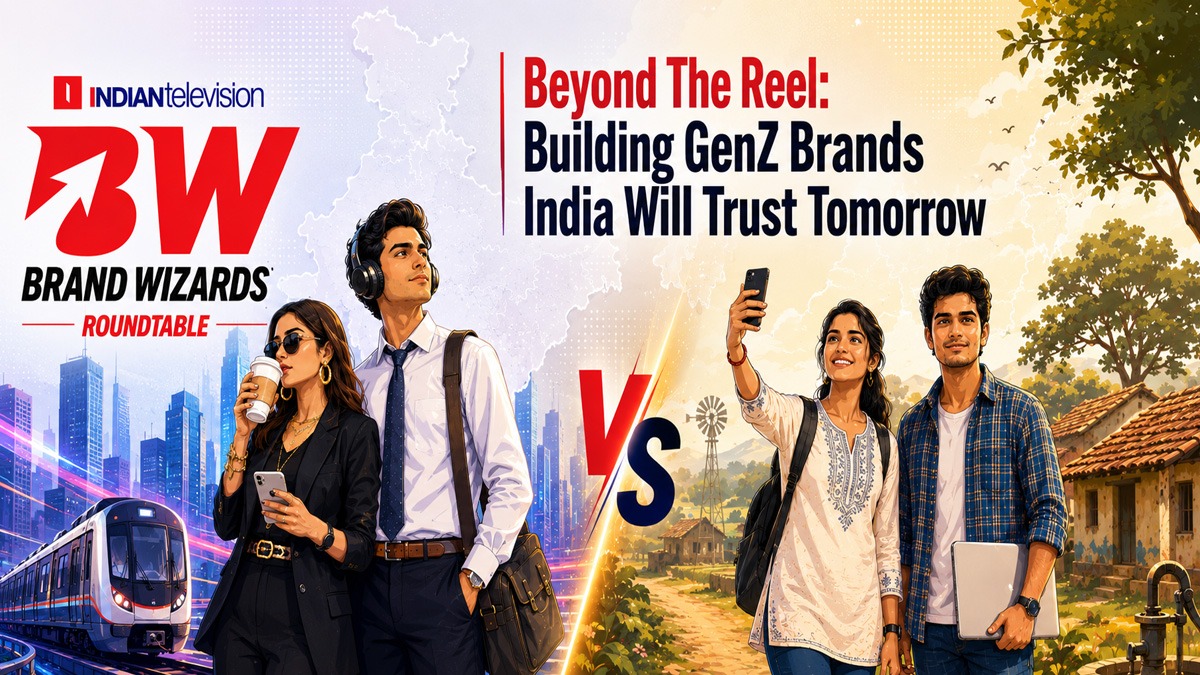
MUMBAI: Every brand will eventually offend somebody. That was the starting point for a two-hour conversation hosted by IndianTelevision.com at its Brand Wizards Roundtable, moderated by Anil Wanvari, and it ended up covering nearly everything marketers now argue about when it comes to India’s 370 million-strong Gen Z: why performance marketing and community-building keep getting pitted against each other, how far dialect and region should shape a brand’s voice, and who, if anyone, survives a public misstep. The panel brought together Anupam Bansal, executive director, Liberty Shoes; Abhishek Mehta, digital marketing lead, Dabur; Aanchal Mahajan, co-founder, Snooplay; Kunal Kumrawat, head of brand and promos, STAGE; Nisha Khatri, head of marketing, Libas; Ria Rustagi, co-founder and chief executive, Sychedelic; and Rumi Ambastha, head of marketing, SKINQ.
It became clear early on that a community earns brands survival in a way an audience never will. Kumrawat described how a STAGE comedy film, whose title inadvertently referenced two rival caste groups in Haryana, sparked immediate backlash from both communities. Rather than defend the choice, the platform apologised and crowdsourced a new name from its own audience, turning outrage into a campaign, and the retitled film went on to become one of the platform’s most-watched. Mahajan recounted a similar reckoning at Snooplay, where a product clip meant to show both genders playing with a toy was mistakenly published showing only a girl, drawing sharp criticism from parents. The brand pulled the content, apologised publicly, and tightened its review process rather than getting defensive, a lesson she called hard-earned but necessary.
Mehta pointed to two contrasting case studies from outside the room: Liquid Death, the American canned-water brand that turns hostile comments into marketing content instead of deleting them, and Vans, whose community in India kept trading and discussing old stock on Reddit years after the brand exited the market, proof that a real community outlives even a company’s physical presence.
The panel also tackled why community-building has stopped being a nice-to-have. Ambastha, drawing on 16 years across brands including The Man Company and Swiss Beauty, argued that with dozens of grooming brands and thousands of cosmetics brands now competing on near-identical products, differentiation has effectively collapsed, leaving storytelling and community as the only real edge, and the only real defence when a Reddit thread over ingredients threatens to spiral. At SKINQ, she is deliberately building a tiny, high-trust WhatsApp group of just three dozen genuine customers rather than chasing scale, a strategy she contrasted with her experience at Swiss Beauty, where a broadcast channel unexpectedly pulled in thousands of members within days of launch.
Language and geography came up repeatedly. Kumrawat, whose platform produces content in regional dialects such as Haryanvi and Rajasthani, argued that authenticity of language is what separates real connection from performative outreach, pointing to Gen Z’s rejection of Bollywood’s attempts at dialect in mainstream films. Ambastha pushed back on the industry habit of lumping regions into tier-one, tier-two and tier-three, preferring to think in terms of India 1 and India 2 instead, and described running region-specific content tests across the south and the northeast before committing budget. Mehta described Dabur’s approach to reviving legacy brands not through product pitches but through cultural storytelling rooted in local heroes and everyday rituals.
On the always-cited tension between performance marketing and community-building, the panel largely agreed there isn’t one: performance marketing keeps the sales engine running quarter to quarter, while community is the slower, compounding investment that pays off over years, not months. Several speakers noted communities now expect constant, two-way engagement rather than one-way broadcasting, a shift from the era of TV and print. Ambastha also flagged that community isn’t purely digital, pointing to fitness and beauty as categories that do offline events particularly well, arguing that meeting a community face to face turns anonymous names into people a brand can genuinely bank on.
Asked which brands they personally admire, the panel named Liquid Death, Royal Enfield’s road-trip culture, and the beauty brand Glossier, which built a loyal newsletter readership before launching a single product. Rustagi framed community as trust infrastructure essential for pre-order businesses like her wearable-tech startup, where backers effectively bet money on a founder’s story months before a product ships.
The conversation closed on how much creative freedom brands should hand their communities, and whether marketing teams will need dedicated community managers going forward. Kumrawat said STAGE deliberately keeps no restrictions on how fans clip and share its content, treating piracy-adjacent sharing as free distribution rather than a threat, while Mehta and Mahajan both confirmed their teams are already hiring or planning to hire specialists solely focused on nurturing community, a role none of them had on their books three years ago.