Sports
Connected TV outshines linear TV for advertisers during FIFA World Cup
TAM Sports finds CTV attracted 31 advertisers and 44 brands, outpacing Linear TV despite ad recovery during the tournament


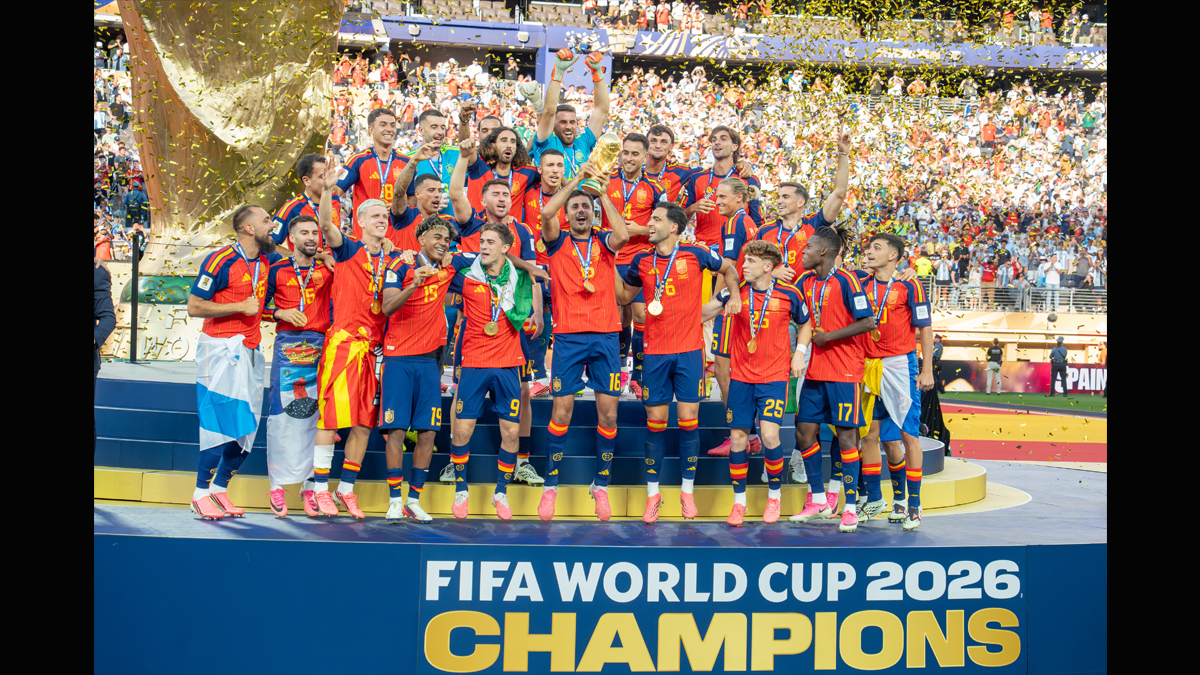
MUMBAI: Looks like advertisers have found a new goalpost and it’s hanging on the living room wall. While millions tuned in to the FIFA World Cup 2026 for the football, brands increasingly treated Connected TV (CTV) as the tournament’s prime pitch, signalling that the battle for viewers is no longer confined to traditional television.
A TAM Sports report, which analysed commercial advertising aired during match breaks across all 104 live matches, found that CTV attracted a significantly wider mix of advertisers, brands and product categories than Linear TV. The study covered advertising across seven Linear TV channels and four CTV language feeds, excluding pre-match, mid-match and post-match programming, broadcaster promotions, film trailers and fillers.
Despite a sluggish start, Linear TV regained some lost ground as the tournament progressed. Advertising volumes were 14 per cent lower during the first 62 matches compared with the FIFA World Cup 2022. By the end of the tournament, however, the decline had narrowed to just 4 per cent, even with the India-US time difference of around 10 hours and 30 minutes affecting viewing patterns.
Momentum also picked up sharply in the latter half of the competition. Average advertising volume per channel per match on Linear TV rose 53 per cent in the second half compared with the first, leaving the FIFA World Cup 2026 with an advertising index of 96, against 100 for the 2022 edition.
Where Linear TV clawed back volumes, CTV stole the spotlight with diversity. The platform hosted 28 advertising categories, 31 advertisers and 44 brands, comfortably ahead of Linear TV’s 17 categories, 17 advertisers and 29 brands.
The difference became even more pronounced when it came to exclusivity. CTV featured 12 exclusive advertising categories and 15 exclusive advertisers, while Linear TV managed just one exclusive category and one exclusive advertiser. Categories such as luggage, e-commerce education, laptops and notebooks, tyres, and vitamins, tonics and health supplements appeared only on CTV. Exclusive advertisers included Pernod Ricard India, Eduauraa Technologies, Lenovo, Ceat India and Naturell (India).
The advertiser mix also reflected contrasting platform strengths. On Linear TV, liquor dominated with a 35 per cent share of advertising volume, narrowly ahead of cars at 34 per cent. Two-wheelers, jewellery retail outlets, and perfumes and deodorants rounded out the top five.
CTV painted a different picture. Cars emerged as the largest category with a 22 per cent share, followed by aerated soft drinks, jewellery retail outlets, liquor and luggage. Notably, the top five categories accounted for 82 per cent of advertising volume on Linear TV but only 51 per cent on CTV, suggesting that Connected TV is attracting a broader and more varied advertiser base.
Among advertisers, United Spirits topped Linear TV with a 38 per cent share of advertising volume, while Mahindra & Mahindra led CTV with 20 per cent. Both companies, along with Hero MotoCorp, featured prominently across the two platforms.
Brand rankings echoed the shift. Black Dog Soda emerged as the leading brand on Linear TV with a 23 per cent share, while Black & White Non Alcoholic Carbonated Beverages topped CTV with 14 per cent. Other prominent brands included Mahindra Thar Roxx, Mahindra XEV 9E, Mahindra BE 6 and Johnnie Walker Luxe Blended Water.
The findings underline how Connected TV is evolving from a complementary screen into a mainstream advertising destination. While Linear TV continues to deliver scale during marquee sporting events, CTV is increasingly winning the contest for advertiser diversity, giving brands a broader field to play on.