
TCHxVAM2026
The Content Hub 2026 kicks off with Anil NM Wanvari decoding India’s content shift
Anil Wanvari maps India’s streaming boom, AI shift and creator-led content wave


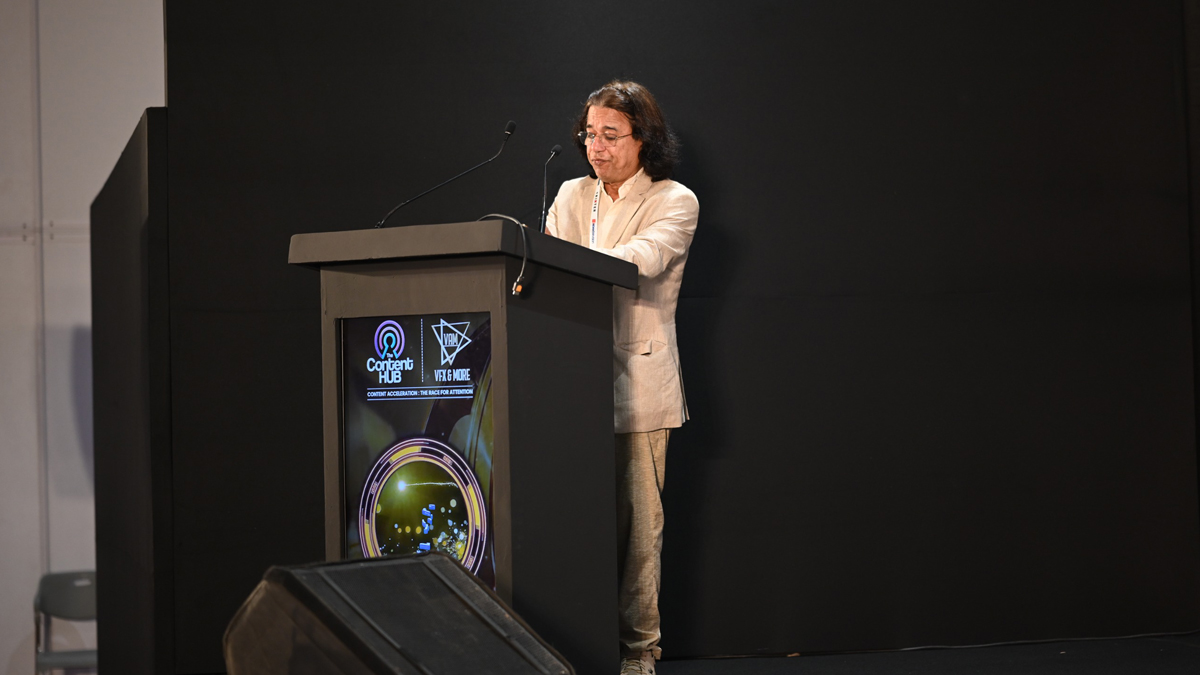
MUMBAI: India’s content business has officially entered its binge era, and according to Indiantelevision.com founder and editor-in-chief Anil NM Wanvari, the industry is now racing against one thing more ruthless than ratings: attention spans.
Opening The Content Hub x VFX & More Summit 2026, Wanvari delivered a sharp, humorous and data-packed address that swung between stand-up style observations and hard industry truths, painting a picture of a content economy moving at algorithmic speed.
“I almost did not show up today,” he joked, recalling how a recommendation algorithm trapped him into watching a vertical drama series before breakfast. “We, all in this room, are victims of what we have built.”
That “monster”, as he called it, now includes more than 600 million OTT users in India, with audiences spending nearly three hours a day streaming content. Wanvari said India currently hosts over 55 streaming platforms, all fighting to prove they have a unique content strategy in an increasingly crowded market.
If the speech had a central theme, it was clear: scale alone is no longer enough. In the battle for viewers, storytelling has become both sharper and more unforgiving.
Wanvari pointed to the growing cracks in Bollywood’s long-standing star system, arguing that audiences are no longer dazzled by massive marketing budgets or celebrity pull alone.
“The audience has become a critic,” he said, noting that viewers now lean heavily on social chatter, ratings and reviews before buying tickets.
While some big-budget Hindi films stumbled, regional cinema quietly tightened its grip on audiences. Wanvari highlighted the strong box office performance of southern language films and Gujarati cinema, arguing that compelling storytelling continues to trump scale.
The OTT sector, meanwhile, has moved from expansion frenzy to spreadsheet discipline. According to Wanvari, the streaming gold rush that peaked with hundreds of originals in 2023 has now entered a more cautious phase where platforms are increasingly driven by audience analytics and viewing behaviour.
He described the shift as the end of “white space commissioning” and the beginning of “spreadsheet-based commissioning”.
Yet amid tighter budgets, one audience segment is becoming impossible to ignore: regional India.
Citing data shared by ZEE5, Wanvari said non-Hindi languages now account for more than 61 per cent of viewership on the platform, with tier two and tier three markets driving substantial consumption growth.
“The content revolution is happening in Tirunelveli, Ranchi and Bhagalpur, not Bandra,” he observed.
Despite years of predictions about its demise, television also received an unlikely standing ovation in Wanvari’s speech. Calling TV “the cockroach of media” in affectionate terms, he argued that linear television continues to survive every disruption while still reaching nearly 900 million viewers across India.
Live programming remains its trump card. Events such as the Indian Premier League, reality shows and quiz formats still create the communal viewing moments that fragmented streaming platforms struggle to replicate.
Streaming giant JioHotstar also came under the spotlight, with Wanvari noting that the platform now houses content from Disney, Marvel Studios, Lucasfilm, Warner Bros. Discovery, HBO and Peacock alongside cricket rights, joking that viewers unable to find something to watch there might themselves be the problem.
But perhaps the loudest applause came when Wanvari turned to creators and the rise of YouTube.
He described the platform as the single most important structural force in India’s content economy, claiming it commands nearly 40 per cent of the country’s OTT market value. Independent creators, many of whom began filming on smartphones bought on EMI, are now competing directly with major studios.
Wanvari cited the success of MrBeast, who reportedly gained 47 million Indian subscribers by dubbing videos into seven Indian languages, as evidence that global creators are adapting to India faster than some domestic players.
He also referenced the rise of creators building massive communities through visual humour, podcasts and snackable storytelling, pointing to figures such as Raj Shamani as examples of digital-first personalities evolving into full-fledged media brands.
Another fast-rising format under discussion was vertical micro drama, which Wanvari described as “three minutes of feelings”. Designed for mobile-first audiences, these short-form serialised stories are increasingly attracting interest from Indian creators and producers hoping to capture younger viewers between commutes, scrolling sessions and food delivery notifications.
Alongside the opportunities, Wanvari also flagged persistent challenges. Piracy, he said, continues to drain nearly Rs 10,000 crore annually from the industry, while evolving content regulations and self-censorship remain ongoing concerns for creators and platforms alike.
Artificial intelligence, unsurprisingly, hovered over the conversation throughout the session. From dubbing and post-production to script assistance and trailer generation, AI is already embedded in the production ecosystem, raising deeper questions around authorship, intellectual property and creative labour.
Still, Wanvari ended on a distinctly optimistic note.
Indian stories, he argued, are no longer confined by geography, language or platform. Overseas audiences now account for roughly a quarter of digital viewership for Indian content, while creators from regional India are finding global audiences at unprecedented scale.
His closing message to the industry was simple: trust writers more, trust audiences outside metro cities more, and stop relying solely on recycled franchises.
Because in today’s attention economy, the safest formula may well be taking a creative risk.






