MAM
Vikram Kharvi on Why PR needs to move beyond impressions and into business impact
The Bloomingdale PR CEO on measuring communications through business outcomes, navigating brand backlash, managing creator compliance, preparing for crises and building resilient agency teams.


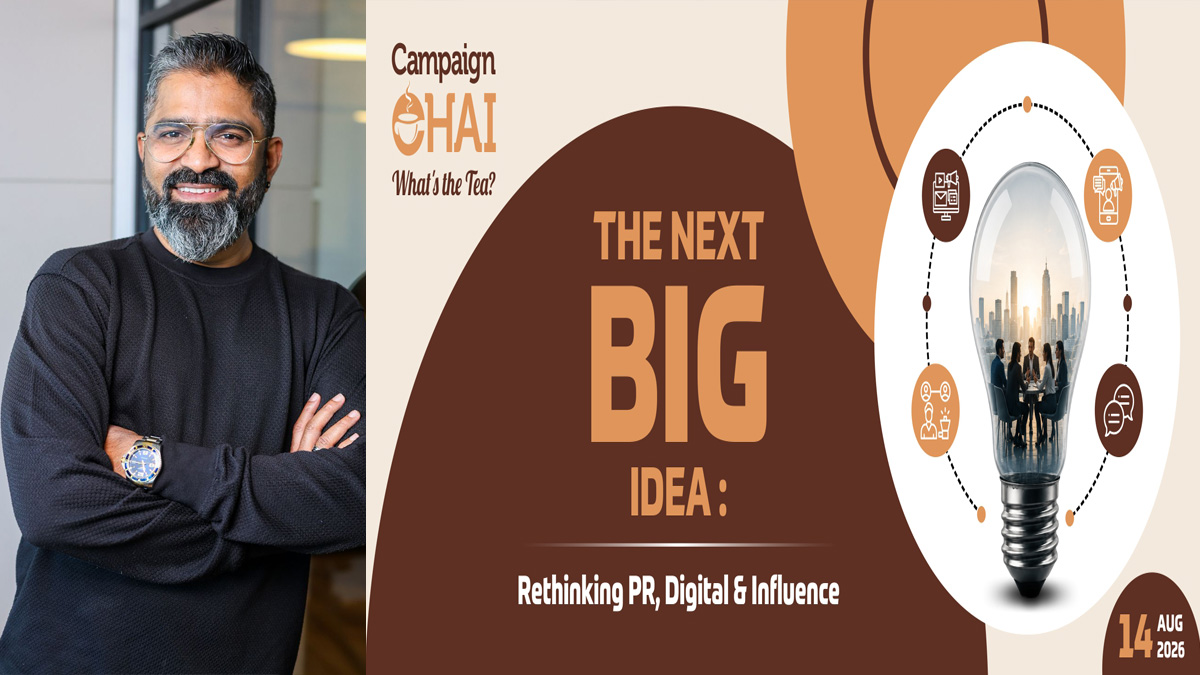
MUMBAI: As the PR and communications industry moves beyond traditional media metrics, agencies are increasingly being challenged to demonstrate how reputation, visibility and strategic communication contribute to actual business outcomes. At the same time, the rise of creators, AI-driven discovery, fragmented media ecosystems and faster-moving crises is reshaping the way brands approach communications.
Vikram Kharvi, CEO of Bloomingdale PR, shares his perspective on measuring PR impact, drawing the line between creative provocation and brand backlash, working with fractional leadership, managing micro-creator ecosystems, predicting reputation risks, executing international PR and building resilient agency teams.
On PR and business impact
Kitna deti hai.
That is how we judge cars in India and it is now how we judge communications. Fair enough. But mileage is the wrong metric for something that is not the engine.
PR does not generate revenue. It changes what revenue costs.
Watch what happens when a founder becomes credible in a category. The sales cycle shortens. The discount conversation gets shorter. Talent applies without a recruiter fee. The investor takes the second meeting. None of that appears in a clippings report and all of it appears in the P&L.
So we stopped defending impressions. We tag the work to a number the CEO already reviews monthly. Branded search. Inbound enquiry quality. Time to close.
One new number matters more than the rest. When a buyer asks an AI assistant to recommend a company in your category, do you appear, and what does it say about you. There is no media buy for that yet. Your last three years of coverage already decided it.
Attribution obsession has a cost. Teams start chasing the measurable instead of the meaningful. That is how you end up with a brand nobody can describe and a dashboard everybody admires.
On creative PR stunts and brand equity
The Yes Madam episode is remembered as a fake layoff. That was not the failure. The failure was the apology. The brand admitted it had used employee stress as a device, then pivoted to selling a stress relief service. The punchline and the product were the same thing. Once the audience saw the machinery, everything the brand said afterwards sounded like a setup.
My test is one line. When the joke lands, who is holding the bill.
Good provocation makes the brand pay. The brand looks silly, takes the risk, absorbs the discomfort. Bad provocation makes the audience pay. It borrows a real fear people live with and rents it for a week of reach.
Job loss in India is not a device. Ask anyone who has told their family they are between roles.
Amul has been sharp and topical for over fifty years without once making its audience the subject of the joke. That is not caution. That is the discipline of knowing whose anxiety you are allowed to use.
Equity is not built by being consistent in your messaging. It is built by being predictable in your character while staying unpredictable in your creative. Most brands do the reverse.
Attention is cheap now. Benefit of the doubt is the scarce asset.
On working with fractional CMOs
Everybody frames this as a chemistry problem. It is a clock problem.
A fractional CMO is judged in ninety days. Reputation moves in nine hundred. Both parties are being honest and both are optimising for different calendars. That is where the friction actually lives.
I will say something unpopular. Fractional leaders are usually better clients than permanent ones.
They arrive without internal politics. They have no history to protect. They kill weak work faster because their reputation is portable and they cannot afford a bad quarter.
A permanent CMO can survive mediocre communications for two years. A fractional one cannot survive one bad review call.
What we insist on is unglamorous.
A named decision-maker for a crisis at 11pm, written down, because the advisor is with another client that night.
A permanent internal owner, however junior, who holds continuity. Institutional memory cannot live inside a consultant’s laptop.
A handover file, updated monthly. Positions taken. Journalists who trust us. Statements we will never repeat.
The risk is never their capability. It is that nobody plans for the day they leave. The next advisor arrives, calls everything legacy thinking and you restart a reputation that had finally started compounding.
On micro-creators and compliance
Ask any agency how many creators they manage. If the answer is in the hundreds, they are managing a spreadsheet.
Governance has a ceiling. A team can genuinely brief, approve and audit a limited set of people. Beyond that you are not managing creators. You are hoping.
The compliance risk is also not where people look. Creators rarely invent claims. They repeat what the brand team wrote in the deck, in their own words, badly. The breach usually originates inside the client’s office and lands on someone else’s account.
So we build a claim bank before a single creator is briefed. Approved language. Banned language. Words regulators have already flagged in that category. Health, finance and beauty get the strictest lists because that is where the notices arrive.
Disclosure is a payment condition, not a polite request. No verified label, no fee released. One cycle of that solves what fifty follow-up messages will not.
We audit a sample weekly. Not everything. Enough that nobody knows whether they are in the sample.
Two breaches and we do not rehire. That clause changes behaviour more than any briefing call.
Follower count is the least useful number on the sheet. Saves and comments tell you more.
On predicting reputation risks
Sentiment dashboards do not predict crises. They confirm them, politely, a few hours late.
The genuinely useful signals are boring and mostly offline.
Your customer service ticket categories. When one complaint type rises and nothing has changed in the product, something is breaking in the field.
Your employee review pages. Three similar posts in a month is not bad luck. It is a pattern with a countdown attached.
Your dealer and distributor groups. In FMCG and auto the trade always knows first. They just do not have your number.
And the one most brands miss entirely. Indian crises rarely start in English. They start in Marathi, Kannada, Tamil, Bhojpuri. By the time an English publication picks it up, the story has travelled three days. Most monitoring setups are still tuned to English keywords and a competitor list.
Here is the honest limit. The crisis you can forecast is rarely the one that damages you. Prediction buys preparedness, not prophecy.
What actually saves companies is recognition speed. I work to a three, thirty, three discipline. Three minutes to judge real or noise. Thirty minutes to align the room. Three hours to a first response.
You cannot build a well when the house is on fire.
On taking Indian PR global
The single biggest error is the follow-up email.
Indian brands export their cadence. Pitch, follow up, follow up again, call the desk, send a WhatsApp. That persistence is normal here and career-ending there. One pitch, one time, and the second nudge puts you in a filter permanently.
Underneath that sits the deeper mistake. Indian companies send Indian news abroad.
A funding round, a new plant near Pune, a leadership appointment. Genuinely important to you. Completely irrelevant to a reporter in London whose reader has no stake in it. The news is not the story. The story is what your news says about their market.
Two things fix most of it.
Keep the positioning identical. Change the proof entirely. Same argument, local evidence.
Put a spokesperson on their clock, not ours. The most common complaint I hear about Indian brands from foreign journalists is response time. We are asleep when their deadline hits, then surprised we are not in the piece.
One more. Many agencies sell a global network in the pitch and deliver a media list on the account. Ask for the name of the person who will make the call in that market. Watch what happens.
On the KPIs that matter in 2026
Start by deleting advertising value equivalence. Formally discredited for over a decade and still appearing in decks, usually in a green box.
The mistake in this question is the word key. Most C-suites want a longer list. They need a shorter one. If your CFO cannot use a number in a sentence about the business, cut it.
What I would put in front of a board.
Share of search against your top three competitors. It moves before revenue does.
What machines say about you. Ask an AI assistant to recommend a company in your category. That answer is your new front page and you did not write it.
Message pull-through. Not how often you appeared. How often your actual argument appeared.
Presence in the ten outlets your buyer, investor or regulator reads. Ten. Not two hundred.
Time to recovery. Days between the first negative story and the first neutral one. This is the truest measure of communications strength I know.
Employee advocacy reach. Fifty people posting honestly beats most paid campaigns.
A vanity metric is not one that flatters you. It is one that cannot change a decision.
On building resilient agency teams
We did not lose talent to tech platforms. We trained talent for tech platforms and forgot to charge for it.
Agencies are the finishing school of this industry. We teach people to write under pressure, handle a hostile journalist, brief a nervous CEO at midnight. Then we act surprised when someone offers double for a tenth of the load.
The structural problem is the model. Agencies grow by adding people to accounts. Platforms hire a person to own a problem. One feels like a career. The other feels like a rota.
Three shifts I believe in.
Fewer accounts per person. Someone handling six accounts produces coverage. Someone handling two produces counsel. Only one of those justifies senior fees.
A specialist ladder. Today the only promotion available is people management. We lose exceptional writers and strategists by forcing them to become mediocre managers.
Visible credit. In-house teams give people their name on the work. Agencies still hide talent behind the logo, then wonder why LinkedIn poaches them.
On resilience, my view is narrower than most. Resilience is not endurance. An agency where the same four people carry every crisis is not resilient. It is lucky.
Resilience is documented judgement. Positions written down. Second-in-commands who have actually run a live crisis instead of watching one. Client relationships owned by two people, never one.
The cultural fix is the hardest. Our industry treats availability as a proxy for commitment. Until responsiveness at midnight stops being the measure of seriousness, we will keep exporting our best people to employers who respect their weekends.
In an industry increasingly measured by speed, visibility and an ever-growing number of metrics, Kharvi’s argument comes back to a simpler idea: communications should ultimately help businesses make better decisions. From measuring share of search and message pull-through to tracking recovery time and employee advocacy, the focus is shifting from how much a brand is seen to what that visibility actually changes. And as agencies look to retain talent and prepare for the next crisis, resilience, in his view, will depend less on endurance and more on documented judgement, shared ownership and the ability to build systems that outlast individuals.