Television
Television thrives in India’s digital age with growing reach and influence
After predictions of decline in the early 2020s, India’s broadcast industry is proving its enduring strength and adaptability

MUMBAI: For much of the early 2020s, broadcast TV was treated as an ageing medium waiting to be buried by streaming platforms and smartphones. The story seemed settled. Viewers would migrate, advertisers would follow, and the big screen in the living room would quietly lose relevance. Yet in 2026, the script looks strikingly different. Linear television in India is not shrinking into nostalgia. It is reasserting itself as a powerful, evolving mass medium that still commands scale, attention and cultural clout.
The shift is not driven by sentiment but by behaviour. While media consumption has evolved and choices have multiplied, television has remained a constant, providing structure and familiarity in an otherwise fragmented ecosystem. The endless scroll through OTT libraries often produces fatigue rather than freedom. Many spend more time choosing than watching. Decision fatigue has crept into entertainment, and structured programming suddenly feels convenient. Scheduled content removes the burden of choice and restores a sense of flow to viewing.
“Appointment viewing continues to thrive because compelling content still inspires audiences to tune in together, a behaviour that remains consistent across both metros and Bharat,” says Sujata Dwibedy, CEO of Dentsu X India. In metros, where OTT fatigue and choice overload are rising, she notes that linear TV continues to offer clarity and more intentional viewing.

“The modern viewer is exhausted by the paradox of choice, making the structure of a scheduled broadcast feel like a luxury once again,” says Rajesh Sethi, partner and leader for media, entertainment and sports at PwC.
Sethi argues that appointment viewing now feels like a luxury. In a cluttered media environment, curated schedules offer relief. That relief translates into predictable audience spikes and consolidated reach that advertisers still value. “While streaming offers infinite options, appointment viewing remains resilient because it replaces aimless scrolling with a deliberate ritual, cutting through decision fatigue with the power of anticipation.”
“Linear television continues to deliver unmatched daily reach, especially in markets like India, where it remains part of household viewing routines,” says L V Krishnan, chief executive of TAM Media Research. “Rather than TV versus OTT, the reality is that both platforms increasingly work together, especially when viewed from the lens of the living room screen.”
The numbers reinforce the mood. Kantar Media Compass estimates that while digital-only users have climbed to about 313 million, roughly 689 million Indians continue to watch linear television regularly. Broadcast TV remains one of the most used daily media platforms in the country, a reminder that scale still matters in a market as vast and diverse as India.
BARC India’s data shows just how vast. The television universe has expanded to over 230 million households, reaching close to 900 million individuals. Dwibedy points out that the number of TV viewing households continues to climb, with India reaching 230 million TV homes in FY2025. No other medium in India offers that kind of footprint. For national campaigns, election coverage, sports tournaments or mass-market product launches, television still delivers unmatched reach.
She adds that weekly BARC data continues to reinforce television’s unmatched scale. In Week 6 of 2026, the top 10 GEC channels including Star Plus, Zee TV, Star Utsav, Sony TV, Sony SAB and Colors reached approximately 74.3 crore viewers, underscoring TV’s enduring mass impact in a fragmented content world.
Measurement has also grown sharper. Since 2025, BARC’s weekly unrolled data system has replaced older rolling averages, giving advertisers more granular and timely insights. This has narrowed digital’s historical advantage in real-time measurement and made TV planning more dynamic. Campaign optimisation on television is no longer slow or blunt. It is increasingly data-led.
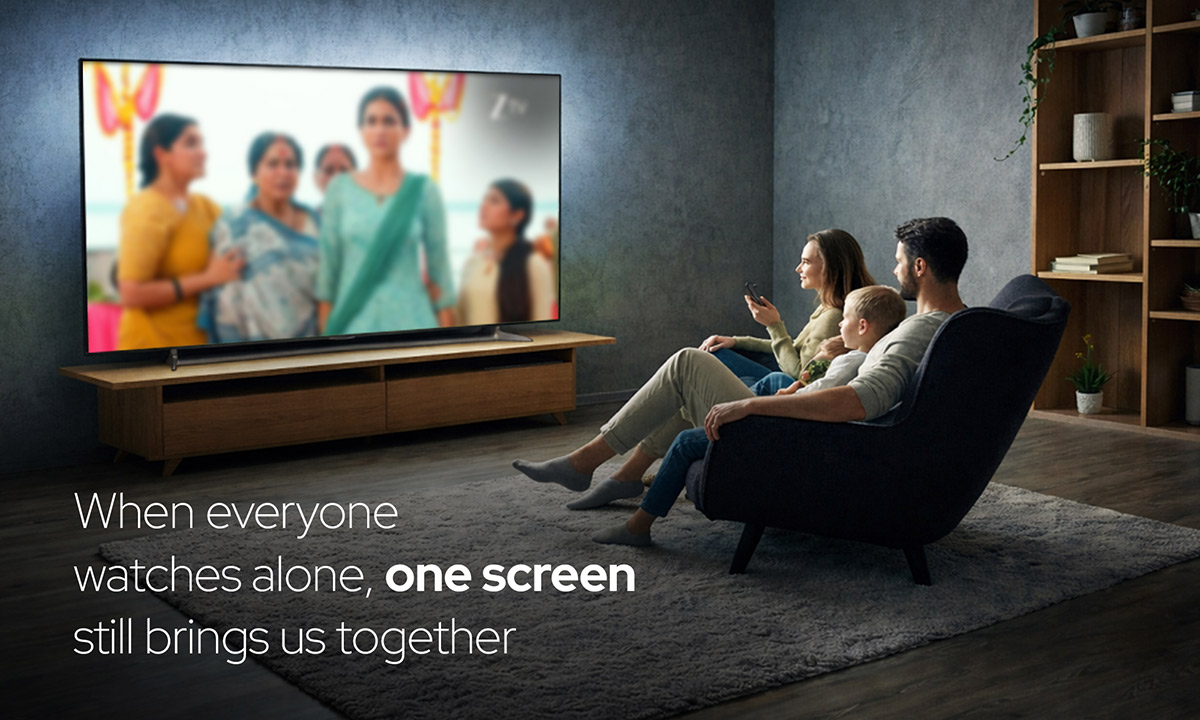
Television also retains a social quality that personal devices struggle to replicate. Prime-time co-viewing averages about 3.4 people per set. Families still gather around serials, reality shows and cricket matches. News events unfold collectively. Advertisements land in shared spaces, often triggering immediate discussion or recall. The living room remains a site of communal media consumption, especially in multi-generational households.
In Bharat’s expanding markets, the growing adoption of connected televisions is reshaping viewing habits. According to Dwibedy, India’s smart TV category demand is consolidating around larger and premium screens, with 33 to 43-inch models alone capturing over 55 percent of the market, signalling accelerated digital TV upgrading across Tier 2 and Tier 3 households. Rising internet penetration, she adds, is complementing not replacing television, with digital expansion shown to drive higher TV consumption across both urban and rural audiences.
Advertisers have noticed. Even as digital ad spending grows, television continues to attract strong investments from fast-moving consumer goods, retail and e-commerce brands. Linear TV remains a top-of-funnel driver capable of building salience at scale. For brands seeking trust and memorability, the big screen still delivers.
“For advertisers, this convergence of high-intent metro audiences, expanding Bharat adoption of connected TVs, and content driven collective viewing creates an environment where attention is natural, recall is stronger, and storytelling carries far deeper emotional resonance,” Dwibedy explains. In a world dominated by endless scrolling, she argues, appointment viewing remains a more meaningful and strategically potent path to impact.
Academic research lends weight to this resilience. A January 2026 study titled “Future of TV in India,” by Viswanath Pingali and Ankur Sinha of IIM Ahmedabad uses statistical modelling to track long-term trends. The projection is striking. India’s TV audience is expected to reach about 1.03 billion by 2029, growing at roughly 2.37 per cent annually. Rather than being cannibalised by the internet, television often benefits from it. Internet access can make television more attractive as a primary household screen, not less.
The study also highlights the role of rising prosperity in lower-income states. For every Rs 1 lakh increase in state GDP per capita in such regions, tens of millions of new viewers are projected to join the TV universe over time. As incomes rise and infrastructure improves, television often becomes one of the first major household technologies adopted.
Television’s influence extends beyond commerce. Same-language subtitling has supported literacy gains. Exposure to television content correlates with greater awareness of financial independence and evolving gender norms. The medium continues to function as a carrier of social messaging and behavioural cues, especially in regions where other information channels are limited.
Then comes connected television, the quiet bridge between old and new. The Ormax OTT Audience Report 2025 shows India’s CTV base surging to about 129.2 million users, after year-on-year growth approaching 85 to 87 per cent. Tens of millions of homes now stream digital video on television screens. For many households, the TV is becoming the central digital screen rather than a purely broadcast device.
These CTV homes, estimated at roughly 35 to 40 million, increasingly treat the television as a hub for both streaming and satellite content. In several markets, CTV has emerged as the second most used screen for digital video after smartphones, overtaking laptops and tablets. The result is not a replacement of television but an expansion of what television means.
Advertising strategies are adapting accordingly. Marketers can now pair the reach of linear TV with the targeting capabilities of digital video on the same screen. Hybrid campaigns blend mass awareness with precision, making the television set a versatile marketing platform rather than a legacy channel. As Sethi notes, “This shift is driving a hybrid future where OTT platforms are integrating live sports and weekly ‘event’ drops to recreate a sense of urgency and community.”
Krishnan argues that linear TV’s strength lies in simplicity and habit. “Viewers can switch on and watch without navigating multiple apps. It remains the shared family screen where news, regional programming and prime-time shows become collective experiences. Cost, internet access and familiarity with traditional viewing keep it relevant for large audiences.”
He adds that television’s biggest edge is appointment viewing. “Live sports, reality finales, elections and breaking news create urgency and real-time participation that on-demand platforms are still developing. These moments bring simultaneous mass audiences, making them culturally significant and highly valuable for advertisers seeking scale.”
None of this suggests digital is weak. India’s OTT universe is estimated at about 601 million users, including around 148 million paid subscriptions. Digital video remains powerful, particularly among younger audiences. Kantar notes that about one in four Indians can be classified as digital-only users. Viewers aged 15 to 34 lean heavily towards online platforms and social video. Media consumption is fragmenting, not reversing.
Yet fragmentation has not dethroned television. Instead, it has clarified its role. TV is where scale lives, where families still converge, where brands achieve broad visibility and where cultural moments become national conversations. Streaming offers depth and personalisation. Television offers breadth and a shared experience. The two increasingly coexist.
“The industry has realised that if everything is available all the time, nothing feels special. It is the event that creates cultural relevance and drives long-term subscription retention,” Sethi says.
The obituary writers underestimated television’s ability to adapt. The medium has absorbed digital tools, improved measurement, embraced connectivity and retained its social core. In India’s media economy of 2026, television is not a relic. It is a resilient platform evolving in step with its audience.
The big screen in the living room is no longer just surviving the streaming era. It is shaping it. And as India marches towards a billion-viewer television market, the so-called old medium looks less like yesterday’s technology and more like tomorrow’s anchor.






Sports
Kaacon Sethi retires as CMO of Dainik Bhaskar Group after 12 years
Led brand, content and revenue innovation across media, sports and entertainment.

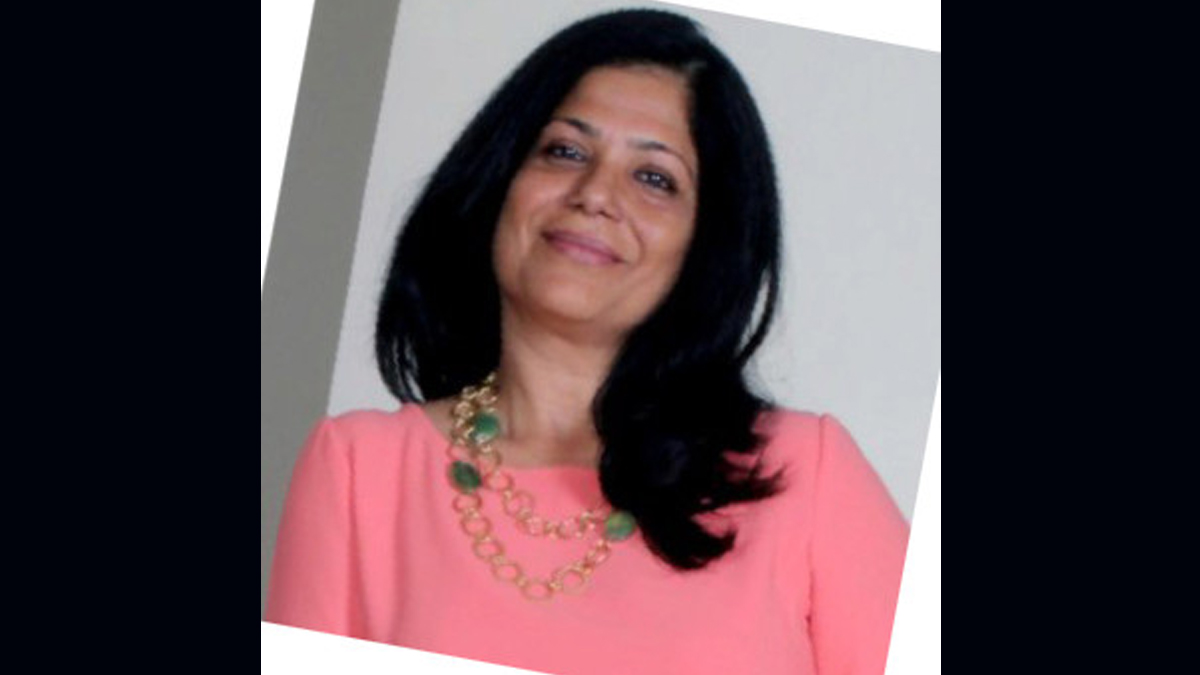
MUMBAI: After nearly a dozen years of shaping narratives and building brands, Kaacon Sethi is signing off from the marketing playbook at least for now. The long-time chief marketing officer at Dainik Bhaskar Group has stepped down, bringing to a close a 12-year stint that saw her steer the organisation through evolving media and revenue landscapes.
During her tenure, Sethi worked at the intersection of advertising, content and commerce collaborating closely with advertisers to craft client solutions and develop content-led offerings that went beyond traditional formats. Her role increasingly focused on aligning editorial strengths with brand objectives, unlocking new revenue streams in a media ecosystem undergoing rapid transformation.
Her journey at Bhaskar, she noted, was among the most defining phases of her career, one that allowed her to build, experiment and contribute across marketing, branded content and business strategy. From strengthening market presence to driving newer initiatives such as “Urban Bharat”, her work reflected a broader shift in how media organisations approach audience engagement and monetisation.
Sethi also highlighted the collaborative environment within the organisation, describing it as a space where ideas were tested, debated and pursued with conviction, an approach that helped shape several of the group’s marketing and content innovations over the years.
With experience spanning media, entertainment and sports marketing, her exit marks the end of a significant chapter not just for her but also for the organisation’s evolving marketing strategy.
For now, Sethi plans to take a short break before moving on to the next phase of her career. If the past 12 years are any indication, the pause may be brief but the impact is likely to linger longer.






