
iWorld
OTT business is a ‘lucrative market’ in India: Shemaroo’s COO-digital businesses Zubin Dubash
Zubin believes content is a crucial input for the growth of a business.


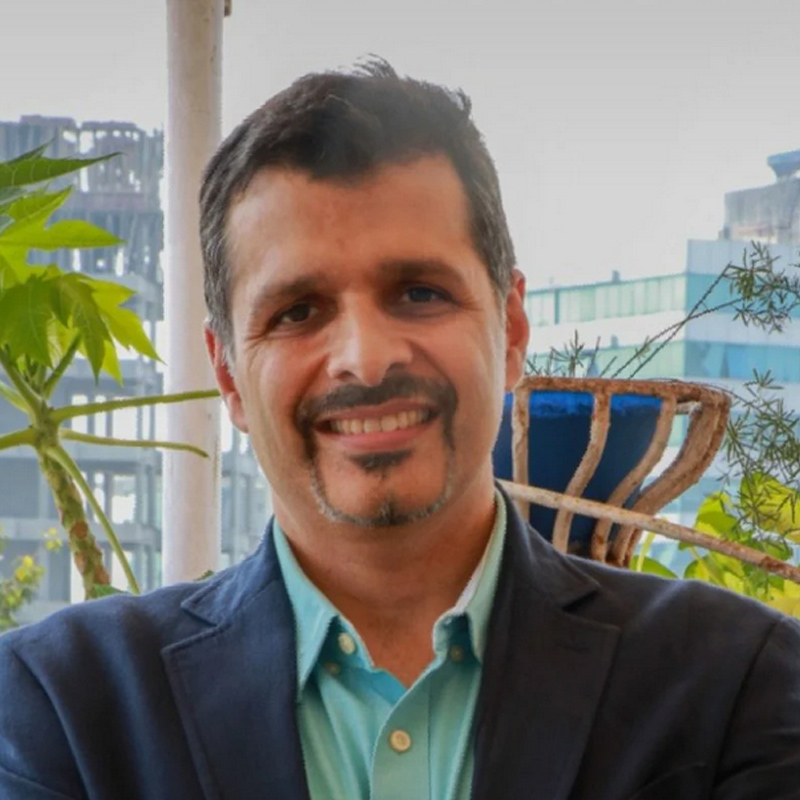
Mumbai: Shemaroo has been a pioneer in the Indian media and entertainment space since its inception. With the advent of digital media, Shemaroo is spreading its wings throughout the market and showing robust growth in the digital space. This could not have been possible without Zubin Dubash, the real man behind Shemaroo’s digital growth story.
In 2017, Shemaroo’s chief operating officer of digital businesses Zubin Dubash took charge of the position. Shemaroo’s digital platforms are growing stronger day by day. In the last five years, Zubin has been working tirelessly to increase the subscriber base of the company’s flagship streaming entertainment platform ShemarooMe and bestow content that matches the audience’s taste. ShemarooMe is available in over 150 countries. Its extensive content library includes Bollywood, regional, devotional, and children’s genres.
During the first two years after its release, the app’s focus was on increasing reach and awareness through partnerships. In FY’22, the revenue breakdown of the company’s digital media contributed 48 per cent while traditional media contributed 52 per cent.
The company has also launched ShemarooMe Gujarati, which includes an impressive slate of direct-to-digital movie releases, plays, and original web series starring leading actors. Over 52 new titles were released on the platform in 2021. ShemarooMe Gujarati also expanded its footprint outside India with its presence in the US, the largest market for the Gujarati diaspora.
Shemaroo originals such as Yamraj Calling, Goti Soda, and Vaat Vaat Ma, released on the platform, were well received by the audience. They are gearing up with a new content lineup like 53 Mu Panu, Cash Che To Aish Che, MatsyaVedh, Leela Natwar Ni, What The Fafada Season 01, Rajyog, Baap No Bagicho and Yamraj Calling Season 02.
The company reported that digital advertising revenue increased by 29 per cent in 2021 due to traditional advertisers’ increasing their investments in digital sales channels. 40 million households paid for 80 million video OTT subscriptions in 2021, contributing to 27 per cent growth in the number of subscriptions and 27 per cent growth in revenue. 322 million Indians consumed content that came bundled with their data plans.
In an exclusive conversation with Indiantelevision.com, Dubash shared insights about Shemaroo’s legacy, its digital journey, the OTT market and its future, and digital media opportunities and challenges.
Edited Excerpts:
On the growth of ShemarooMe
Zubin: Our focus is on the needs of the customer; it works for us. To effectively communicate with and serve the customers, it is important for us to fully comprehend their needs.
We make sure that, whatever the issues are, we provide a solution. We also ensure that the solution is developed correctly and conveyed, as well as that the consumers receive service without any issues. We concentrate on what the customers’ desires are and, based on that, we develop our proposals and solutions.
We have cutting-edge technology. The tech stack is based on numerous technological elements, and we are active on several online platforms. As a result, everything is available and distributed, and our technical support is excellent in terms of all the other elements, including analytics, technology, platform, transport, and back-end content. The entire technology stack is therefore extremely well-built to scale up at a 3x or 2x capacity within a week to 10-day period. Therefore, we developed our agile stack there.
On the legacy of Shemaroo
Zubin: We have been in business for 60 years and are well-known to people of all ages, from 18 to 60. As a result, we cater to the audience’s various segments. Our strategy is also quite straightforward. We offer video content in a variety of genres and languages.
Therefore, we follow the customer to ensure that we have a sufficient and increased presence on the platform where the client visits and utilises whatever device or technology to consume content. We are currently using our broadcast channels. As a result, we will be present to provide content to the user wherever they are. It is clearly reflected in our vision.
On his journey
Zubin: We’ve seen a multifold increase in business on all three platforms (YouTube, Facebook, and OTT). Since I joined, I have been part of building up everything, from setting up a team and planning strategy, to thinking about what the entire vision & roadmap is, and getting the tech on board, including everything. So it started with B2B to see what would happen, and then we moved on to B2C, where we have many other plans. So it has been a slow but spectacular ride since 2017. We’ve been riding the wave of digital adoption, ensuring that customers appreciate and discover every such platform across the digital landscape.
On the model
Zubin: We are a subscription-based platform. And, of course, we began in 2019, where we continued to be B2B but focused on driving subscription video on demand (SVOD) through partnerships. If we want to go from B2B to B2C, we have to wait a couple of years to showcase the entire product and offers. Additionally, we ensure that our distribution is in place through all of the B2B partnerships with telecom, direct-to-home (DTH), Internet service providers (ISP), and other players.
In 2021, we launched our B2C forum, where we began to learn about what customers wanted, as it was directly based on a specific cohort that we identified, and that cohort was that we wanted to focus on one regional market. We’ve been growing rapidly over the past five years at a rate of roughly 200 per cent annually. We’ve expanded more than 10 times in terms of utilisation, which is a really large increase in overall consumption.
On the ShemarooMe Gujarati
Zubin: There is a significant need in the Gujarati market to be driven by Gujarati content, and there are formidable players out there who can sustain and provide consistently excellent content. We devised a proposition that stated we would give you one piece of content every week, so whether it’s a blockbuster hit, a web series, or a play, we promised this weekly.
From the Gujarati audience’s perspective, we speak to customers, understand what they want, and look at different types of profiles; what the overall family audience wants to watch; what individuals want to watch; and what YouTube viewers want to watch. Then, based on that, we configure our content strategy and proceed from there. So this will be the same formula that we’ll use for different cohorts and regions that we develop as we go.
On content commissioning
Zubin: We operate under a variety of models. We commissioned our content on various models, and we worked with producers to get all of their films on the OTT platform and acquire them for long-term or perpetual rights. We also work on revenue share deals, so it’s a mixed bag of everything we work on, and we’re willing to collaborate with the entire ecosystem.
I would say we work as good partners in a professional approach with the entire ecosystem of content providers and writers. We want to create a level playing field to provide a pitch for us, and we have an opportunity to select it with the customers.
On the challenges
Zubin: Regional business is quite lucrative. There is such an acute need for content, that there will always be difficulties. As a result, you will need to manage your profit and loss appropriately. Additionally, every organisation will be considering the difficulty of acquiring customers while staying within the parameters necessary to maintain profit and loss. Every industry is dependent on the ROI and without profit do we have the appetite to burn?
On the opportunities
Zubin: We haven’t explored all areas of OTT and only got success in the Gujarat region as of now, there is enough room to expand and we will do that horizontally. We want to cater to all audiences who do not get enough content but can pay for it.
Undoubtedly, 5G will be here over the next few years. As a result, many new modules will emerge, and so will numerous new revenue streams.
On arrival of 5G
Zubin: We collaborate closely with telecommunications companies. For us, it is essentially about extending and cementing our relationships as well as providing more facilities, content, and quality. Without a doubt, 5G and any new technology for enhancing data gathering simply add a significant or exponential effect and a factor of growth to this business.
On the competition
Zubin: There are 40 OTT players, and they all have different types of content and approaches to reaching out to consumers. So, in the end, it’s essentially a supply of digital content for consumers to consume. Each OTT will have a unique strategy for the audience they are attempting to reach, where there is enough and more room for everyone to participate and grow.
I don’t see why there should be a contest. And in terms of competition, as of now, we’ve made sure that we’re playing a digitally original game, the Cohorts’ game, focusing on indie web series (that is, Indian web series). Bollywood is our forte and we will explore many more new categories. So competition is beneficial. It’s extremely useful. And it’s a good thing to have because it keeps you on your toes and forces us to make the entire industry grow.
On the OTT market
Zubin: It’s a lucrative market. There are about 80 to 90 million subscriptions in India, and at least about 40 to 50 million households have at least one OTT subscription. This is just the beginning. So the sky’s the limit. We’ve got 450 million video users or digital video users in India, and you have at least 850 million data consumers. So, as 5G comes in, there will be a huge impact on the overall streaming experience.
The lessons have all been learned. Therefore, when OTT first emerged, it was about changing people’s viewing habits away from television to smaller screens and educating them on the possibility of viewing long-form material on these screens. Shemaroo started with an advertising-based model, but now it is a subscription-based model.
On the devotional genre
Zubin: We have a lot of content on live shrines. So we take the live feed from the shrines and upload it directly to our OTT platform so that customers can access it. During the Ganesha festival, we live-streamed Lal Baug ka Raja, and these audiences aren’t being served by the market as a whole. Most of them are only getting an indie web series or south dub. However, this type of content is underserved. That’s where we come in to make sure customers get what they’re looking for.






