iWorld
YouTube makes its case at Goafest 2026: reach faster, sell smarter, own your narrative
YouTube makes its case at Goafest 2026: reach faster, sell smarter, own your narrative


GOA: If Indian advertisers are still planning their media calendars around appointment viewership, Anurag Pasi has a number for them: one-third. That is how much of the viewership that India’s big-ticket impact shows commanded in 2017 they retain today, despite roughly Rs 500 crore in annual advertising spend still chasing them. It was the sharpest line from a sharp session.
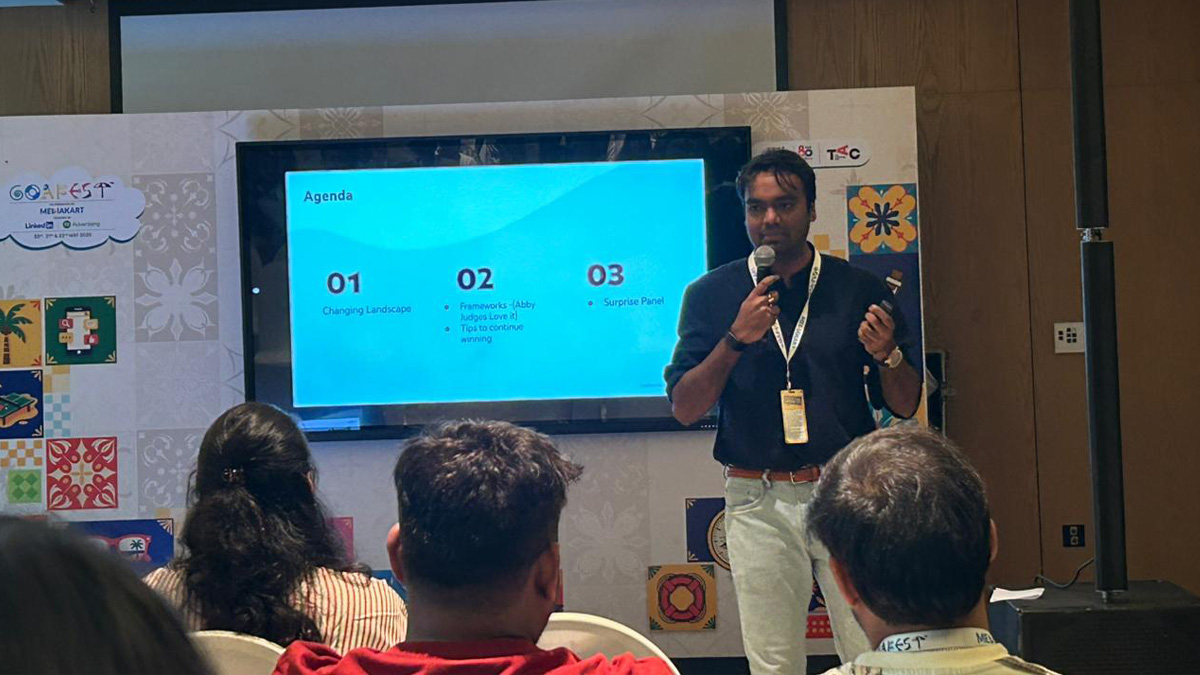
Pasi, content solutions and sponsorship lead at YouTube, took the stage at Goafest 2026 for a masterclass titled Captivate to Convert: Mastering YouTube’s High-Impact Engine, and spent an hour systematically laying out the assumptions that should now govern how Indian brands buy media.
His central argument was structural. Audiences, he told the room, no longer organise their viewing around a broadcaster’s schedule. They watch what they want, when they want it, driven in part by the fear of spoilers and in part by the sheer abundance of choice. India now has 15,000 YouTube channels with more than a million subscribers each, compared with roughly 800 television channels reaching 800 million people. The viewership has not disappeared; it has atomised.
That fragmentation has consequences for how brands measure reach and how quickly they need to achieve it. Where India’s biggest reality shows take approximately 31 weeks to reach 120 million people, YouTube’s Masthead format can do the same in a single day. The platform’s connected TV Masthead delivers 30 million premium viewers; a combined video campaign across formats reaches 350 million. The metric that matters, Pasi argued, is no longer raw reach but reach within a defined time window.
On attention spans, he pushed back on a fashionable concern. The problem, in his telling, is not that consumers cannot focus; it is that their tolerance for unremarkable advertising has collapsed. People watch long-form podcasts for two to three hours without complaint. Attention is available; the obligation to earn it is simply higher than it used to be.
He proposed three priorities for the next six months. The first was maximum reach in minimum time, particularly relevant for product launches and sale periods. The second was shoppable formats; YouTube’s Masthead and CTV units now carry direct purchase functionality, allowing brands to combine scale with transaction in a single placement. The third, and most framework-heavy, was what he called owning the narrative through a tiered creator strategy.
The tier model drew a distinction that Pasi said most marketers still blur. Tier one properties, large creators with genuine cultural authority and a premium on CPM, anchor a campaign and lend it stature. Tier two is contextual, connecting a brand to a relevant niche or moment. Tier three is conventional influencer marketing, useful for scale and engagement but not, he was emphatic, a substitute for impact. Brands that collapse all three into one budget line and call it an impact strategy are, in his assessment, making a category error.
On frequency, he suggested that on a standard cricket campaign a consumer might be exposed to the same ad 20 to 25 times. Refreshing creative mid-campaign and using creator content to validate the brand message is, he argued, no longer optional.
YouTube also used the session to announce its expanding content slate in India. A partnership with Balaji Telefilms will bring four original shows exclusively to the platform, with full integration and sponsorship options modelled on traditional television buying. India’s Got Talent will also stream exclusively on YouTube, alongside a global FIFA content partnership. The Star Screen Awards, which moved to YouTube last year, generated 1.5 billion views, a data point Pasi deployed to suggest that live and event-driven content has not lost its pull, only changed its address.
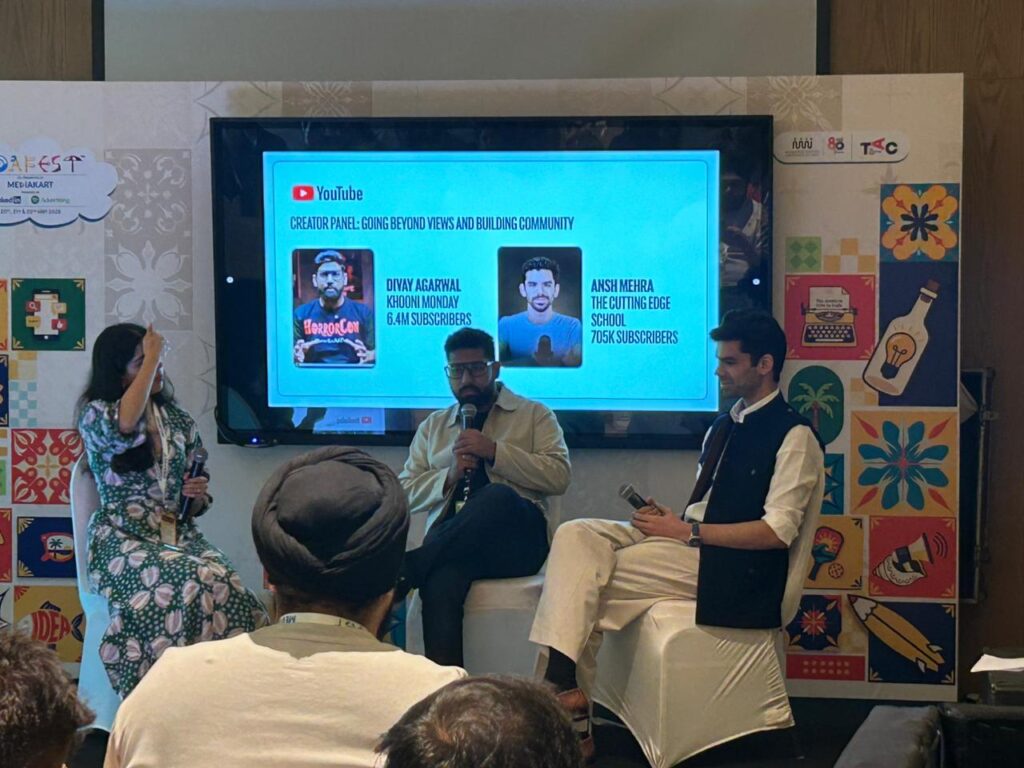
The session closed with a creator panel hosted by Varsha Mohan, who leads creator partnerships at Google. Divya Agarwal, the face behind horror channel Khooni Monday with nearly 7 million subscribers and founder of creative studio TMV, spoke about her channel’s unusually balanced male-to-female audience split, rare in the entertainment category, and how an on-ground horror event in Delhi last year drew 20,000 paying attendees, illustrating how a loyal YouTube community can translate into real-world commercial activity. Ansh Mehra, who runs The Cutting Edge with seven lakh subscribers and trains enterprises in AI across India and the UAE, made the case for long-form trust-building as the foundation for high-ticket course sales, a business he said would have been impossible to build on shorter-form platforms.
The message from the room was clear. Indian advertising has an opportunity to match where audiences already are. The platforms, the formats and the creators are ready. The budgets simply need to follow.