MAM
Are celebs killing their brand by endorsing too many products?

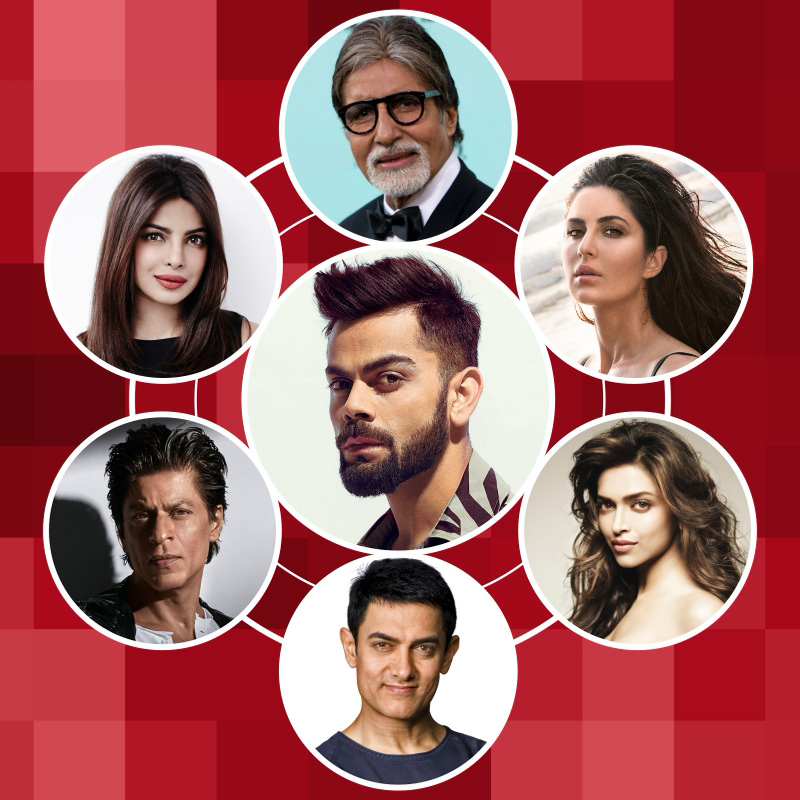
MUMBAI: How often do we come across an ad that features a Bollywood celebrity? Maybe, a lot, and it is mostly driven by people’s affinity for seeing their favourite celebrity on television, outside of movies.
The brand value added by a celebrity to the product is immediate and palpable. When a celebrity signs an endorsement deal with a company, an element of legitimacy is suddenly attached to the product simply because of the power of the name backing it up. Even though viewers enjoy watching their favourite celebs on screen advertising products, more often than not, the message becomes a little too much about the celebrity rather than the product itself.
Today, there are numerous celebrities endorsing multiple brands. Two such popular celebrities are Amitabh Bachchan and Shah Rukh Khan, who endorse multiple brands across a range of categories from fashion, food and beverage, consumer products and others.

Does a celebrity’s association with several brands reduce his brand equity? It is quite likely that their endorsements may not resonate as well when the same face woos them with the goodness of everything–from biscuits to oil to a direct-to-home connection to chocolates. The case is similar is for female celebrities. Deepika Padukone promotes Coca-Cola, L’Oreal, Venus and Axis Bank while Katrina Kaif backs Mango Slice, Veet, Pantene and Lux.
But the question here is whether these celebrities actually consume or use the products that they endorse. Highly unlikely is the quick answer.
Although the Advertising Standards Council (ASCI) has laid down guidelines for celebrity endorsements, not much seems to be followed in the industry. The ASCI’s guideline for celebrity endorsement states:
a) Testimonials, endorsements or representations of opinions or preference of Celebrities must reflect genuine, reasonably current opinion of the individual(s) making such representations, and must be based upon adequate information about or experience with the product or service being advertised.
b) Celebrity should do due diligence to ensure that all description, claims and comparisons made in the advertisements they appear in or endorse are capable of being objectively ascertained and capable of substantiation and should not mislead or appear deceptive.
Celebrities that do not abide by these guidelines have to pay a fine of Rs. 20 lakh or more according to the current limit for appearing in a single advertisement or a campaign or per year, whichever is more.

But the celebrity ad world isn’t entirely about the money after all and not every celebrity wants the limelight all the time. Some are picky about the brands they associate themselves with. Cricketer Virat Kohli and Bollywood actor Aamir Khan are paragons for this endorsement phylosophy.
According to a recent report by corporate advisers Duff & Phelps, Kohli is India’s most valuable brand surpassing even Shah Rukh Khan who held the title since 2014. While the early glamour may have pushed Kohli to advocate Pepsi and Fair & Lovely Men, he eventually decided to move away from these brands. He was signed up as the brand ambassador for Pepsi in 2011 but refused to renew the contract, which ended in April 2017, saying at the time that he would not ask people to consume something that he himself does not. Kohli said, “The things that I’ve endorsed in the past—I won’t take names—but I feel that I don’t connect to [the brands] anymore. If I myself won’t consume such things, I won’t urge others to consume it just because I’m getting money out of it.”
Many saw his move as a sign of a man who believes in himself and someone who has invested his mind, heart and body in his role as a leader in society. “I want to give something to people that I use myself. One of the reasons I decided not to sign Pepsi is that I have undergone a lifestyle change. It might have been big money for me and a very lucrative deal but I opted out as we need to have some thought behind the products we promote and we must understand that people trust us,” he added. He no longer endorses fairness creams or products of that genre since equating success with skin fairness goes against his values.
It is no coincidence that the number of celebrity endorsements has gone up in recent years. A 2015 study by Nielsen found that famous faces work best on millennials and gen Z– the two generations most likely to spend the most compared to their predecessors and with aims of having a topnotch lifestyle.
In 2014, Bachchan had also cut off ties with Pepsi after 16 long years of commitment, when a young girl asked him why he promoted a product her teacher branded as ‘poison’. Bachchan, having realised the impact on the minds of people, even urged his son Abhishek and daughter-in-law Aishwarya Rai Bachchan to be careful about their ties.
Studies have shown that consumers have better brand recall of products backed by celebrities. Celebrity backing adds awareness, trust and familiarity–important objectives for marketers to achieve. People believe that by using products their favourite celebrities endorse, they will be able to emulate their lifestyle.
Similarly, Aamir Khan has been known to be picky about which products he wants to endorse. Although the actor was associated with Coca-Cola, Godrej, Titan Watches, Tata Sky, Toyota Innova, Samsung, Monaco Biscuits in the past, he decided to move away from products that he does not believe in and does not consume himself.
The actor witnesses backlash after his intolerance comment in 2016 and the uproar impacted his endorsed brand Snapdeal that bore the brunt with more than 7 lakh customers uninstalling the app. Soon after the incident, Khan was removed as the India brand ambassador for Incredible India and was replaced by Bollywood actress Priyanka Chopra. The actor did not have any endorsements for nearly two years as brands did not want to associate themselves with negative publicity.
The actor was recently announced as the India and Pakistan brand ambassador for Chinese handset maker Vivo, which many see as his big come back. Brands of Desire CEO Saurabh Uboweja believes that Khan, as a brand, doesn’t need comebacks to make his point. “He is a brand in every way and on the contrary, it is a big opportunity for Vivo to establish itself as a mainstream brand,” he says.
While the over exposure does harm the brand equity of celebrities in the long term, being selective with endorsements is beneficial to the star as well as the brands.
Also Read :
Pepe Jeans launches India centric ad with Siddharth Malhotra
The ins and outs of femvertising
The influence of influencer marketing
Gender stereotyping remains the template for weight-loss ads