
TCHxVAM2026
Content powerhouses of tomorrow will hinge on guts, data and daring bets: TCH x VAM 2026
At TCH x VAM 2026, industry leaders debate AI, creators and the future studio model


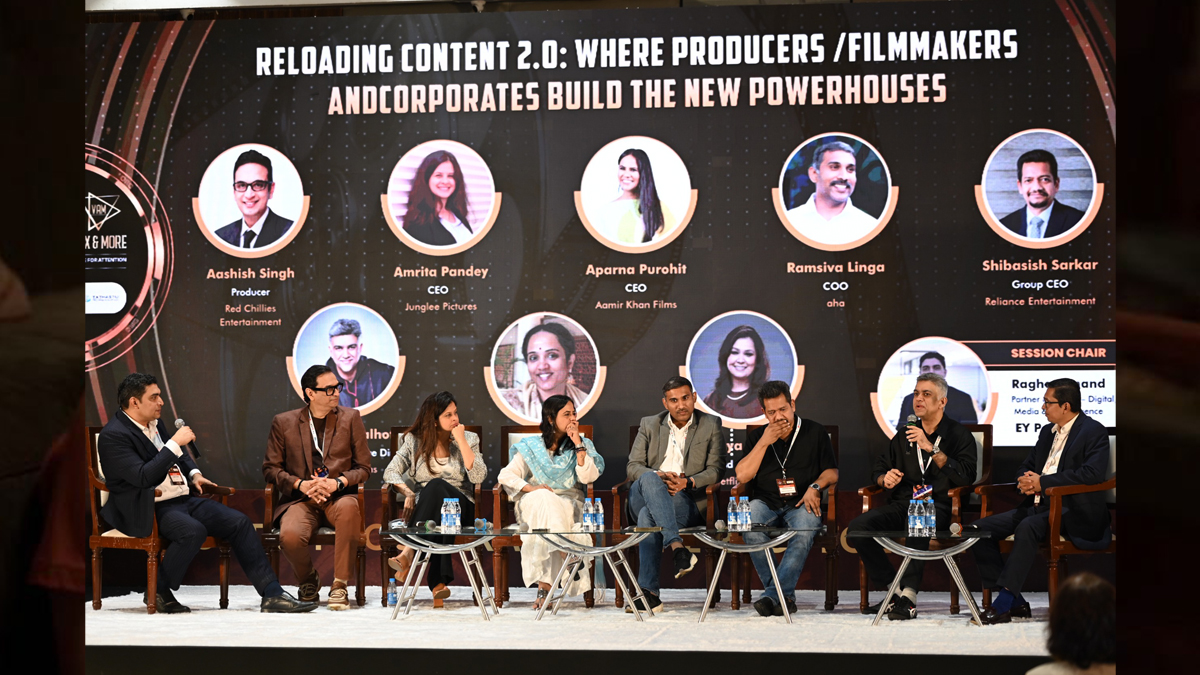
MUMBAI: In an industry where scripts are king but algorithms are increasingly calling the shots, the battle for attention is turning into a high-stakes balancing act between instinct and insight.
That debate took centre stage at The Content Hub x VFX & More Summit 2026 during a panel titled “Reloading Content 2.0: Where Producers/Filmmakers and Corporates Build The New Powerhouses.” The session brought together an influential mix of studio executives, filmmakers, producers and platform leaders, including Red Chillies Entertainment producer Aashish Singh, Junglee Pictures CEO Amrita Pandey, Aamir Khan Films CEO Aparna Purohit, aha COO Ramsiva Linga, Reliance Entertainment group CEO Shibasish Sarkar, Alchemy Films co-founder and creative director Siddharth Malhotra and Broadvision producer Roshan Ongole. The discussion was chaired by EY partner and leader, digital, media and convergence Raghav Anand.
The discussion quickly moved beyond box office numbers and OTT metrics into a broader debate about what truly defines a modern content powerhouse. While older studio systems once relied on distribution muscle or star-led banners, panellists agreed that the future would be shaped by a mix of creative conviction, scalable intellectual property, technology and the ability to monetise stories across platforms.
A recurring thread throughout the session was that content is no longer consumed in a straight line. Audiences now live inside stories through streaming, music, social media, merchandising and brand extensions. That shift, speakers suggested, is forcing studios to think less like film factories and more like ecosystem builders.
The conversation also explored how the meaning of a “studio” itself has evolved over decades. Traditional production houses, global streaming giants, creator-led brands and even technology platforms are now competing in the same arena. Panellists noted that in today’s landscape, a filmmaker’s personal brand can sometimes carry as much weight as a studio logo.
Yet amid all the talk of AI, analytics and scale, storytelling remained the undisputed centrepiece of the discussion. Executives argued that the studios that survive long term will be those willing to nurture bold stories and back fresh voices rather than merely chase trends.
The panel repeatedly stressed that data can inform decisions, but cannot manufacture originality. While streaming platforms increasingly rely on audience analytics to understand viewing habits, drop-off points and regional preferences, speakers warned that overdependence on algorithms risks flattening creative individuality.
Examples from recent theatrical successes were cited to illustrate how audience behaviour often defies conventional wisdom. Films that broke established “rules” around runtime, genre, violence or casting still emerged as major successes, underlining the unpredictability of cinema audiences. The consensus in the room was clear: instinct still matters.
The debate around corporatisation also generated sharp insights. Industry leaders argued that corporate backing is not inherently restrictive and, in many cases, has strengthened the ecosystem by recycling profits into fresh productions, talent development and larger creative opportunities. At the same time, filmmakers acknowledged that greenlighting projects has become increasingly complex, with creators now navigating financiers, platforms, pre-sales, rights deals and audience sentiment before a project even begins production.
Still, the mood remained optimistic rather than cynical. Panellists pointed out that barriers to entry have dramatically lowered for aspiring storytellers. Independent creators today can shoot content on minimal budgets, release work directly on digital platforms and build audiences without waiting for traditional studio approval.
Talent, too, was discussed beyond the narrow definition of star actors. Writers, directors, editors, cinematographers and composers were all described as critical pillars of the future content economy. Several speakers highlighted that successful talent-led studios thrive because they combine creative risk-taking with deep involvement in the storytelling process.
Technology and AI formed another major pillar of the discussion. Panellists acknowledged that artificial intelligence is already accelerating production cycles, enabling faster iterations and helping studios analyse audience patterns more efficiently. AI is also narrowing skill gaps in areas such as animation and visual production, making sophisticated workflows more accessible.
However, the panel stopped short of declaring technology the ultimate solution. Instead, the overarching view was that AI works best as an enabler rather than a replacement for human creativity. While data may point to patterns, speakers argued that emotional resonance, cultural instinct and storytelling soul still remain deeply human traits.
The session ultimately painted a picture of a future industry where the winners may not necessarily be the biggest studios, but the most adaptable ones. In the race for attention, the next content powerhouse could well belong to those who can combine fearless storytelling with smart monetisation, creator-first thinking and tech-enabled agility without losing the emotional heartbeat of the story itself.






