
TCHxVAM2026
The pitch perfect formula: Creators reveal what makes projects sell
From IP and casting to instinct and algorithms, industry voices unpack what sells


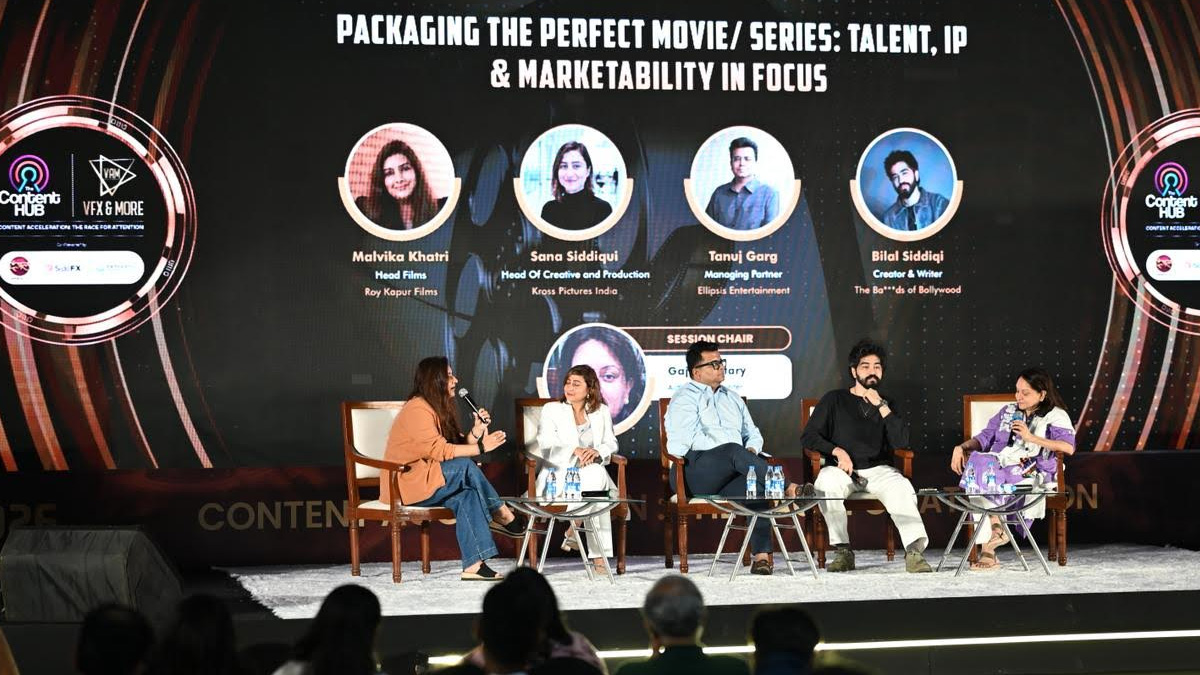
MUMBAI: In today’s entertainment business, a great script alone no longer seals the deal. The real trick, industry insiders suggested at The Content Hub x VFX & More Summit 2026, is learning how to package a story so well that audiences cannot scroll past it.
At the session titled Packaging The Perfect Movie/Series Project: Talent, IP & Marketability In Focus, the conversation brought together Roy Kapur Films head of films Malvika Khatri, Kross Pictures India head of creative and production Sana Siddiqui, producer Tanuj Garg, creator and writer Bilal Siddiqi, with author and scriptwriter Gajra Kottary steering the discussion.
The session unpacked how the business of storytelling is becoming increasingly shaped by market realities, audience behaviour, platform trends and global ambitions, while still depending heavily on instinct and emotional resonance.
One recurring idea dominated the conversation: trends may change every season, but compelling storytelling still sits at the centre of the business. Whether it is toxic romances, horror comedies, sequels, nostalgia-driven IP or high-concept dramas, creators today are constantly navigating shifting audience appetites and platform expectations.
The panel explored how writers are often nudged towards currently fashionable genres, but also acknowledged that these demands are now part of the modern content economy rather than an outright creative roadblock. The balancing act, they suggested, lies in finding originality within familiar spaces.
At the same time, the discussion highlighted how commercial viability has become inseparable from packaging. A strong concept may spark interest, but attaching the right actor, filmmaker, studio, distributor or platform often determines whether a project actually moves forward.
The panellists repeatedly returned to the idea that audiences today are spoilt for choice, making positioning just as important as storytelling itself. In a crowded entertainment landscape, projects need a sharp hook, a recognisable emotional pull and a clearly marketable identity to cut through the noise.
There was also broad agreement that instinct still matters more than algorithms, even in an era dominated by analytics and audience data. While research, platform insights and viewing trends help creators make informed decisions, gut feeling continues to drive many final calls.
The discussion frequently circled back to how producers evaluate pitches in a world flooded with submissions. Beyond the script itself, sincerity, originality and clarity of thought were seen as major differentiators. Formulaic pitches and overly manufactured presentations were viewed as easy to spot, especially as AI-generated communication becomes more common.
Yet the panel also acknowledged that raw talent often arrives unpolished. Several speakers stressed that good producers must invest time in nurturing emerging writers, especially those with strong ideas but limited industry exposure. Development, they argued, remains one of the most undervalued parts of filmmaking.
The theatrical versus OTT debate also surfaced during the session. Big-screen projects were broadly described as stories that promise scale, spectacle or a deeply collective emotional experience, while streaming content increasingly leans towards intimate, layered storytelling designed for slower consumption.
Interestingly, the conversation revealed how audience behaviour itself is reshaping creative decisions. Viewers today may binge a series overnight or stretch it over weeks, changing how stories are structured and paced.
Global storytelling trends formed another key part of the discussion. The panel noted that Indian creators no longer need to dilute their identity to appeal internationally. Instead, culturally rooted stories with universally relatable emotions are increasingly finding audiences across borders.
Examples from Korean entertainment and global breakout successes reinforced the point that authenticity, rather than imitation, is what travels best. The conversation also hinted at growing international interest in Indian stories, including cross-border remakes and collaborations now taking shape.
Awards and critical acclaim were discussed too, though with some scepticism. While recognition helps projects stand out in an overcrowded market and can improve commercial opportunities, audience connection was widely seen as the more meaningful marker of success.
Across the session, one idea became increasingly clear: in modern entertainment, nobody is simply selling a script anymore. They are selling an experience, a world, a cultural moment and, above all, a reason for audiences to care.
In an industry obsessed with opening weekends, trending charts and algorithm-friendly hooks, the panel’s underlying message was surprisingly old-school. Packaging may get audiences through the door, but only emotionally honest storytelling convinces them to stay.






