iWorld
Facebook Watch has its work cut out in video content creation

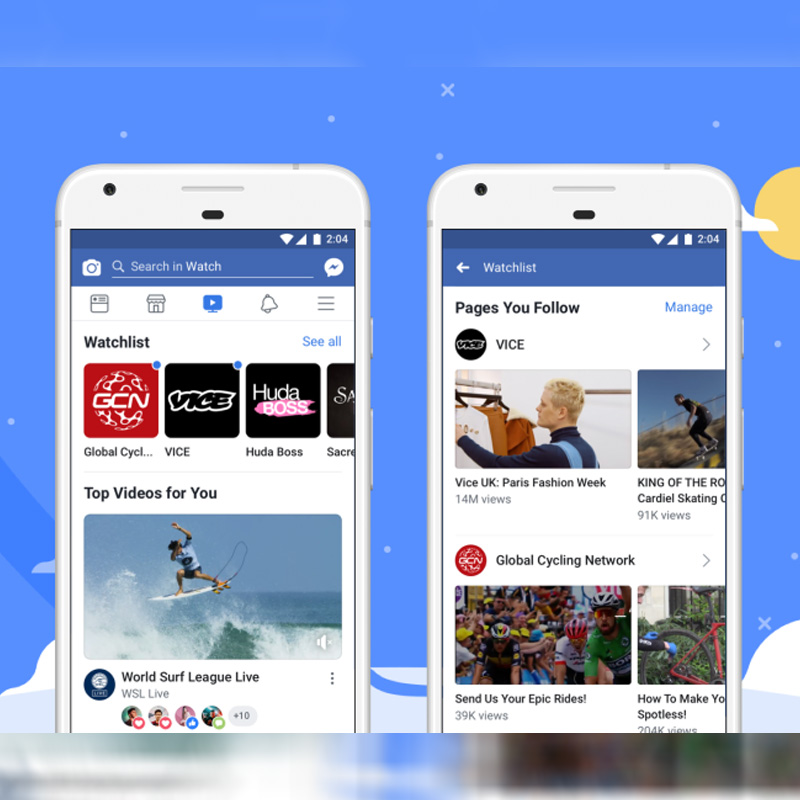
MUMBAI: Tech giant Facebook, with over 2.2 billion monthly active users, is quickly reshaping the world’s digital ecosystem. Despite Wall Street’s disappointment with its Q2 results, the company generated $13 billion in ad revenue during the period. Now, Facebook has opened up another avenue to increase its advertising revenue by gaining a stronger foothold in the crowded online video space. It is very evident that the Mark Zuckerberg-led organisation is investing in video more seriously than ever before, rolling out Facebook Watch globally. This, at a time when video viewing has become a core digital activity among internet users. A recent Zenith report forecast that global consumers are bound to spend 84 minutes a day watching videos online by 2020.
While Facebook remains the unquestioned king of social media, Facebook Watch has had its work cut out with the likes of Amazon, Netflix and YouTube dominating the online video space. Despite the challenge, the sizable user base of the platform is a worthy asset to enhance its new product. Moreover, Facebook’s latest offering is likely to delight digital marketers and advertisers.
Last year, Facebook launched this video viewing hub in the US. Initially, it tested with a limited group of publishers and creators. The early aim was to offer longer form episodic content many of which were created by traditional media and production companies and social media stars. Later, it expanded the range of content as well as options for content creators.
After experimenting with the service for one long year, the social media giant finally made it available everywhere. As the Indian market holds a very important position in the company’s business, its foray into India’s streaming market is a good move at a time when digital advertisement revenues are growing rapidly. According to KPMG 2018 report, digital advertising saw a 35 per cent growth in FY18 over FY17.
As YouTube is the largest digital video platform in the country with 225 million monthly active users (MAUs), it is undoubtedly the main rival for Facebook Watch. While YouTube is the go-to place for video, users log on to the social networking platform to connect to peers and family rather than to watch video. On the other hand, users log on to Facebook several times every day but YouTube is not a habit of users. In addition to that, Facebook knows users emotions far more than the Alphabet-owned video hub, making it easier for targeted marketing. Hence, it is certain that the new video service of the platform is going to throw a potential challenge to YouTube.
“Obvious advantages aside, Facebook will have to up the ante pretty quickly to seriously compete with YouTube. Competition is good for the industry. And this development bodes well for both, advertisers and audiences,” The 120 Media Collective founder and CEO Roopak Saluja commented on the upcoming war.
Several people are speculating about the future market share of Watch in online video space but what matters more is user engagement. To increase overall profitability, higher user attention is highly co-relatable as it signals they are finding value in the service.
“Indian digital consumption market is growing at breakneck speed. While market share remains to be one of the top tracked parameters for a brand’s success, one must understand, if the market has grown by 10x in the past two years, adaptation, acceptance and stickiness to the app matters more than the market share,” said White Rivers Media chief executive officer and co-founder Shrenik Gandhi.
However, Facebook wants to differentiate its new video service with altered formula. It wants to connect people through videos rather than focusing on passive consumption. The aim is to turn Facebook Watch into a service where people can watch videos together, discuss about content, even if they are accessing it from different corners of the world through separate devices. For example, it has features like Watch Party which lets people watch alongside friends.
“Facebook Watch is a big move which shall lead to more aggressive video viewing habits of Indians. As Mark Zuckerberg had predicted, 90 per cent content on social media shall become video content in a few years, it makes sense to have a separate section dedicated to curated and fan videos. It’s high time brands make video content creation as a part of not only hero strategy, but also hub and hygiene. Time will come, when brands will have to adapt to videos or perish on social media,” Gandhi commented on Facebook Watch’s impact on digital advertisers and marketers.
Vidooly co-founder and CEO Subrat Kar also thinks that from a marketing angle, it will be a great medium for advertisers to run a mid roll ad for the right audience, just like on YouTube. Facebook only allowed running ads in the newsfeed. He also adds after global rollout of Watch now the platform is actually taking the option to original content producers.
“Facebook uses a lot of AI and algorithm to figure out what is the most interesting point of content. While watching a video on Facebook, the ad comes on exactly at the most interesting point. This is one interesting thing you can experience on Facebook, not on YouTube. Facebook knows well what the emotion of an audience is. Going forward, it will open new avenues for marketers and lot of traction because metric on Facebook is 3-second viewing,” Kar added.
While established content creators or media houses with a good number of followers can leverage the new service well, it remains to be seen how it will help small-scale content creators to create a fan base from scratch. User-generated content attracts a large number of users to Facebook, even more than YouTube. But since the monetisation model of Watch is not clear yet, it would take time to pick up the interest of content creators.
“For content creators, the monetisation model for YouTube is very clear. You could be a massive media company or you could be a creator in a room with a fan following, YouTube will take 45 per cent tax on whatever the revenue. I believe Facebook’s rev share split is along the same lines. At the moment, Facebook Watch is more geared towards monetisation for organised content creators and media companies or established content creators who command a sizable audience, whereas YouTube has advantages in terms of building a following from scratch. Will Facebook be able to do the same thing? That is the question. They have everything aligned to be able to, that is for sure,” Saluja said.
Saluja said that five years ago YouTube had the largest bouquet of content from broadcasters like Star, Sony, Viacom and Zee. They aren’t present on the platform any longer because they did not want to share a good amount of earnings with Google. “So what remains to be seen is whether Facebook will open up easy monetisation for amateur content creators looking to build a fan base. Because, much like they’ve done over the past few years, there are latent possibilities waiting to be leveraged. Facebook needs to open up the tap another notch every now and then,” he added.
This move also could be Facebook’s secret weapon to drive into live sports streaming more actively. In theUS, Watch already streams popular sporting events including some baseball and basketball games. The platform even got an exclusive WWE show. Already, the social media giant acquired the right of the streaming premier football tournament La Liga in India. Last year also, the social network made a $600 million bid to acquire digital rights to show Indian Premier League cricket games in the country, but failed. There’s a possibility that the company could get more aggressive about acquisitions now.
Facebook Watch, the new asset of the tech leader definitely has promising opportunities to emerge as a service to watch videos. With a user-friendly interface, it can attract more consumers also. But the very first thing Facebook needs to do is proper marketing to create more awareness about the video service, especially when users from its domestic market are also not totally aware of it. It can be said YouTube’s new rival has a long way to go.