iWorld
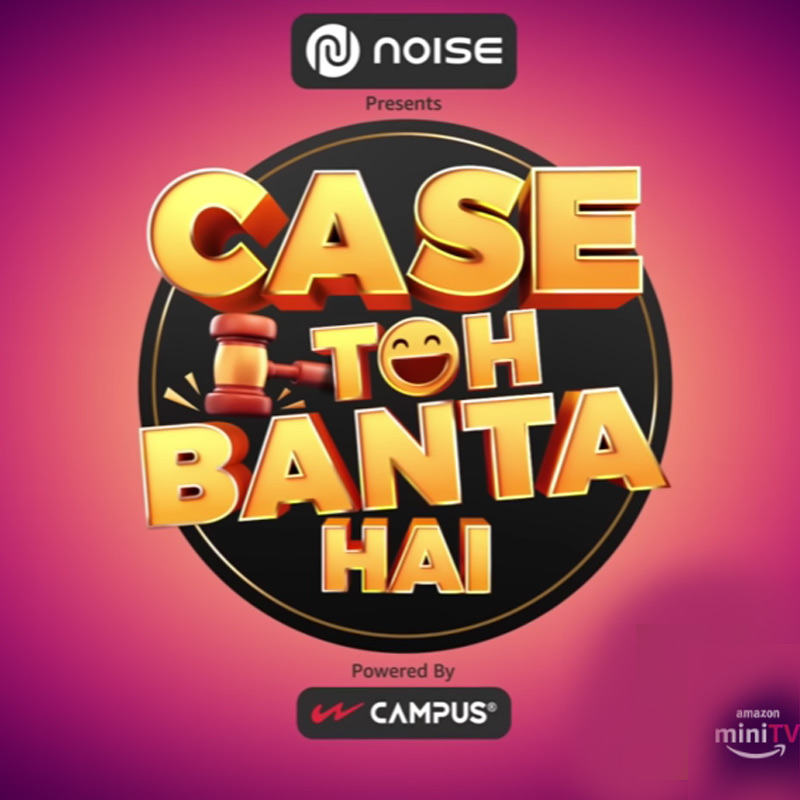
Amazon miniTV’s new comedy series ‘Case Toh Banta Hai’ to stream on 29 July
Mumbai: Amazon miniTV, the ad-supported streaming service by Amazon piloted in India, has announced the launch of its new show Case Toh Banta Hai that will begin streaming on 29 July. The platform released the quirky trailer for the show on 18 July.
Produced by Banijay Asia, the show features actor Riteish Deshmukh, comedian Varun Sharma and influencer Kusha Kapila who play prosecutor, defender and judge in the comedy series. The trio will take popular celebrities including Rohit Shetty, Badshah, Kareena Kapoor, Sara Ali Khan, Karan Johar, Varun Dhawan, Anil Kapoor and more to task by charging them with the most oddball allegations.
The show has a stellar supporting cast including Gopal Dutt, Paritosh Tripathi, Monica Murthy, Sanket Bhosle, Sugandha Mishra and Siddharth Sagar.
Speaking about the concept of the show, Banijay Asia CEO and founder Deepak Dhar said, “India has a great appetite for experimental content which allows us to curate fresh formats that revitalises the existing genres. To helm our original concept of Case Toh Banta Hai, we wanted to bring a combination of faces that were never seen together before, thus, we brought in unique voices from the industry with Riteish Deshmukh, Varun Sharma, Kusha Kapila and a spectrum of talented artists. This is Banijay Asia’s first collaboration with Amazon miniTV, so a snackible content like Case Toh Banta Hai makes for a perfect show to kick start this association.”
Amazon miniTV has roped in sponsors Noise and Campus Shoes for the show. Banijay Asia has completed filming three-fourth of the series i.e., 12-15 episodes. A new episode of the season will drop every Friday on the miniTV platform native within the Amazon app and Amazon.in website.

iWorld
Snapchat parent Snap cuts 16 per cent of workforce in AI-driven restructuring
The Snapchat parent is axing around 1,000 jobs and closing 300 open roles to save $500m, as artificial intelligence makes smaller teams the new normal
CALIFORNIA: Snap is snapping. The Snapchat parent has confirmed plans to cut around 1,000 employees, roughly 16 per cent of its full-time workforce, as it bets that artificial intelligence can do what headcount once required. Shares jumped more than 10 per cent in premarket trading on the news, a brisk vote of confidence from a market that has watched the stock shed about 31 per cent this year.
The restructuring, which also closes more than 300 open roles, follows pressure from activist investor Irenic Capital Management, which holds an economic interest of about 2.5 per cent in the company and has been loudly pushing Snap to tighten its portfolio and lift performance. The firm got what it asked for, and then some.
Chief executive Evan Spiegel told employees the cuts would reduce annualised expenses by more than $500m by the second half of the year. The company expects to incur charges of between $95m and $130m related to the layoffs, mostly severance, with the bulk landing in the second quarter. Staff in Snap’s North America team were asked to work from home on the day of the announcement.
The financial backdrop is not without bright spots. Snap expects first-quarter revenue to rise around 12 per cent to approximately $1.53 billion, broadly in line with analyst estimates. Adjusted core profit for the January to March quarter is forecast at about $233m, comfortably ahead of Wall Street’s expectation of $186.8m.
The harder question surrounds Specs, Snap’s augmented reality smart glasses subsidiary, which Irenic has urged the company to spin off or shut down entirely. The unit has absorbed more than $3.5 billion in investment and burns through approximately $500m in cash annually. Snap is pressing ahead regardless, with a consumer product expected later this year, even as Meta leads the market in the segment.
Spiegel is betting that leaner teams, smarter machines and a consumer AR play can restore Snap’s credibility with investors who have run out of patience. The redundancy notices have gone out. The harder restructuring, the one that requires a hit product rather than a headcount reduction, is still very much pending.