MAM
NDTV sues TAM, Nielsen for manipulation of data


MUMBAI: Television news broadcaster NDTV has filed a lawsuit in New York seeking injunction against publication of television ratings by TAM Media Research and also compensation and damages, a move that can have major implications if the allegations are proved right.
The lawsuit has been filed against TAM, its parent companies Nielsen and Kantar Media Research and senior officials of the companies in the Supreme Court of the State of New York.
NDTV has demanded $810 million as compensation for the loss in revenues it has suffered over the years and $580 million in penalty for negligence by Nielsen and Kantar officials.

In the petition, NDTV has accused the companies of knowingly allowing manipulation of viewership data in favour of channels that are willing to provide bribes to its officials.
According to NDTV‘s complaint (a copy of which is with Indiantelevision.com), “rampant manipulation” of viewership data has been going on for at least eight years. “The loss of revenue caused to NDTV on account of the false, fabricated and manipulated data released to the public by Nielsen, Kantar and TAM over the past eight years is not less than $810 million,” it states.
“This is a case, brought under New York State laws, of negligence, gross negligence, false representations, prima facie tort and negligence per se… This is also a case of a once noble company, Nielsen…exhibiting unabashed short term greed and reckless disregard of its duties and of its noble origin. It is a case of the two largest audience measurement conglomerates in the world, Nielsen and Kantar, formerly competitors, operating worldwide through a deliberately complex web of subsidiaries and joint ventures, creating, at least in India, a monopoly and abusing the power of that monopoly,” the lawsuit reads.
NDTV has also stated that it presented evidences to Nielsen and other parties and its senior officials promised to take remedial actions. However, all promises to make changes proved to be a “sham” and bad data continued to be released “recklessly and in pursuit of profits.”
At a meeting NDTV had with Nielsen and TAM officials on January 20 2012, NDTV had arranged a detailed presentation by a whistleblower, who was a consultant providing on ground services to TAM. The consultant informed those present that he used to bribe TAM personnel as well as peoplemeter homes in order to manipulate ratings for TV channels and he was successful at doing so. The consultant further stated that he was also able to bribe TAM officials to select him as a sample PeopleMeter home and had a PeopleMeter installed in his own premises.
NDTV has not disclosed the identity of the consultant in the lawsuit. The 20 January meeting was also attended by Robert Messemer, Chief Security Officer at The Nielsen Company.
NDTV is being represented by attorneys Adam Finkel and Rohit Sabharwal.
“The primary reason that data could be so easily manipulated in India was due to the persistent refusal of Nielsen and Kantar to provide adequate funds for TAM to increase its sample size and invest in the systems/quality/security procedures,” the lawsuit says.
Apart from TAM, Nielsen Group, Kantar Media Research, WPP, JWT, IMRB International, and the Nielsen directors are also made party to the lawsuit.
NDTV claims that TAM is employing an inadequate sampling size for the Indian market, and also of using inadequate security measures to protect its data. It has also alleged that the lack of security has led to an atmosphere of widespread corruption, with different networks bribing sample households to watch them, and TAM employees taking bribes in exchange for helping to game the numbers.
The lawsuit lists 42 counts against Nielsen, Kantar, TAM and other defendants, ranging from breach of fiduciary duty and gross negligence to tortious and negligent interference with prospective economic advantage.
“TAM India doesn‘t comment on any litigation,” said a spokesperson of TAM, a joint venture of Nielsen, Kantar and Cavendish Square Holdings B.V.
Earlier in 2001 Outlook Magazine and later in 2002 Zee Group had carried exposes on manipulation of TAM ratings.







Brands
DeVANS sparks buzz with self-chilling beer can April Fools campaign
Godfather stunt racks up 7 million impressions, blending humour with hype
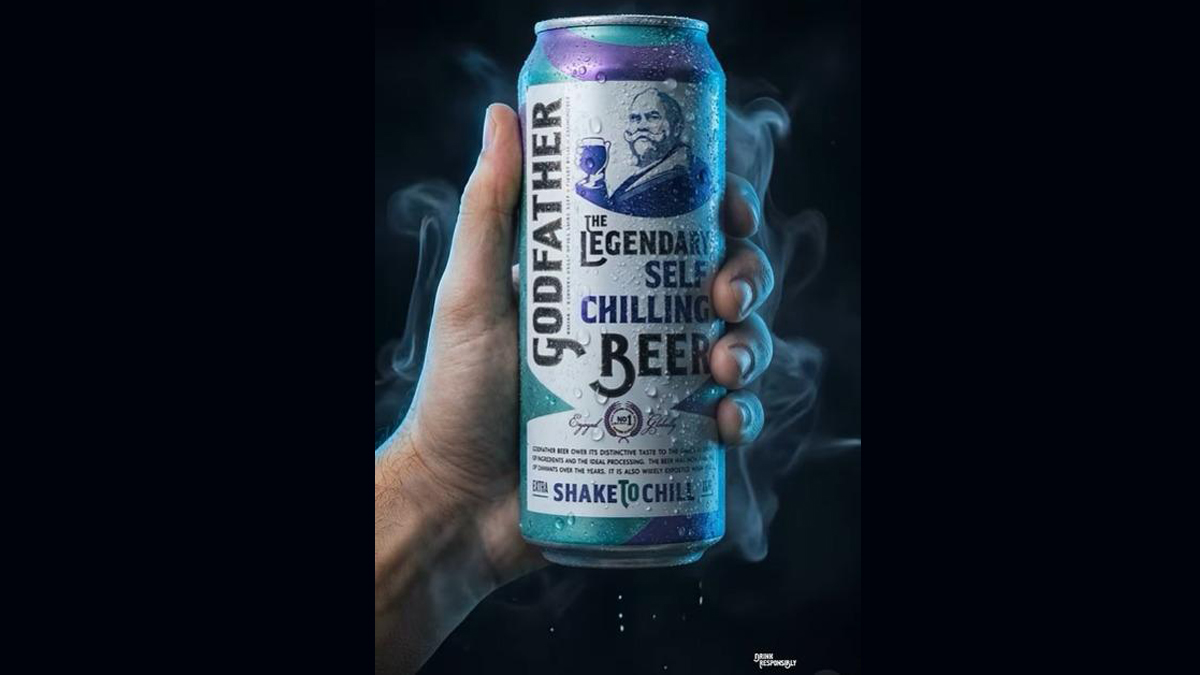
NEW DELHI: DeVANS Modern Breweries has stirred up the marketing pot with a playful yet high-impact campaign teasing a futuristic “self-chilling beer can” under its flagship Godfather label.
What began as a seemingly bold product innovation quickly turned into one of the most talked-about brand moments online, before being revealed as an April Fools’ Day prank. The reveal, however, did little to cool the buzz.
The campaign clocked over 7 million organic impressions across platforms including LinkedIn, Instagram, Facebook and X, with users debating whether the concept was a genuine breakthrough or clever marketing theatre. Thousands of shares and comments turned the idea into a full-blown conversation, drawing in both consumers and industry insiders.
The hook was simple but effective. A self-chilling can positioned as an on-the-go convenience product tapped into the imagination of younger, urban audiences. Add the timing around April Fools’ Day, and the campaign struck the perfect balance between curiosity and scepticism, keeping audiences guessing.
Marketing experts have pointed to the campaign as a case study in leveraging cultural moments. By leaving just enough ambiguity, the brand invited audiences to participate rather than simply observe, turning passive viewers into active contributors to the narrative.
“Godfather has always been an iconic brand, but iconicity must evolve to stay meaningful,” said DeVANS Modern Breweries chairman and managing director Prem Dewan. “The ‘Self-Chilling Can’ was our way of showing up in a cultural moment with confidence and a sense of humour.”
Beyond the numbers, the campaign signals a broader repositioning for Godfather. Long seen as a legacy beer brand, it is now leaning into youth culture, digital-first storytelling and topical engagement to stay relevant in a crowded alcobev market.
In a space where attention is fleeting, DeVANS has shown that sometimes the coolest idea is the one that keeps people guessing.






