
MAM
Brands ditch old playbooks as Gen Z rewrites the rules of marketing
With 375 million consumers, Gen Z demands authenticity over advertising


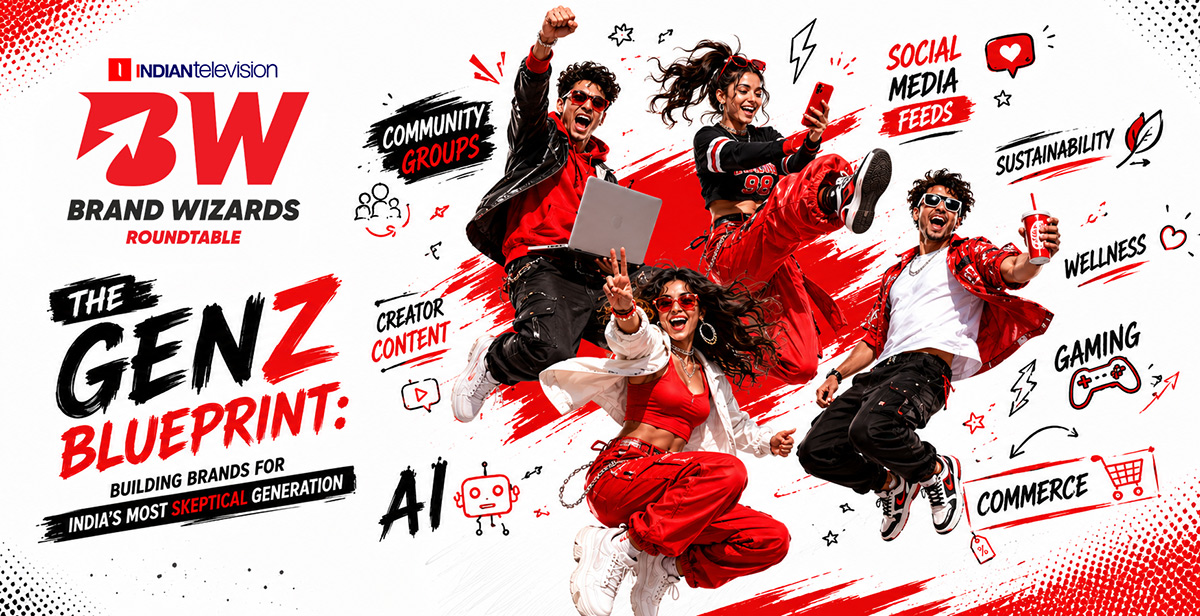
MUMBAI: Forget selling the dream, Gen Z wants the receipts. That was the overarching message from IndianTelevision.com’s roundtable discussion, The Gen Z Blueprint: Building Brands for India’s Most Sceptical Generation, where marketers agreed that traditional brand-building rules are rapidly losing relevance in the face of a consumer cohort that values authenticity, transparency and cultural relevance over polished campaigns.
Moderated by Anil Wanvari, Founder, CEO and Editor-in-Chief of IndianTelevision.com, the discussion brought together marketing leaders from sectors ranging from mobility and personal care to food, fashion and retail. Their collective conclusion was clear, Gen Z is not merely another consumer segment but a generation reshaping how brands are built, communicated and experienced.

The stakes are significant. India is home to more than 375 million Gen Z consumers, who currently account for 43 per cent of consumption and wield an estimated direct spending power of $250 billion. Over the next nine years, they are expected to contribute 46 per cent of India’s consumer spending, equivalent to nearly $1.8 trillion.

For Gayatri Chona, Founder of Phab, the biggest lesson was abandoning traditional marketing language altogether.

“The biggest unlearning is that when you’re building a brand, you can’t sell it or market it. It has to come from a place of authenticity,” she said, noting that Gen Z consumers are less interested in product jargon and more interested in whether a brand solves a real problem in a relatable way.

That sentiment was echoed across categories. Veejay Verma, Business Head – Retail & Business Development at Ammarzo, observed that younger consumers no longer respond to visual merchandising or sales pressure in the same way previous generations did.
“You can’t push that audience to buy something. They know what they have to buy,” Verma said, highlighting how Gen Z shoppers actively question products before making purchasing decisions.

For personal care brands, changing spending habits have forced marketers to rethink assumptions around purchasing power. Stuti Sethi, Brand Lead at Plum BodyLovin’, said one of the industry’s biggest misconceptions was that millennials would remain the primary growth audience.
“The huge unlearning for us was that millennials hold the purchasing power. But Gen Z consumers are incredibly vocal about what they want and are willing to spend significantly on categories that help express their personality,” she said.

Technology and mobility brands are witnessing a similar shift. Adil Lokhandwala, Creative Head at Kinetic EV and Founder of creative agency BIRTHDAY, pointed out that Gen Z increasingly influences household purchase decisions, particularly in technology-led categories.
“They have the decision-making power on behalf of their families when it comes to tech-oriented products because they are highly research-driven and extremely knowledgeable,” Lokhandwala said.

That insight influenced Kinetic EV’s communication strategy. During product development, the company realised that electric vehicles were increasingly being perceived not just as automobiles but as technology products.
“Halfway into making it, we realised that an EV is no longer just an automobile, it’s a gadget. We had to take a step back and understand what was genuinely insightful versus what was simply trendy,” he noted.
The conversation also highlighted the growing importance of user-generated content and community-led engagement. Akshay Deshmukh, Head of Marketing at PALMONAS, said some of the brand’s strongest-performing campaigns came not from high-production advertisements but from creators and customers sharing authentic experiences.
“Gen Z questions everything. They already know the brands. They filter information, ask questions and then decide what they want to buy,” Deshmukh said.
For food brand WickedGud, authenticity extends beyond communication into where and how consumers experience the brand. Jhil Shah, Head of Marketing, said the company moved away from traditional sampling exercises and instead integrated itself into communities such as running clubs and fitness groups.
“As a brand, we had to ensure we were transparent and culturally relevant. Rather than marketing to them, we wanted them to experience the product first-hand,” Shah explained.
The discussion repeatedly returned to one central insight, Gen Z’s relationship with brands is built less on advertising and more on trust. Participants agreed that celebrity endorsements, heavily polished campaigns and one-size-fits-all messaging are giving way to creator-led storytelling, community recommendations and long-term brand consistency.
In an era where consumers can fact-check claims, compare products instantly and publicly challenge brands, marketers acknowledged that authenticity is no longer a differentiator, it is the price of entry.
For brands hoping to win over India’s most influential generation, the message from the roundtable was simple, stop talking at Gen Z and start earning a place in their lives.






