
iWorld
JioStar’s Ishan Chatterjee explores the future of sports viewing
FICCI FRAMES session examines television, streaming, mobile and changing audience habits


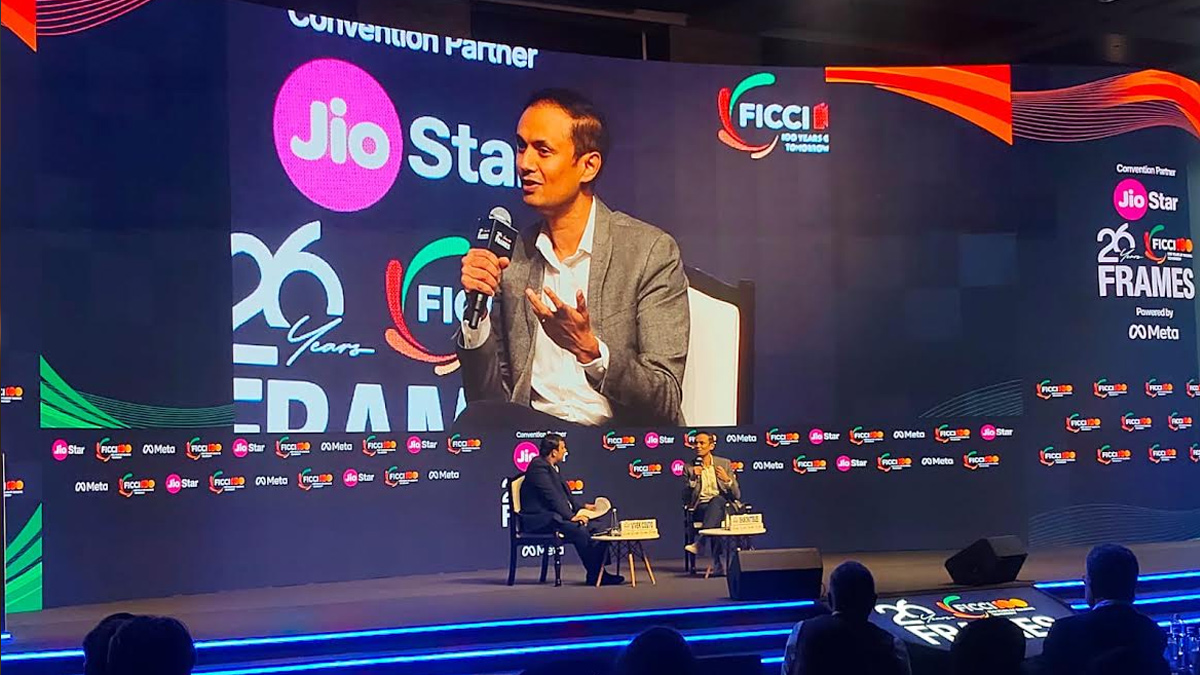
MUMBAI: The match may be the same, but the way fans watch it is anything but. At FICCI FRAMES 2026, sports viewing took centre stage as Ishan Chatterjee, Chief Executive Officer, Sports, JioStar, and Vivek Couto, Co-Founder, CEO and Executive Director, Media Partners Asia, explored how television, streaming, mobile and emerging formats are reshaping the way audiences experience live sport.
The fireside chat, titled ‘One Game, Many Screens: Where Is Sports Viewing Headed?’, looked beyond the familiar television-versus-streaming debate to examine a more fragmented viewing landscape, where the same sporting property can travel across multiple screens and reach audiences in increasingly different ways.
The discussion centred on a basic but increasingly complicated question: when audiences have more screens, platforms and viewing choices than ever before, what actually makes them choose where and how to watch a game?
The conversation suggested that sports viewing can no longer be understood through a single distribution format. Television remains an important part of the ecosystem, but streaming, mobile viewing and newer digital experiences have created additional ways for audiences to connect with live sport.
Rather than treating these platforms as completely separate worlds, the discussion examined how they can work together across the lifecycle of a sporting event.
A viewer may encounter a match through one platform, follow updates elsewhere and consume additional content through another screen. The viewing journey can therefore extend well beyond the live broadcast itself.
That shift has also changed the way broadcasters and sports businesses need to think about audiences. The challenge is not simply to put a game on a screen, but to understand where viewers are, how they consume content and what encourages them to stay engaged.
A recurring theme of the conversation was audience connection.
Sports have a natural advantage because they generate emotion in real time. But that emotional connection needs to be translated effectively across different viewing environments.
The discussion explored how the industry needs to identify audiences, understand where they are and make content accessible to them in the formats they prefer.
That means the traditional distinction between television viewers and digital viewers is becoming less straightforward. Audiences can move between screens depending on the occasion, the device available to them and the kind of experience they want.
The television screen may remain central for a large-scale viewing experience, while a mobile device can offer flexibility and portability. Streaming, meanwhile, can provide another layer of accessibility and personalised consumption.
The result is a sports ecosystem where the screen is increasingly determined by the viewer rather than the broadcaster.
The conversation also placed emphasis on engagement rather than simply reach.
A sporting event can attract a large audience, but the value of that audience increasingly depends on the quality of the connection created with viewers.
That connection can begin with the live game but continue through surrounding content, audience reactions, conversations and other forms of participation.
In an environment where viewers have numerous entertainment options, sports platforms have to compete for attention even while a match is taking place.
This makes the presentation of the game increasingly important. The sporting contest remains the central attraction, but how it is packaged, promoted and made available can influence the depth of audience engagement.
The discussion also highlighted distribution as a critical part of the sports business.
Making a game available is not simply a technical exercise. The right content has to reach the right audience through the right platform and at the right time.
That becomes particularly important as audiences become accustomed to consuming content across devices.
For broadcasters and rights holders, this creates a more complex distribution equation. Instead of designing a single route from sporting venue to television set, the industry now has to build an ecosystem that can serve audiences across television, streaming, mobile and emerging formats.
The ability to understand those audiences therefore becomes closely connected to the ability to monetise sports rights and build sustainable viewing businesses.
Despite the growing number of personal screens, the discussion also recognised the importance of collective viewing.
Sport remains one of the few forms of content that can bring large audiences together around an unpredictable live moment. A goal, wicket, victory or defeat can trigger an immediate reaction across an audience that may be spread across different cities, devices and platforms.
That shared emotional response is an important part of the value of sports content.
The challenge for broadcasters is to preserve that sense of occasion even as consumption becomes increasingly personalised.
In other words, the screen may become individual, but the sporting moment can remain collective.
The discussion also touched upon the importance of trust in building a relationship between content and audience.
For viewers to repeatedly return to a sporting property, the overall experience needs to feel dependable and relevant. That relationship extends beyond the match itself to the people presenting it, the way it is marketed and the wider ecosystem built around the event.
Audience response can then become an important indicator of whether a platform or sporting property is creating the right connection.
This puts greater emphasis on understanding viewer behaviour rather than relying solely on conventional assumptions about what audiences want.
The evolution of sports viewing is also changing the way success can be understood.
A large audience remains important, but the conversation increasingly extends to how deeply viewers engage with content and whether platforms can reach the right audience segments through the right formats.
The same sporting event can therefore have different roles on different screens.
Television can provide the scale and shared experience associated with major sporting occasions. Streaming can extend accessibility and offer greater flexibility. Mobile can keep fans connected when they are away from the television. Emerging formats can create new ways to interact with the sport.
Together, these platforms create a more layered viewing environment.
The FICCI FRAMES discussion ultimately moved away from the idea that television and streaming are locked in a winner-takes-all battle.
Instead, the future of sports viewing appears increasingly connected to how effectively different platforms complement one another.
The question is no longer simply where the game is being watched. It is how audiences move between screens, what keeps them engaged and how the industry can make each touchpoint part of a larger viewing journey.
For sports broadcasters, rights holders and platforms, that means putting the audience at the centre of the equation.
The game may still last 90 minutes, 20 overs, four quarters or several hours, depending on the sport. But the viewing journey can begin well before the first whistle and continue long after the final result.
At FICCI FRAMES 2026, the message was clear: the future of sports viewing is unlikely to belong to one screen. It will belong to the ability to make many screens feel like part of the same sporting experience.






