
eNews
Barc India, Nielsen launch Barc | Nielsen One Ads, a unified cross-media ad measurement tool
JioHotstar to deploy cross-screen measurement during T20 World Cup 2026


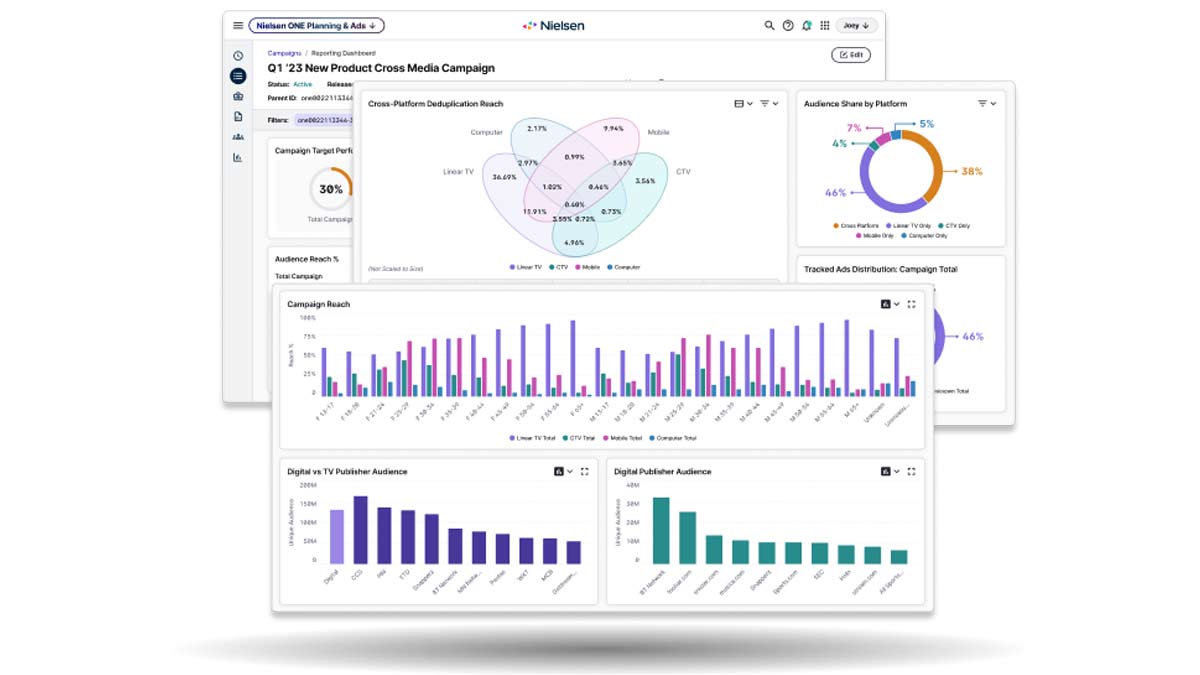
MUMBAI: Broadcast Audience Research Council India and Nielsen have joined forces to launch Barc | Nielsen One Ads, a cross-media measurement system designed to give advertisers a unified view of advertising performance across television and digital platforms.
The new framework combines Barc India’s linear television viewership data with digital audience measurement from Nielsen One Ads. The result is a single dataset that measures advertising reach and frequency across four screens: linear tv, connected tv, mobile and computer, while removing duplicated audiences across devices.
The move comes as India’s media landscape grows increasingly fragmented, with advertisers struggling to reconcile data from multiple platforms. The joint system aims to provide a single, deduplicated picture of campaign performance and audience reach.
“This marks a defining moment for cross-media ad measurement in India,” said Barc India chief executive Nakul Chopra. “Barc | Nielsen One Ads brings together television and digital screens in a unified system, enabling advertisers to understand their true reach and incremental impact across the entire media ecosystem.”
Nielsen chief product officer Akhil Parekh, said the collaboration addresses a long-standing challenge for advertisers. “Brands have had to stitch together fragmented data to understand how campaigns perform. A single, deduplicated view across screens is something the industry has needed for years.”
The first deployment will take place on JioHotstar, which will use the system to measure advertising during the ICC Men’s T20 World Cup 2026 hosted by India and Sri Lanka. Barc India said the framework could expand to include more broadcasters and platforms if industry demand grows.
Among the system’s key features are unified four-screen reporting, advanced reach deduplication to eliminate duplicate viewers across devices, and detailed metrics including average frequency, gross rating points and demographic performance.






