iWorld
Netflix expands its 2025 content slate with over 25 new titles

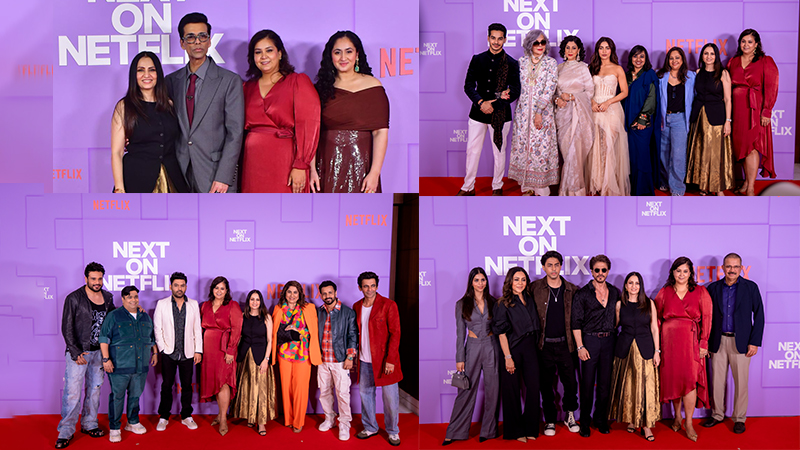
MUMBAI: If Amazon makes a big bang, can Netflix be far behind? Of course not.
Today, Netflix pulled back the curtain on its power-packed 2025 content slate, unveiling an eclectic mix of films, series, and unscripted originals. Unlike Amazon Prime Video, which hosted a lavish industry party, Netflix chose to keep things all-business—because let’s face it, they’d rather spend on content than caviar. The lineup boasts over 25 titles spanning multiple genres, ensuring that no matter what your mood, there’s a binge-worthy fix waiting for you.
Leading the charge is Aryan Khan’s directorial debut, The Ba**ds of Bollywood, produced by Shah Rukh Khan and Gauri Khan’s Red Chillies Entertainment. The series blends sharp industry satire with high-stakes drama, offering an inside look at the chaos of Bollywood. Expect plenty of witty references and some surprise cameos from the who’s who of Indian cinema.
Adding to the action-packed lineup, Saif Ali Khan headlines Jewel Thief – The Heist Begins, a high-stakes thriller surrounding the hunt for the priceless African Red Sun diamond. Directed by Siddharth Anand and featuring Jaideep Ahlawat and Kunal Kapoor, this promises an exhilarating game of deception, strategy, and intrigue.
Netflix’s love affair with romance continues with Aap Jaisa Koi, starring R. Madhavan and Fatima Sana Shaikh, and Nadaaniyan, featuring Ibrahim Ali Khan and Khushi Kapoor in a classic opposites-attract setup. Meanwhile, Dhoom Dhaam throws Yami Gautam Dhar and Pratik Gandhi into a wedding-night-gone-wrong adventure that’s equal parts thrilling and hilarious.
On the Tamil front, Test delivers a compelling narrative with R. Madhavan, Nayanthara, Siddharth, and Meera Jasmine against the backdrop of a historic Chennai cricket match. Helmed by S. Sashikanth, this direct-to-OTT release highlights Netflix India’s commitment to regional storytelling.
Comedy lovers can look forward to Toaster, a quirky family drama starring Rajkummar Rao and Sanya Malhotra, centered around a wedding gift fiasco that spirals into chaos. Meanwhile, Delhi Crime Season 3 brings back Shefali Shah, joined by Huma Qureshi and Sayani Gupta, in a gripping investigation into human trafficking.
Fan-favorite Kohrra returns for Season 2 with Barun Sobti and Mona Singh tackling a fresh murder mystery, while Rana Naidu Season 2 sees Rana Daggubati and Venkatesh Daggubati returning, this time with Arjun Rampal as their new nemesis. Additionally, Khakee: The Bengal Chapter introduces Jeet as an unyielding cop squaring off against Prosenjit Chatterjee’s political mastermind.
The thrills continue with YRF Entertainment’s Mandala Murders, starring Vaani Kapoor and Vaibhav Raj Gupta, which uncovers a series of ritualistic killings tied to a mysterious secret society. Akka, another YRF production, features Keerthy Suresh, Radhika Apte, and Tanvi Azmi in a revenge saga drenched in blood and suspense.
Pulkit Samrat, Divyenndu, and Suvinder Vicky bring raw intensity to Glory, a gripping story of vengeance and Olympic boxing aspirations. Meanwhile, espionage thriller Saare Jahan Se Accha sees Pratik Gandhi and Sunny Hinduja navigating the treacherous world of 1970s intelligence.
Netflix forays into Telugu content with Super Subbu, where Mithila Palkar and Sundeep Kishan lead a laugh-out-loud journey of an adult sex education teacher finding herself in the most unlikely of places—a conservative village.
Unscripted entertainment takes a glamorous turn with Dining with the Kapoors, offering an intimate look at Bollywood’s first family, while The Roshans traces three generations of cinematic legacy. Stand-up special Full Volume sees Vir Das returning with a fresh dose of sharp political humor and social commentary.
Oscar-nominated short film Anuja, backed by Priyanka Chopra Jonas, Guneet Monga Kapoor, and Mindy Kaling, makes its debut, adding yet another feather to Netflix’s cap. In a groundbreaking move, Netflix has also acquired exclusive WWE programming rights for India and other territories, promising wrestling fans a knockout viewing experience.
Netflix is also diving into crime thrillers with Black Warrant, a gripping drama set in Tihar Jail, where an idealistic jailer uncovers corruption, gang wars, and deep-rooted injustice. The series has already earned a spot in Netflix’s Global Top 10 in its second week, proving its appeal worldwide.
Crime meets comedy in Dabba Cartel, where five middle-class women find themselves running an accidental drug cartel while caught in a pharma investigation. Produced by Farhan Akhtar and Ritesh Sidhwani, this darkly comic drama showcases a web of secrets, power struggles, and the sheer unpredictability of life.
Fans of The Great Indian Kapil Show can rejoice as Season 3 brings more laughs, celebrity guests, and signature desi humour. Kapil Sharma and his gang are all set to dish out fresh skits, hilarious banter, and plenty of unexpected surprises.
For cricket lovers, The Greatest Rivalry – India vs Pakistan chronicles the on-field and off-field drama of the world’s most heated cricketing contest. Featuring legends like Virender Sehwag, Shoaib Akhtar, and Sunil Gavaskar, this docuseries goes beyond boundaries to explore the history, culture, and politics that fuel this fierce competition.
Netflix is also stepping into the world of royal drama with Bhumi Pednekar and Ishaan Khatter starring in The Royals, where a polo-playing prince and a high-powered CEO clash in a whirlwind of romance, ambition, and palace intrigue. Bhumi Pednekar and Ishaan Khatter lead the cast in this lavish rom-com.
Netflix India VP of content, Monika Shergill emphasised the platform’s commitment to bold storytelling, stating, “In 2025, we’re redefining storytelling by pushing creative boundaries like never before, delivering an unparalleled variety of world-class entertainment. From dreamy romcoms and high-stakes dramas to action-packed thrillers, beloved fan-favorite franchises, and laugh-out-loud comedies, there’s something for everyone.”
Netflix’s 2025 slate is poised to redefine streaming entertainment in India. Whether it’s high-octane action, gripping thrillers, laugh-out-loud comedies, or heartwarming romances, one thing’s guaranteed—your binge list just got a whole lot longer. And with the rise of local-language content, expect even more diverse storytelling that speaks to every corner of India. If the 2024 lineup was a game-changer, 2025 is about to blow the roof off the OTT space.