Connect with us

Movies

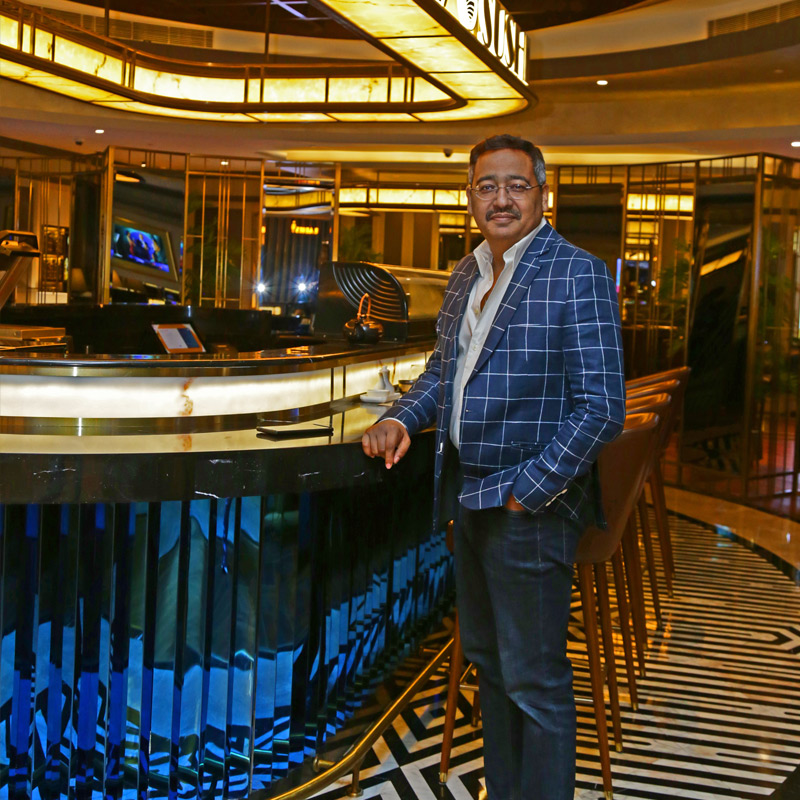
“We expect cinema advertising to reach close to 80% of its pre-pandemic level”: PVR CEO Gautam Dutta

Published

on

Mumbai: While the fiscal second quarter June-September has been subdued due to the underperformance of Bollywood (apart from “Brahmastra”), multiplex operator PVR is counting on a much better performance during the festive season. It is planning a slew of initiatives to cash in on the season, which will see a return to normalcy in this period after a gap of two years.

Speaking to Indiantelevision.com PVR CEO Gautam Dutta said, “With an objective to encash on the blockbuster releases during the festive period, PVR will be running many promotions from 10–31 October across its products and services. This would entail special offers on ticket booking, PVR e-gift cards, Diwali gift hampers, and ‘V Pristine’ by PVR for its loyalty base of 1.46 crore privilege members. These will be announced on the PVR social media handle and in our cinemas.”

Talking about the growth in revenue that PVR expects during the festive season compared to the same period last year, he says that after a rousing start of FY23 with Q1 doing amazing numbers and breaking all-time records in the history of cinemas, Q2 has become subdued, marked by the underperformance of some movies. “We are extremely optimistic about the festive season ahead, as this will be the first time in two years that cinemas will be operating without restrictions. Substantiating these expectations is a big line-up of movies that would hit the theatres, and the rolling back of the usual eight-week theatrical window that has been reintroduced since 1 August.”  

Advertisement

When asked about inflation being a challenge, he said that in the first quarter of FY23, there has been a strong growth of 23 per cent in average ticket price (ATP which is Rs 250) and 32 per cent growth in average F&B spend per patron (which is Rs 134) as compared to the pre-pandemic period. He added that the spending ratio of F&B to ATP has also increased from 49 per cent to 54 per cent. “This shows that patrons have accepted the increase in ticket prices and there has been an increase in their spending on F&B. The contribution of recliner seats to overall footfalls and occupancy has also increased, indicating that patrons are willing to pay a premium for a more luxurious moviegoing experience. There was a strong bounce-back in theatrical admissions with 2.5 crore patrons visiting our cinemas during Q1 FY23.” 

Festivals, Gautam explained, are a time when families bond with each other, while cinema is primarily a family entertainment medium, so they complement each other. What encourages him is the fact that there is a festive atmosphere and people are in a buoyant mood and like to eat out and watch movies with their families. Speaking about the big releases lined up across languages, he noted, “There is an exciting movie line up in the October to December period covering all languages and genres, released in multiple formats and appealing to all segments of the audience. These include “Vikram Vedha” (Hindi), “Kantara” (Kannada), Mani Rathnam’s “Ponniyin Selvan” (Tamil, Hindi, Telugu, Malayalam, Kannada), “The Woman King” (English), “Ticket to Paradise” (English), “Goodbye” (Hindi), “Doctor G” (Hindi), Warner Bros “Black Adam” (English), “Ram Setu” (Hindi), “Har Har Mahadev” (Marathi, Hindi, Tamil, Telugu, Kannada), “Prince” (Tamil, Telugu), “Thank God” (Hindi), “Phone Bhoot” (Hindi), Disney’s “Black Panther – Wakanda Forever” (English), “Uunchai” (Hindi), “Drishyam 2” (Hindi), “Bhediya” (Hindi), Disney’s “Avatar; The Way of Water” (English), “Cirkus” (Hindi).””

When queried about the scene in terms of in-theatre advertising, he pointed out that there has been a gradual improvement in advertising revenue with a 68 per cent recovery in Q1 FY23 as compared to the pre-pandemic Q1 FY20. “Given the fact that we have some big films slated to release in the upcoming festive season, it will serve as an opportunity for us to revive advertiser interest and drive brand partnerships and retail opportunities. Q3, which includes the holiday season, is traditionally a good quarter for advertising surges, and we expect the same this year. We expect cinema advertising to reach close to 80 per cent of its pre-pandemic level and will bounce back and hit pre-Covid levels by the end of Q4.” 

Advertisement

Offering further perspective, he said that PVR plays with fair equivalence vis-a-vis traditional media in terms of enjoying brand confidence and presence across various sectors of product categories. “Mostly all the relevant and sizable categories are on board with us. FMCG, telecom, e-commerce, ed-tech, BFSI (including fintech), consumer durables, automobiles, apparel, accessories, and jewellery, media entertainment, real estate, and so on are dominant categories. Some mainstream brands include Apple, Oppo, Cred, One Plus, Facebook, Whatsapp, Pepsico, Coke, Dyson, Kotak, Pepsi, Coke, Tata CliQ, Dettol, HDFC, Nippon , WOW etc.”

On the ticket price front, he pointed out that the pandemic caused unprecedented damage to the film exhibition industry. It has practically remained shut or been allowed to operate partially for two years. In normal course, there would have been a marginal increase in ticket prices every year to match inflationary trends. There has been an increase in ticket prices since there was no increase in ticket prices for two full years. “Our average ticket price for FY 21-22 has been Rs 235, which is marginally more than Rs 204 in the pre-pandemic FY 19-20. Ticket prices are capped in three states, namely, AP, Karnataka, and Tamil Nadu, where we can’t do much. Moreover, they vary as per the category of the movie, show times during the day, weekdays and weekends.”

In terms of where the growth is coming from, he reveals that over the last decade, the number of malls has increased dramatically. Previously, the development was happening in metros and tier I cities—they are now finding their way into tier II cities as well. “The expansion of multiplexes will also be aided by this deepening footprint. Moreover, there is a lack of out-of-home entertainment options in tier II and III as multiplexes continue to remain the cheapest form of similar leisure activity in India as compared to theme park visits, dining out, and vacations. With such indicators in place, our recent expansion to Narsipatnam, Rourkela, Patiala, and Nizamabad clearly shows our vision and commitment to strengthen our presence beyond metro cities.”

Advertisement

He added that the company has revived its capex plans in a significant manner and is on track to open a total of 125 new screens during FY23. “We have opened 20 screens across four properties since the start of FY23. We recently opened our six-screen cinema at Hinjawadi, Pune, which includes a P[XL] auditorium that marks Pune’s first multiplex with an extra-large screen. About one-third of the new screen additions in this fiscal year will be in tier II and III cities. The company plans to enter nine new cities during the year.”


Click to comment

Leave a Reply

Your email address will not be published. Required fields are marked *

Hindi

GUEST COLUMN: Why film libraries & IPs are the new engines of growth

Unlocking value through catalogue strength and IP synergy

Published

on

MUMBAI:In a media landscape defined by fragmentation, platform proliferation, and ever-evolving audience behavior, the economics of filmmaking are undergoing a fundamental shift. No longer confined to box office performance, a film’s true value is now measured across an extended lifecycle that spans digital platforms, syndication networks, and global markets. As content consumption becomes increasingly non-linear and algorithm-driven, film libraries and intellectual properties (IPs) are emerging as strategic assets, capable of delivering sustained, long-term returns. For Mohan Gopinath, head – bollywood business at Shemaroo Entertainment Ltd., this transformation signals a decisive move from hit-driven models to portfolio-led value creation. In this piece, Gopinath explores how legacy content, when intelligently repurposed and distributed, can unlock recurring revenue streams, why the interplay between catalogue and original IP is critical, and how media companies can build resilient, future-ready entertainment businesses.

For all these years, we thought that a film is successful if it performs well in theatres. There are opening weekend numbers, box office milestones, and distribution footprints that gave a good picture of how the movie has done commercially and also tell us about its cultural impact. However, there are multiple platforms today, always-on content ecosystem, which has caused a shift. Today, the theatrical performance is not the culmination of a film’s journey but merely the beginning of a much longer and more dynamic lifecycle.

Film libraries today are emerging as high-value, constantly evolving assets that deliver sustained returns well beyond initial release cycles. This becomes a point of great advantage for legacy content owners with diverse catalogues, to shape long-term business outcomes.

Advertisement

According to FICCI-EY, the media and entertainment industry of India achieved a valuation of Rs 2.78 trillion in 2025 which is expected to reach Rs 3.3 trillion by 2028 through a compound annual growth rate of approximately 7 per cent and digital media will bring in more than Rs 1 trillion to become the biggest sector which generates about 36 per cent of overall market revenues.

This shift is the expansion of distribution endpoints. We know how satellite television was once the primary secondary window but today, it coexists with YouTube, OTT platforms, Connected TV, and FAST channels. Each of these platforms caters to distinct audience demographics and consumption behaviors, helping content owners to obtain more value from the same asset across multiple formats.

For instance, films that had great reruns, now find continuous engagement across digital platforms. On YouTube, classic Hindi cinema continues to attract significant viewership, reaching audiences across generations and geographies with remarkable consistency. At Shemaroo Entertainment, this is reflected in our film library shaped over decades as part of a long association with Indian entertainment. From classics such as Amar Akbar Anthony to much-loved entertainers like Jab We Met, Welcome, Dhamaal, Phir Hera Pheri, Dhol, Golmaal, and Bhagam Bhag, many of these titles continue finding new audiences while retaining their place in popular memory. Their enduring appeal reflects how culturally resonant stories can continue creating value over time.  Similarly, FAST channels have created curated, always-on environments where catalogue content can continue to thrive through star-led and genre-based programming.

Advertisement

This multi-platform approach has very well transformed films into long-tail IP assets which are capable of generating recurring revenue across advertising, subscription, and syndication models. 

The evolution of audience behavior is equally important. Nowadays, it’s more important to find what’s more relative than what’s recent as viewers are more influenced by mood, memories, and algorithmic suggestions than by release schedules. Even if a movie was released decades ago, it can trend alongside a newly released movie, if surfaced in the right context. Thoughtful packaging, whether through festival-based playlists, actor-driven collections, or genre clusters, allows catalogue content to remain dynamic and continuously discoverable. Shemaroo Entertainment has built extensive film libraries over decades and its focus has mostly been on recontextualizing content for the consumption of newer environments. This process doesn’t just include digitization and restoration, but also re-packaging of films as per platforms.

Syndication itself has evolved into a key growth driver. In perspective, when looking at the domestic market, curated content packages continue to find strong demand across broadcast and digital platforms. Meanwhile, in the international market, especially in markets like Middle East, North America and Southeast Asia, the appetite for Indian content is opening up new monetization avenues. Here, the ability to package and position catalogue content effectively becomes as important as the content itself.

Advertisement

Importantly, the need to re-package catalogue content does not diminish the role of new content. In fact, originals and fresh IP are essential to sustaining the long-term value of a film library because they act as discovery engines that bring audiences into the ecosystem, while catalogue content drives depth, retention, and repeat engagement. 

This interplay between the “new” and the “known” is what defines a robust content strategy today. While new films generate spikes in consumption, catalogue titles offer familiarity and comfort. These are factors that are increasingly valuable in an era of content abundance and decision fatigue. This is also shaping our strategy, drawing value from both a deep catalogue assets and a growing focus on original IPs to strengthen long-term audience engagement and build more predictable revenue streams.

There is growing recognition that long-term value in entertainment will be shaped not only by how intelligently existing content continues to live, travel and find relevance, but also by how consistently new stories are created to renew that ecosystem. In that sense, film libraries and original IP are not parallel bets, but reinforcing engines of growth. For media companies, the opportunity lies in making these two forces work together, because that is increasingly where more resilient and predictable businesses are being shaped.

Advertisement

Note: The views expressed in this article are solely the author’s and do not necessarily reflect our own.

Continue Reading

Advertisement News18
Advertisement
Advertisement
Advertisement
Advertisement Whtasapp
Advertisement Year Enders

Indian Television Dot Com Pvt Ltd

Signup for news and special offers!

Copyright © 2026 Indian Television Dot Com PVT LTD


