News Broadcasting
Indian news media hurtling towards regulatory cliff: Prannoy Roy

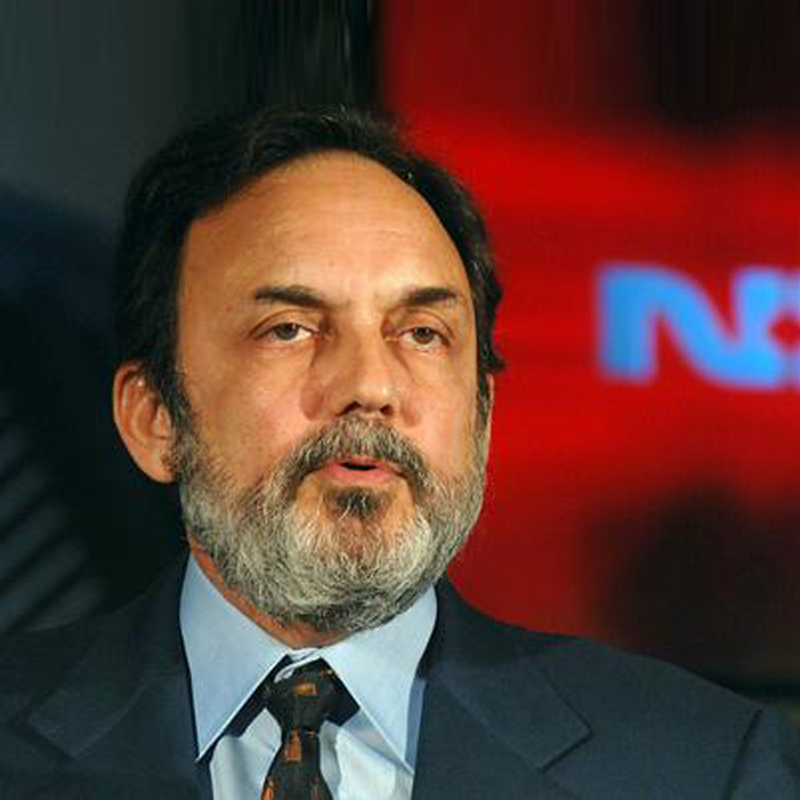
NEW DELHI: When one of the poster boys of TV news in India holds forth on the subject of news, it is worth a read even if one did not agree with the person on every point. And when that person is Prannoy Roy, the reading becomes that much more compelling.
“Almost by definition, the path to making profits for a news organization is littered with compromises that change the nature of journalism, often so that it can no longer be recognized as a news channel.
“In the quest for profits in the overcrowded market of news channels in India, several choices are possible and different channels have chosen different routes, but the greater the success with any one of these routes, the more the nature of news journalism changes,” says Roy in his chapter in a book about NDTV and 25 years of television journalism, aptly named More News is Good News. The chapter has been put up on NDTV’s website.

Pointing out that an easy option for TV news channels is to become tabloid-ish to gain eyeballs, Roy observes, “Virtually every single Hindi news channel in India today is grotesquely tabloid.”
“I recall what I think is the lowest point so far when one Hindi channel anchor twirled her hair with her forefinger, looked into the camera and said, ‘Break ke baad aapko ek rape dikhayenge’ (After the break we will show you a rape),” Royrecounts one of the many faux pas of TV news in India.
Though Roy feels that Indian media, especially TV news segment, has been much tabloid-ish — an observation that will certainly raise heckles in various quarters — he admits that it would be incorrect to put the full blame on Hindi news channels for this “grotesque” tabloidization.
Not that NDTV — and Roy — hasn’t faltered, but it has also attempted to stand up and protest against discriminations. For example, alleging discriminations, NDTV filed a case in the US against a global advertising behemoth that had an interest in a company doing audience measurement in India.
“Virtually every city in India has a ‘ratings consultant’ who, for a relatively small fee, will ensure higher ratings for any channel…In fact, Nielsen sent out their global head of security to India and, after a four-month elaborate investigation, he said, ‘I have never seen as much corruption of the Nielsen system anywhere else in the world’,” Roy holds forth on an open secret on audience measurement in India’s media world till a few years back and before BARC came into existence.
What do such trends mean for journalism? Roy’s answer: “I don’t need to state the obvious that going tabloid in the quest for profits changes the nature of the beast, destroying journalism…the only Hindi news channel in India that is not tabloid is NDTV India and I must also report that the channel is making a loss!”
Having held forth on tabloid journalism, TRP-fixing, `paid news’, blackmail and extortion, Roy is cautiously optimistic about the ‘soft power’ of media and its role in Indian democracy.
“As India’s media has grown over the years, despite all the baggage, so far more news has been good news. So far we have seen the upside of unfettered journalism. But any strength taken too far becomes a weakness and our media appears to be hurtling towards its own regulatory cliff. It is at these critical moments that governments try to take control,” Royconcludes.






News Broadcasting
News18 India launches Command Centre war explainer with Arya
New show shifts from debates to decoding global conflicts and impacts
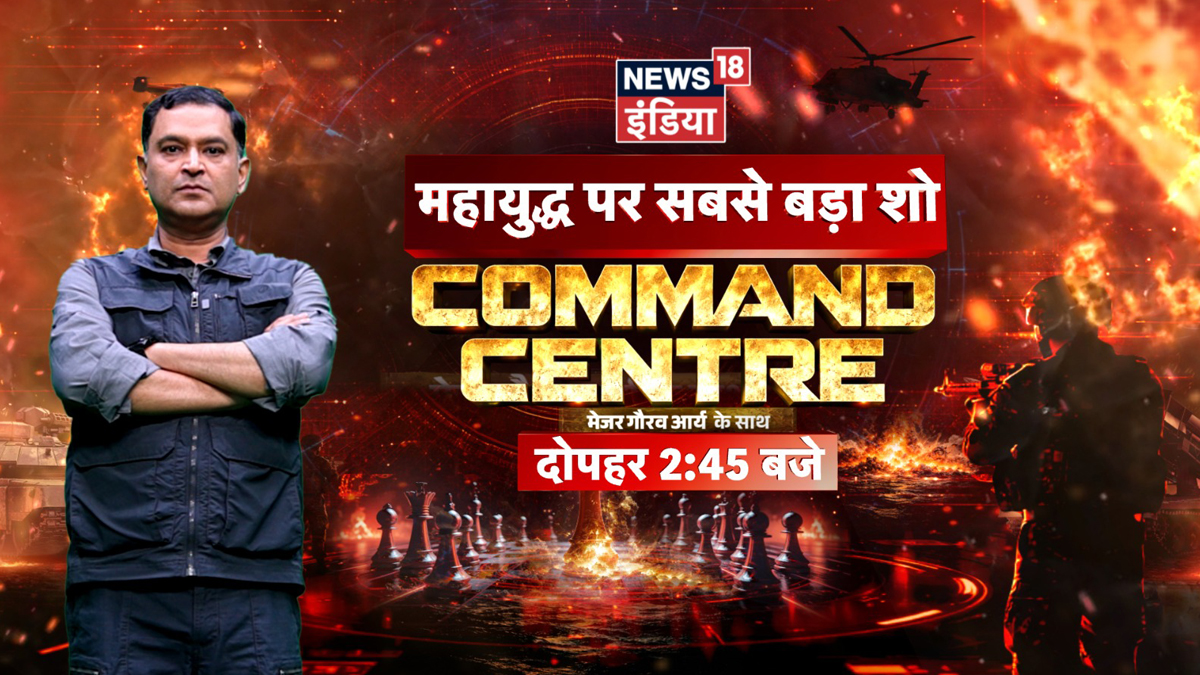
MUMBAI: News18 India has rolled out a new war-focused programme, Command Centre, featuring Gaurav Arya, as it looks to offer viewers a sharper, more grounded take on global conflicts amid rising tensions in West Asia.
Positioned as an “insider war room”, the show moves away from conventional panel debates and instead focuses on explaining military developments, decoding strategy and connecting global events to their everyday impact, from fuel prices to economic shifts.
The format leans heavily on visuals and data. The studio has been designed like a command hub, complete with large LED war maps, real-time graphics and an alert system to track developments as they unfold.
At the centre of it all is Arya, who brings his military background to simplify complex war strategies for viewers. His signature line, “Seedhi baat samjhiye”, anchors the show’s promise of clarity over noise.
News18 India managing editor Jyoti Kamal said, “Command Centre, featuring Major Gaurav Arya is designed to deliver accurate insights and a clear perspective on how evolving conflicts impact everyday life, from household budgets to national security. With expert voices analysing every development in real time, the show goes beyond headlines to decode what’s happening now, what it means, and what could come next.”
Echoing the intent, Gaurav Arya added, “In times of war, confusion is the biggest threat. With News18 India’s Command Centre, we are bringing viewers inside the war room, decoding strategies, tracking every escalation, and explaining, in the simplest terms, what it means for India and for every household. Seedhi baat samjhiye, this is where you understand not just what is happening, but what happens next.”
The weekday show will air in the afternoon slot and will also feature Gaurav Shukla, adding to its editorial depth.
With its mix of analysis, visuals and a clear focus on impact, the show reflects a broader shift in news consumption. Viewers are no longer just watching events unfold, they are looking to understand what those events mean for them.







