News Headline
ICC teams up with Google to turbocharge women’s cricket

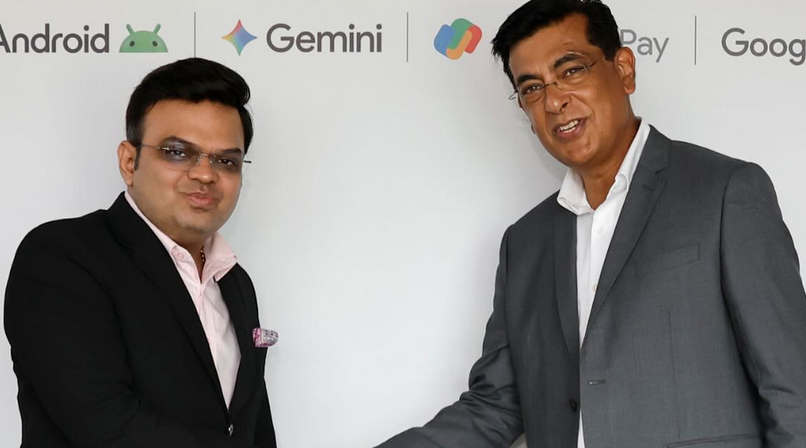
LONDON: The International Cricket Council (ICC) has inked a landmark global partnership with Google to accelerate the growth of women’s cricket, betting that technology can turbocharge fan engagement at a moment when the sport is reaching critical mass.
The tie-up, unveiled on Friday, comes just as the women’s game prepares for its two biggest stages: the ICC Women’s Cricket World Cup 2025, to be split between India and Sri Lanka, and the ICC Women’s T20 World Cup 2026 in England and Wales.
For the ICC, the partnership signals a decisive push to make women’s cricket more visible, accessible and lucrative. Earlier this year, Unilever became the ICC’s first global partner for the women’s game. Now, Google’s entry adds the sheen of Silicon Valley to cricket’s most ambitious attempt yet at elevating women’s sport to parity with the men’s version.

ICC chairman Jay Shah called the deal “a landmark moment” that would help take women’s cricket “to even greater heights” by inspiring new generations and strengthening the sport’s global reach. “Together with Google, we aim to make women’s cricket a truly global force, resonating with fans in both established and emerging markets,” he said.
Google’s arsenal of consumer products—Android, Google Pay, Gemini AI, and Pixel smartphones—will form the backbone of this strategy. The idea is to create an integrated ecosystem that enhances every stage of the fan journey: discovering match schedules, watching highlights, engaging with players’ stories, making seamless payments for tickets or merchandise, and celebrating wins online.
“This alliance is not just about a single tournament; it’s about building deeper engagement,” said Google India vice-president of marketing Shekar Khosla. “We want to make the sport more accessible and enable fans to feel a stronger connection with what they care about.”
The ICC hopes this “always-on” digital presence will not only expand the fan base but also attract new advertisers eager to reach younger, more digital-native audiences.
Women’s cricket has been growing rapidly, buoyed by marquee tournaments like the Women’s Premier League (WPL) in India, the Big Bash in Australia, and increasing broadcast commitments. Audience numbers are rising, sponsorship is flowing in, and players such as Smriti Mandhana, Alyssa Healy, and Nat Sciver-Brunt are becoming household names.
But the economics still lag far behind the men’s game. Rights packages, sponsorship valuations and player salaries remain a fraction of men’s cricket. By hitching the sport to Google’s technology stack, the ICC is signalling it wants to fast-track the commercialisation curve, making women’s cricket a product that broadcasters, advertisers and fans cannot ignore.
The deal also reflects the growing entanglement of global tech platforms with sport. From Amazon streaming tennis to Apple bankrolling Major League Soccer, Silicon Valley is embedding itself in the sporting ecosystem. For Google, cricket is a natural fit: it is India’s most-followed sport and one of the most powerful cultural exports across the commonwealth. By associating with women’s cricket, Google also gets to position itself as a champion of inclusion and representation—values that resonate with global consumers.
For the ICC, this is as much about geopolitics as sport. The women’s World Cup in 2025 will be staged in India and Sri Lanka, markets where Google dominates digital infrastructure but where competition from local players like Paytm, PhonePe and Jio is fierce. Embedding its brand through cricket is a way to reinforce dominance at a cultural level.
For women’s cricket, the timing could not be better. With two World Cups in less than a year, unprecedented visibility is guaranteed. The challenge will be to convert eyeballs into habit, passion into loyalty, and novelty into permanence.
Cricket’s men’s World Cups have long been billion-dollar properties. The women’s version has so far lived in their shadow, but that is changing. The 2022 Women’s World Cup drew record viewership globally, and the inaugural WPL auction stunned observers with player valuations that rivalled established men’s leagues. The ICC now wants to seize this momentum and institutionalise women’s cricket as a commercially viable product on its own terms.
The Google alliance, then, is more than a sponsorship. It is an attempt to rewire how women’s cricket is consumed, blending sport with technology to create experiences that transcend stadiums and television screens. If successful, it could turn the women’s game into a global sporting phenomenon, not just a promising sideshow.
If it fails, critics will dismiss it as another flashy announcement without structural change. But for now, women’s cricket has the wind at its back, the ICC has its boldest partner yet, and Google has found a new pitch to play on.






NEW DELHI: Hamdard Laboratories gathered a cross-section of India’s achievers in New Delhi on Friday, handing out the Hakeem Abdul Hameed Excellence Awards to figures who have left their mark across healthcare, education, sport, public service and the arts.
The ceremony, attended by minister of state for defence Sanjay Seth and senior officials from the ministry of Ayush, celebrated individuals whose work blends professional success with a sense of public purpose. It was as much a roll call of achievement as it was a reminder that influence is not measured only in profits or podiums, but in people reached and lives improved.
Among the headline awardees was Alakh Pandey, founder and chief executive of PhysicsWallah, recognised for turning affordable digital learning into a mass movement. On the sporting front, Arjuna Awardee and kabaddi player Sakshi Puniya was honoured for her contribution to the game and for pushing women’s participation onto bigger stages.
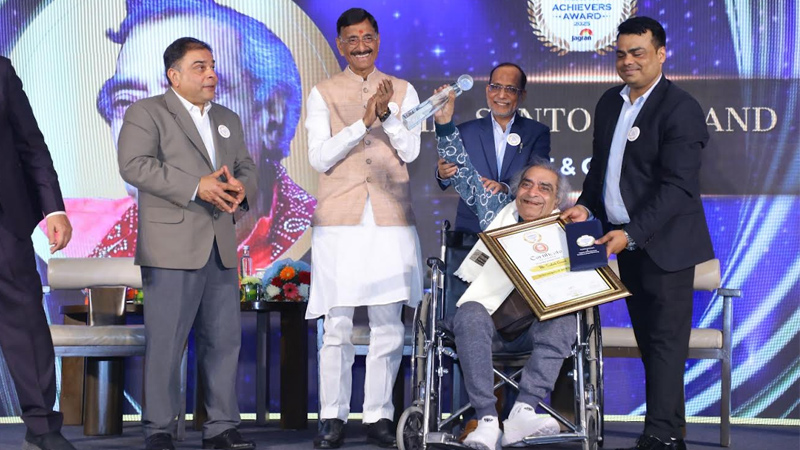
The cultural spotlight fell on veteran lyricist and poet Santosh Anand, whose songs have echoed across generations of Hindi cinema. At 97, Anand accepted the honour with characteristic humility, reflecting on a life shaped by perseverance and hope.
Healthcare honours spanned both modern and traditional systems. Manoj N. Nesari was recognised for strengthening Ayurveda’s place in national and global health frameworks. Padma shri Mohammed Abdul Waheed was honoured for his research-backed work in Unani medicine, while padma shri Mohsin Wali received recognition for his long-standing contribution to patient-centred care.
Education and social development also featured prominently. Padma shri Zahir Ishaq Kazi was honoured for decades of work in education, while former Meghalaya superintendent of Police T. C. Chacko was recognised for public service. Goonj founder Anshu Gupta received an award for his dignity-centred rural development initiatives, and the Hunar Shakti Foundation was honoured for empowering women and young girls through skill development.
The Lifetime Achievement Award went to former IAS officer Shailaja Chandra for her long career in public healthcare and governance, particularly in the traditional systems under Ayush.
Speaking at the event, Hamdard chairman Abdul Majeed said the awards were a tribute to those who combine excellence with empathy. “These awardees reflect Hakeem Sahib’s belief that healthcare, education and public service must ultimately serve humanity,” he said.
Minister Seth struck a forward-looking note, saying India’s young population gives the country a unique opportunity to become a global destination for learning, health and wellness by 2047.
The ceremony also featured the trailer launch of Unani Ki Kahaani, an upcoming documentary starring actor Jim Sarbh, set to premiere on Discovery on 11 February.
Instituted in memory of Unani scholar and educationist Hakeem Abdul Hameed, the awards have grown into a national platform that celebrates those building a more inclusive and resilient India. For one evening at least, the spotlight was not just on success, but on service with substance.






