iWorld
OpenAI hits back at Elon Musk’s lawsuit ahead of trial
Company calls claims “baseless” and accuses Musk of trying to disrupt a rival.
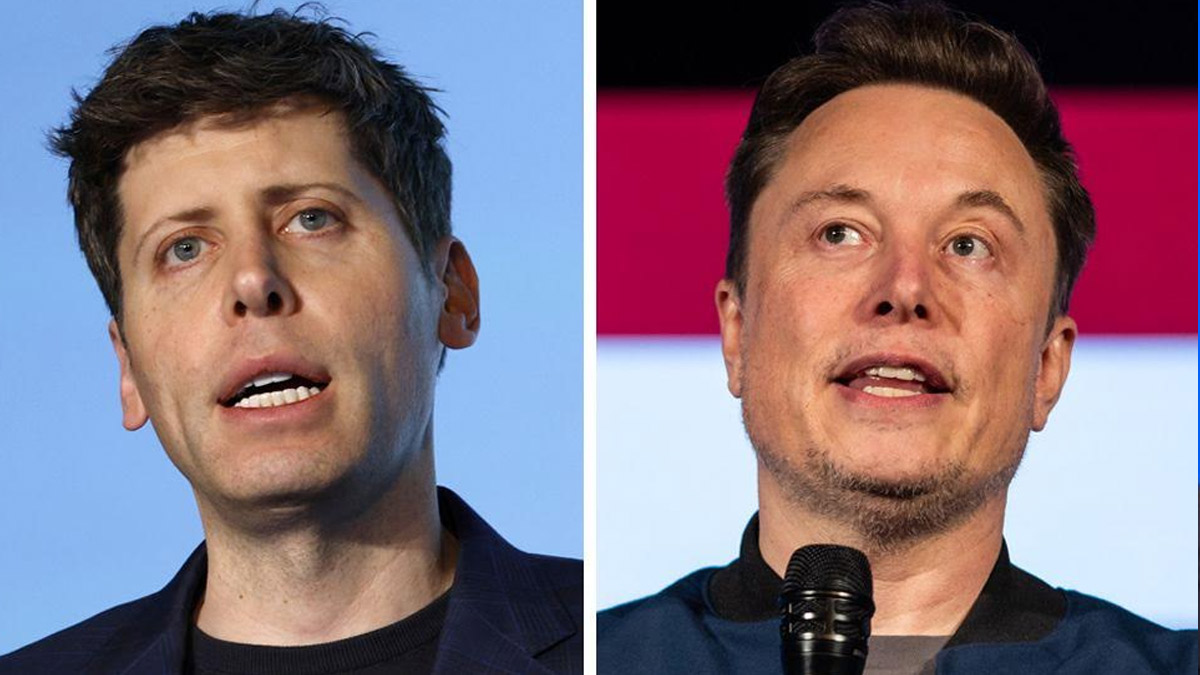
MUMBAI: When the stakes are measured in billions and egos are involved, even Silicon Valley titans can turn a courtroom into a battlefield. OpenAI has issued a sharp public response to Elon Musk’s ongoing lawsuit, accusing the billionaire of filing the case to harass a competitor rather than address genuine concerns. In a strongly worded statement shared on its official X account, OpenAI described Musk’s allegations as “baseless” and suggested the lawsuit is an attempt to disrupt the company as the case heads toward trial later this month in Oakland, California.
The response comes after Musk’s legal team recently amended the complaint, proposing that any damages potentially exceeding $150 billion should go to OpenAI’s nonprofit entity rather than to Musk personally. OpenAI questioned the timing and motive behind this change, calling it a late-stage attempt to “pretend to change his tune” on the nonprofit structure.
The company further labelled the lawsuit a “harassment campaign”, arguing that Musk’s actions are driven by personal rivalry, ego, and a desire for greater control and financial upside.
At the heart of the dispute is Musk’s claim that OpenAI has abandoned its original nonprofit mission of developing artificial intelligence for the benefit of humanity. A co-founder who left in 2018, Musk is seeking governance changes, including the removal of CEO Sam Altman from the nonprofit board, and the return of certain financial gains linked to Altman and President Greg Brockman.
OpenAI has firmly rejected these allegations, maintaining that its current hybrid structure, a public-benefit corporation overseen by a nonprofit parent remains true to its long-term goals. The company has also previously accused Musk of anti-competitive behaviour aimed at weakening its leadership.
As the case prepares for a jury trial, this public exchange highlights the deepening rift between two of the most influential figures in the AI revolution and raises broader questions about governance, mission, and power in the fast-moving world of artificial intelligence.
In the high-stakes game of AI, it seems the real drama isn’t just inside the models, it’s playing out in courtrooms too.

iWorld
Meta plans 8,000 layoffs in new AI-led restructuring wave
First phase from May 20 may cut 10 per cent workforce amid AI pivot.
MUMBAI: At Meta, the future may be artificial but the cuts are very real. The social media giant is reportedly preparing a fresh round of layoffs, with an initial wave expected to impact around 8,000 employees as it doubles down on its artificial intelligence ambitions. According to a Reuters report, the first phase of job cuts is slated to begin on May 20, targeting roughly 10 per cent of Meta’s global workforce. With nearly 79,000 employees on its rolls as of December 31, the move marks one of the company’s most significant workforce reductions in recent years.
And this may only be the beginning. Sources indicate that additional layoffs are being planned for the second half of the year, although the scale and timing remain fluid, likely to be shaped by how Meta’s AI capabilities evolve in the coming months. Earlier reports had suggested that total cuts in 2026 could reach 20 per cent or more of its workforce.
The restructuring comes as chief executive Mark Zuckerberg continues to steer the company towards an AI-first operating model, committing hundreds of billions of dollars to the transition. Internally, this shift is already visible: teams within Reality Labs have been reorganised, engineers have been moved into a newly formed Applied AI unit, and a Meta Small Business division has been created to align with broader structural changes.
The trend is hardly isolated. Across the tech sector, companies are trimming headcount while investing aggressively in automation. Amazon, for instance, has reportedly cut around 30,000 corporate roles nearly 10 per cent of its white-collar workforce citing efficiency gains driven by AI. Data from Layoffs.fyi shows over 73,000 tech employees have already lost jobs this year, compared with 153,000 in all of 2024.
For Meta, the move echoes its earlier “year of efficiency” in 2022–23, when about 21,000 roles were eliminated amid slowing growth and market pressures. This time, however, the backdrop is different. The company is financially stronger, generating over $200 billion in revenue and $60 billion in profit last year, with shares up 3.68 per cent year-to-date though still below last summer’s peak.
That contrast underlines the shift underway. These layoffs are less about survival and more about reinvention. As Meta restructures itself around AI from autonomous coding agents to advanced machine learning systems, the question is no longer whether the company will change, but how many roles will be left unchanged when it does.