iWorld
Amazon MX Player unveils over 100 new shows at StreamNext event

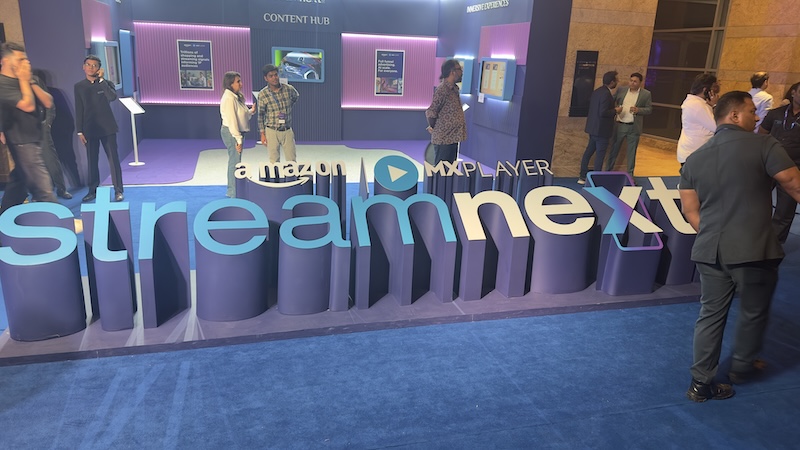
MUMBAI: It was meant to amaze and Amazon MX Player’s first edition of StreamNext event did so – more than expected. It showcased the advertising video on demand platform’s ambitious plans for 2025, featuring over 100 new show announcements and interactive ad innovations. Attendees included global marketing leaders such as Martin Sorrell and Benedict Evans, alongside entertainment figures like Bobby Deol, Suniel Shetty, Jackie Shroff, and Malaika Arora.
Amazon MX Player head Karan Bedi highlighted the platform’s extensive reach with 1.4 billion app downloads and over 250 million unique monthly users across mobile and connected TVs. “Amazon MX Player is driving the shift from linear TV to digital streaming, offering unmatched free content across genres,” said Bedi. “The key thing about this growth is that it is not just restricted to a single demographic but is happening across the board — across ages, genders, and income groups. The main driver of this shift is that audiences are moving from TV to digital as India’s premier mass consumption medium. But more than just reach, streaming also provides a higher quality of engagement. In many countries, especially India, a higher proportion of users engage with ads while streaming when compared to TV.
“Going beyond engagement, to actual ROI in terms of recall or consideration, streaming wins over every other medium. While it scores well on immediate impact, the difference is even more pronounced from a long-term impact perspective, where the gap widens. This is because video streaming is an active consumption medium, and TV is passive,” added Bedi.
Amazon MX Player content head Amogh Dusad unveiled 40 new Hindi originals and returning favourites like Aashram, Hunter, Hip Hop India, and Playground. New series include Bhay – The Gaurav Tiwari Story, starring Karan Tacker and Kalki Koechlin; The Titan Story, chronicling the rise of the Indian brand Titan; and First Copy, a crime drama set in 1990s Mumbai.

Reality show Rise and Fall, featuring Ashneer Grover and produced by Banijay Asia, follows contestants divided into “Rulers” and “Workers” competing in an iconic skyscraper setting. The platform also announced Petty Cash, a thriller about a botched bank robbery in Purulia, starring Tanya Maniktala and Sahil Mehta.
Bedi emphasised the platform’s role in transforming advertising by leveraging Amazon’s data insights. New ad formats, including in-stream shoppable ads, were introduced, boasting viewer interaction rates six to seven times higher than industry standards.
“Our audiences are highly engaged viewers and we have a strong understanding of their shopping patterns, an advantage that only Amazon MX Player can provide. Even brands that don’t sell products or services on Amazon can connect to customers through this premium world of content and by leveraging our first-party shopping signals, to enhance their campaign effectiveness”, said Amazon MX Player director Aruna Daryanani.
Amazon Ads India head Girish Prabhu described Amazon MX Player as a “full-funnel advertising solution” allowing brands to directly measure campaign outcomes and reach highly engaged audiences.
It was followed by an evening get together of the entertainment industry at a scale not witnessed for a long time now, probably since the Covid lockdowns. Most industry veterans appreciated the no-expenses-spared approach by the Amazon team with Saleem-Suleiman performing some of their favourite hits, and getting both the advertising and marketing professionals and entertainment executives and stars on the dance floor swaying to their beats.
A host of stars including producers like Sameer Nair, Deepak Dhar, Lalit sharma, JD, Sudhir Sharma, Lalit Sharma, Sameer Gogate, All3Media’s Sabrina Douquet, Rishi Negi, Neil Bhatt, Mishaal Wanvari, Khalid Khan, Prerna Wanvari, Jennifer Winget, Rajiv and Raghu Laxman, Saurabh Tiwari, Namit Sharma, Ratna Sinha, Manish Singhal, Atul Agrawal Rithwilk Dhanjani, Tejkiran Bajaj, Zakir Khan, Arjun Bajalani, Simple Kaul, Juhi, Manav Gohil, Varun Badola, Rajeshwari Sachdeva, Natalie de Lucio, amazon’s Nikhil Madhok – spent the evening catching up with each other.






