
Movies
Rooted stories go mainstream as cultural specificity wins wider audiences at FICCI FRAMES
Industry leaders explore why cultural specificity is travelling beyond its home turf


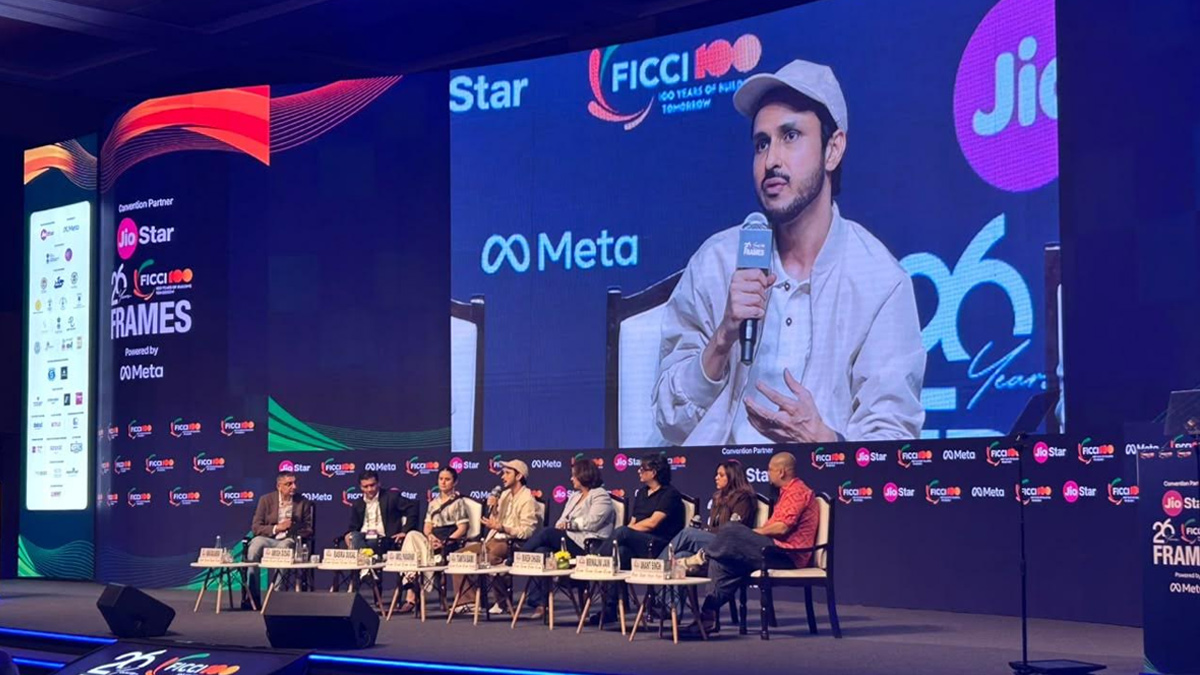
MUMBAI: Rooted storytelling is finding routes far beyond its hometown. At a time when audiences have more content choices than ever, cultural specificity, authentic characters and sharply observed worlds are emerging as important ingredients in making stories travel.
That was the central theme of a panel on “The New Mainstream: Why Rooted Stories Are Winning Audiences” at FICCI Frames 2026 in Mumbai.
Moderated by Naman Ramachandran, the discussion brought together perspectives from across production, streaming, casting and acting, with participants including Mrinalini Jain, Tanya Bami, Amogh Dusad, Mukesh Chhabra, Anant Singh, Amol Parashar and Abhay Verma.
The conversation challenged the idea that “rooted” automatically means rural, regional or set in a small town. Instead, rootedness was discussed as the credibility of a world, the specificity of its characters and the emotional truth that makes audiences recognise something of their own lives in a story.
One of the strongest ideas to emerge from the discussion was that geography alone does not make a story rooted.
A narrative set in an affluent South Mumbai boardroom can be just as culturally specific as one set in a village in Uttar Pradesh. What matters is whether the characters behave, speak and make choices in ways that feel true to the world they inhabit.
This distinction also applies to adaptations and international formats. Audiences do not necessarily approach an Indian adaptation through the lens of its source material. They can engage with it as a story in its own right when the characters, conflicts and emotional stakes are convincingly localised.
Projects such as Aarya, Campus Beats and Trial by Fire illustrate the breadth of this approach, spanning different settings, genres and formats while relying on character and emotional authenticity to connect with viewers.
The creative process, however, comes with a recurring balancing act: how far can creators go in preserving local authenticity without making a story inaccessible to a wider audience?
Language and dialect are particularly important. Stories set in regions where Hindi is not the primary language may involve multiple versions of Hindi, depending on the community and individual character. Decisions around dialogue, casting and performance can therefore affect how convincingly a world is recreated.
Similar choices arise when depicting professions, institutions and historical periods. Research and immersion can help creators understand how people actually speak, work, form relationships and navigate their surroundings.
The discussion highlighted examples such as Delhi Crime and Manto, where understanding the professional and social worlds of the characters was central to creating believable narratives.
Casting has become another important part of the rooted storytelling equation.
The traditional reliance on a small pool of recognisable stars can limit how convincingly a story represents a particular community or location. The growing emphasis on authenticity has opened greater space for actors who naturally fit the physicality, language and behavioural details of the worlds being portrayed.
This approach can involve looking beyond major cities and established talent pools to find performers who genuinely resemble the people being represented.
The result is not necessarily a rejection of stars. Rather, it expands the casting palette and gives creators more options to populate fictional worlds with characters who feel lived-in rather than manufactured.
The rise of global streaming has also weakened the old assumption that stories need to be made generic to appeal to a national or international audience.
Earlier mainstream Hindi cinema often favoured neutral accents, familiar settings and broadly relatable characters in an effort to maximise reach. Today, the proliferation of global content has made audiences more comfortable with unfamiliar languages, dialects, cultures and social contexts.
Subtitles and dubbing have played a significant role in this shift. Viewers can now sample stories from different countries without needing to understand their original language, turning streaming platforms into a kind of cultural window into other parts of the world.
The international reception of highly specific stories has demonstrated that local detail does not necessarily restrict a narrative’s appeal. In many cases, it can give the story a distinctive identity while the underlying emotions remain universally recognisable.
The discussion also examined the relationship between scale and creative specificity.
As platforms seek larger audiences, there can be pressure to broaden concepts, simplify characters or make settings more familiar. But this can risk removing the very details that make a story distinctive.
A strong creative idea, a clear point of view and a convincing world can provide the foundation for scale without requiring the story to lose its identity.
Examples such as Maamla Legal Hai show how an accessible set of characters can introduce audiences to a more specific social or institutional world. The familiarity of the characters can provide an entry point, while the setting and subject matter add novelty.
Similarly, large-scale productions can remain rooted when their spectacle serves a believable world and emotionally grounded characters rather than replacing them.
The conversation also drew a line between what data can identify and what creative instinct must deliver.
Audience research can reveal viewing behaviour, preferences and patterns across regions. But authenticity is harder to engineer through spreadsheets or algorithms. It often comes from creators who understand a particular community, profession, culture or lived experience.
For platforms, this makes relationships with storytellers increasingly important. Creators bring knowledge of characters and worlds that can be difficult to reproduce through conventional audience segmentation alone.
At the same time, audience response suggests that rooted stories do not necessarily remain confined to their place of origin. Shows set in places such as Delhi, Patna or smaller towns can find viewers across the country when the emotional and narrative foundation is strong.
The broader takeaway from the panel was that India’s mainstream is becoming more diverse rather than more generic.
Rooted storytelling is not simply about putting a story in a village, adding a regional dialect or recreating a particular visual style. It is about creating a world with enough specificity to feel real and enough emotional resonance to feel familiar.
As audiences continue to discover stories from across India and the world, the opportunity for creators may lie less in making content that looks universal and more in making local worlds feel truthful. In an increasingly crowded content landscape, being specific may be one of the clearest ways to stand out.






