
Movies
From Ramayana to regional cinema, India’s cultural depth offers a global IP canvas
Creators highlight India’s diverse stories, music and literature as global IP opportunities


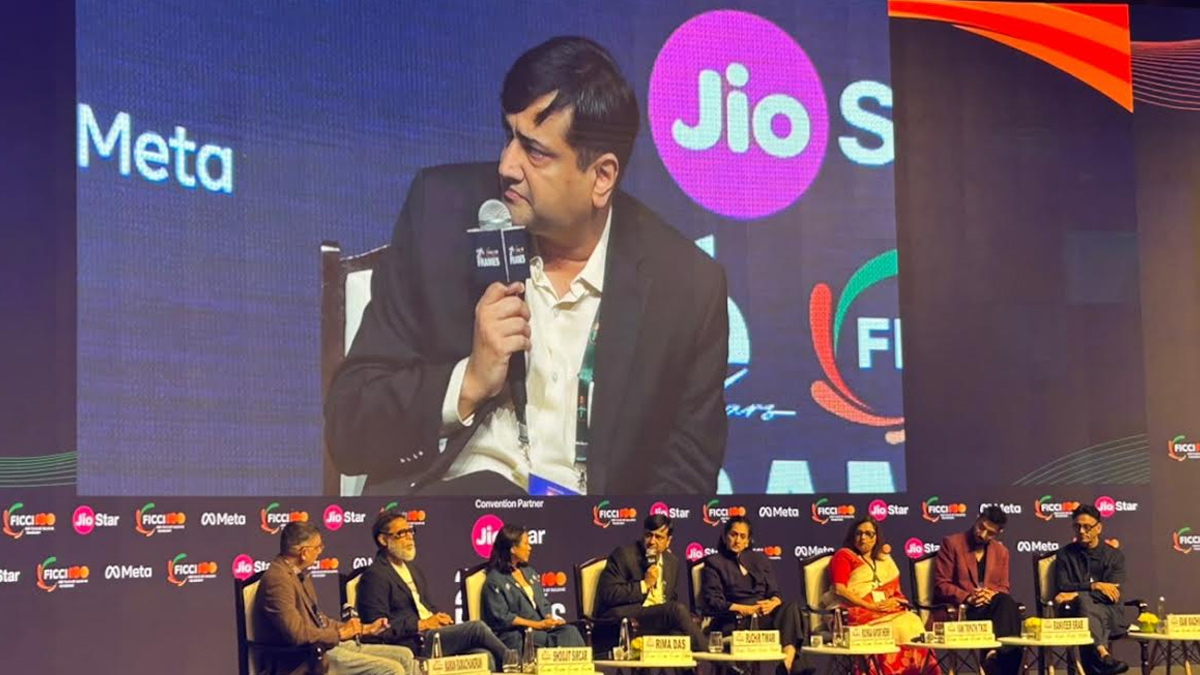
MUMBAI: Storytelling has no passport, and India’s stories may be ready to travel further than ever. The country’s creative industry needs to look beyond simply packaging content as intellectual property and focus on the cultural depth, originality and emotional universality that can help Indian stories connect with audiences worldwide.
That was the broad message from the panel discussion From India to the World: Creating IP that Transcends Borders at FICCI Frames 2026, where filmmakers, actors, producers, chefs and media executives explored what can make Indian intellectual property travel across languages, markets and cultures.
Held as part of FICCI Frames 2026 at the Grand Hyatt Mumbai, the discussion brought together filmmaker Shoojit Sircar, filmmaker Ram Madhvani, actor and producer Vani Tripathi Tikoo, filmmaker Rima Das, celebrity chef, author and actor Ranveer Brar and Zee Entertainment Enterprises chief cluster officer for Hindi movie channels Ruchir Tiwari. The session was moderated by Variety Asia editor Naman Ramachandran. The event is being held under the theme India’s Media Moment: Creating Value in an Age of Infinite Content.
A key thread through the discussion was the tension between intellectual property as a commercial asset and stories as cultural expressions that evolve as they travel.
The conversation questioned whether every culturally powerful story needs to be treated as a conventional property that can be registered, packaged and monetised. Indian food, mythology, folklore, music and traditional narratives often have deep collective roots, making ownership more complicated than simply identifying a creator or rights holder.
This distinction was particularly relevant to the discussion around cultural IP. The Ramayana and Mahabharata, for instance, have travelled across generations, regions and countries, continually acquiring new interpretations while retaining their core identities.
The same principle can apply to food and other cultural expressions. Turmeric and its derivatives, for example, illustrate how something deeply embedded in Indian culture can acquire new commercial and scientific applications without losing its cultural origin.
The challenge for the Indian creative industry, therefore, is to build commercial value around cultural assets without reducing them to purely transactional properties.
The panel also explored why audiences in markets such as Brazil, Korea or Germany might choose to watch an Indian film or series despite language and cultural differences.
The answer lies less in trying to make Indian stories look international and more in making them emotionally relatable.
Stories can travel when audiences recognise a human predicament, relationship or emotion, even when the surrounding world is unfamiliar. At the same time, audiences can also be drawn towards worlds that are completely different from their own.
That combination of familiarity and discovery can make subtitles and cultural differences less of a barrier.
Global successes such as Squid Game have demonstrated how a deeply local story can acquire international relevance without being stripped of its cultural identity. The same approach can apply to Indian content, where the sheer diversity of the country’s languages, communities and storytelling traditions provides an unusually broad creative pool.
The Indian creative ecosystem is not a single market either. Tamil, Telugu, Malayalam and Kannada cinema, for instance, represent distinct creative cultures, while Assamese, Marathi, Gujarati, Bhojpuri and other language industries add further layers to the country’s storytelling landscape.
Rather than searching for a single formula for international success, the industry can benefit from preserving that diversity.
The discussion also challenged the idea that a successful Indian title automatically needs to be replicated.
Some stories are complete experiences that audiences connect with as standalone works. Others create worlds and characters that viewers want to revisit, opening the door to sequels, spin-offs and wider franchises.
The important distinction is between extending a world because audiences genuinely want more of it and mechanically reproducing a formula because an earlier title succeeded.
This creates a paradox for content businesses. Data can identify what has worked, but simply copying the ingredients of a successful title does not guarantee another hit. The creative opportunity lies in finding another distinctive story rather than producing multiple versions of the last successful one.
That becomes particularly important as Indian content reaches more international audiences through streaming platforms and other digital distribution channels.
For independent filmmakers, however, creating an internationally relevant story is only one part of the journey. Discovery, financing, marketing and distribution remain significant hurdles.
The experience of regional and independent cinema shows how festivals, theatrical releases, streaming platforms, cultural institutions, schools and colleges can all contribute to a film’s long-term life.
Films can continue to find audiences years after their initial release if they remain available and discoverable. But availability alone is not enough. Audiences first need to know that the work exists.
That makes marketing and discovery infrastructure particularly important for filmmakers operating outside the established commercial system.
The discussion also highlighted the need to create stronger pathways for filmmakers from smaller communities and less-established creative centres. A film or story does not necessarily need to originate from one of India’s traditional entertainment hubs to acquire global relevance.
Empowering new filmmakers, providing them with production support and allowing them to develop beyond the expectations created by their earlier work could broaden the range of Indian stories reaching international audiences.
As the conversation turned to India’s biggest untapped cultural opportunities, music emerged as one of the strongest possibilities.
Indian music has historically crossed borders, with songs and musical traditions finding audiences in places far removed from their origins. The current global interest in Indian music suggests there is scope to build on that connection through contemporary creators as well as traditional sounds.
Literature was another major opportunity. India’s vast body of books, poetry, folklore and regional writing offers a deep reservoir of stories that can be adapted for film, television, streaming and other formats.
The most valuable source material may not always come from established commercial properties. Family histories, oral storytelling, local legends and personal experiences can provide equally powerful foundations for new IP.
The panel ultimately shifted the focus from IP as an asset to creators as the force that gives it life.
India’s enormous community of passionate creators across languages and formats represents a major advantage. As creators become more comfortable with the grammar of global storytelling and international audiences become more receptive to Indian narratives, the distance between local stories and global audiences is narrowing.
The opportunity now is to build an ecosystem in which those creators can experiment, find audiences, retain long-term value and take their stories beyond India’s borders.
For Indian IP, the global journey may therefore begin with something deceptively simple: telling an authentic story well. The bigger opportunity is to make the world curious enough to come back for another one.






