MAM
When the chips are down, hand sanitizer brands ride high

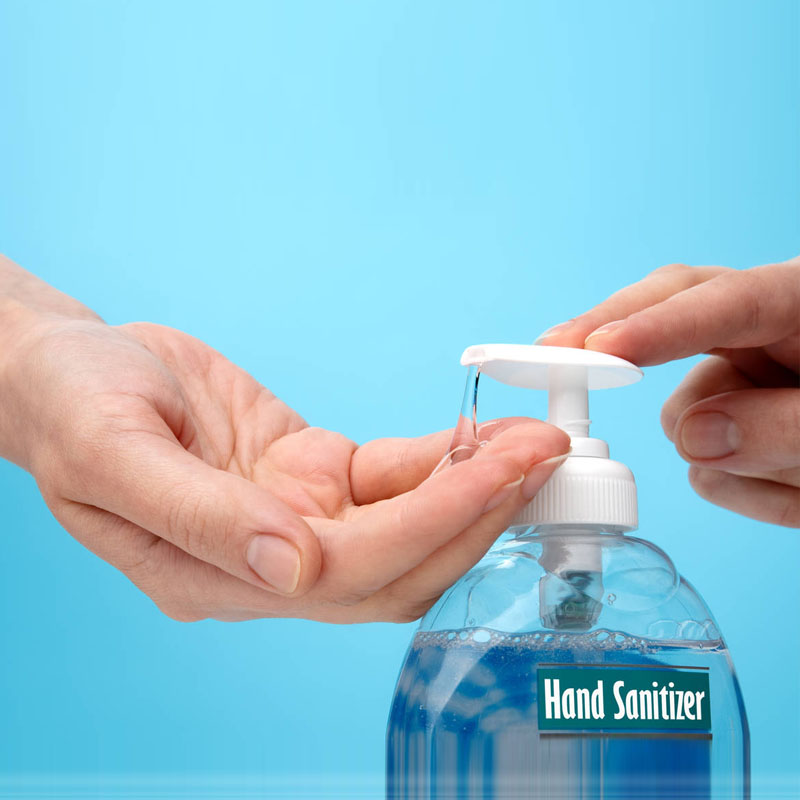
MUMBAI: The simple act of washing your hands has become the only known way to stay safe from COVID-19. As more people, including the prime minister, health officials, celebrities, public faces and brands, started encouraging hygiene, the demand for products like soaps and hand sanitizers have shot up. In fact, hand sanitizers have become one of the fastest-selling products in the global market.
Reckitt Benckiser, the company that produces products under the brand name Dettol, has significantly scaled up production capacity of Dettol soaps, liquid soap, and hand sanitizers to meet the unprecedented demand.
Madison Media Sigma COO Vanita Keswani notes, “We know COVID-19 has heightened demand for sanitizer and how! Even in the coming months, healthcare and hygiene habits will certainly form an integral part of our lives, which will ensure a good future for the sanitizer industry at least for this year.”
As per Digitalkites senior vice president Amit Lall there is a major pandemic glaring across the globe, it’s a choice for humanity between life and death. Ways by which you can protect and control yourself, is by social distancing and by washing your hands thoroughly at regular intervals or using sanitizers. “This communication is not only broadcasted by the government across all channels but the same is also getting emphasized by celebrities, politicians and many digital and social influencers. By doing so, this whole exercise will not only help us to contain the spread of COVID-19 but will also help building this as a habit which will have a positive impact towards maintaining better hygiene standards. This will in-turn create an up-take for sanitizer as a product.”
In the wake of rising COVID-19 cases, VLCC has also upped the production of its hand washes and hand sanitizer products. “We decided to start manufacturing and distribute hand sanitizers as our humble contribution to the collective national effort of tackling the COVID-19 crisis and have accordingly diverted part of our manufacturing capacity to produce them. The pricing of the product is in keeping with the latest statutory regulations for all pack sizes,” says VLCC MD and group head Jayant Khosla.
Currently, the company’s GMP-certified plant in Haridwar that manufactures skin-care, hair-care and body care products is now only producing hand sanitizers.
Recently, ITC also commenced the production of Savlon sanitizers at its newly commissioned perfume manufacturing facility in Himachal Pradesh. The company said it will help produce an additional 1,25,000 litres of Savlon hand sanitizers to meet the growing demand.
Pee Safe vice president growth Pragya Upadhyay thinks it is a good time for health and hygiene companies since everyone is looking to get hand sanitizers, soaps, masks and other safety measures to protect themselves. People have become more conscious of cleanliness due to COVID-19.
She adds, “We had planned to launch our brand ‘Raho Safe’ in the month of May which was in the process since October. But when we realised that the demand for hand sanitizers is going to go up we had to advance it. We supplied as many hand sanitizers as possible in March itself.”
In line with the government order and in public interest, some brands have slashed their prices and others have chosen to keep the price cap as per the regulation.
Reckitt Benckiser Health South Asia CMO Pankaj Duhan says, “In our continuous commitment to public health and in compliance with the government order capping sale price of hand sanitizer, RB has taken steps to revise the sale price of Dettol hand sanitizer, including holding stocks.”
VLCC has decided to go ahead with the manufacturing and distribution of hand sanitizers at this point in time despite the adverse implications on gross margins as a consequence of the price capping mandated by the government. “The company is ensuring that these products, in 50 ml and 500 ml pack sizes, at the stipulated retail price of Rs 25 and Rs 250 respectively, reach pharmacies and general stores throughout India as quickly as possible, to cater to the surge in demand. We are also providing these to some NGOs, but we would not like to take any credit for that at this time,” says Khosla.
Upadhyay explains that despite the lockdown the company is supplying to hospitals and pharmacies. “We have distributed a lot of products to police personnel. We distributed it in the district commissioner office in Gurgaon and Pune. From our end, we are doing as much as possible to make sure everyone gets this product.”
As the demand for hand sanitizers surged, Pee Safe had to ship 40,000 orders in a three day time. According to Upadhyay, to meet the demand, everyone from the sales and marketing team had to come out in the warehouse to help in shipping the products.
Riding on the wave is Dabur India, which has launched 'Dabur Sanitize' hand sanitizer. Initially, the product will be available at every e-commerce platform is priced at Rs 370 (500 ml), Rs 200 (250 ml), Rs 122 (85 ml), Rs 85 (60 ml), and Rs 72 (50 ml).
ITC has also reduced the prices of Savlon sanitizers and is working to reach the new stocks with the revised prices to the market. ITC is also spreading awareness about the importance of hand hygiene through campaigns across digital, print and other communication platforms.
However, brands are not looking at spending any money on promotional activities as logistics remains the main concern due to the lockdown.
With new entrants emerging to meet demands, especially from the unorganised sector, the challenges will also rise for incumbents. Upadhyay feels that there is a fair share for everybody in the market because the demand has gone up to the level where everybody is in need of these products.
“It will help only if more and more manufacturers come in the picture otherwise there will be a lack of supply. Six months back or just before COVID-19 hit, hygiene consciousness in India was at level one. Currently, hygiene consciousness has reached level ten. In the coming months, it is going to remain somewhere between six to seven, due to the awareness among people,” says Upadhyay.
Answering to what value will it add to an existing company to ramp up production and keep costs low Lall said, “As this pandemic is spreading its wings fast, it’s important for us to curtail it. It is important that the supply of the product should be uninterrupted and easily available to avoid fear and anxiety among people. Hence, the main prerogative of the brands in this hour of crisis, should be to ramp up their production and focus on distribution. The economics of business states that, the higher the volume of production, the lesser is the per unit cost. Also at this trying times, it’s important for brands to play a pivotal role towards CSR initiative to control the mayhem and add a humanitarian touch.”
Market players are adopting numerous kinds of strategies to hold consumer base. Where some manufacturers are adding fragrances to their formulation others are slashing the prices to attract the consumer.
However, a recent study shows that consumers care more about the availability than the brand and its attractive features. If products are unavailable, 40.55 per cent consumers said they would turn to less familiar brands as options. Whereas, 33.85 per cent consumers said they’d wait until the store restocks their preferred brands. 28.75 per cent consumers will rather try that they’d try other stores to find them. 17.50 per cent consumers will choose to sign up for product restocking updates.