MAM
Viral today, forgotten tomorrow? Goafest panel backs long-term branding
Industry leaders debate virality, AI and why branding still matters in scroll culture


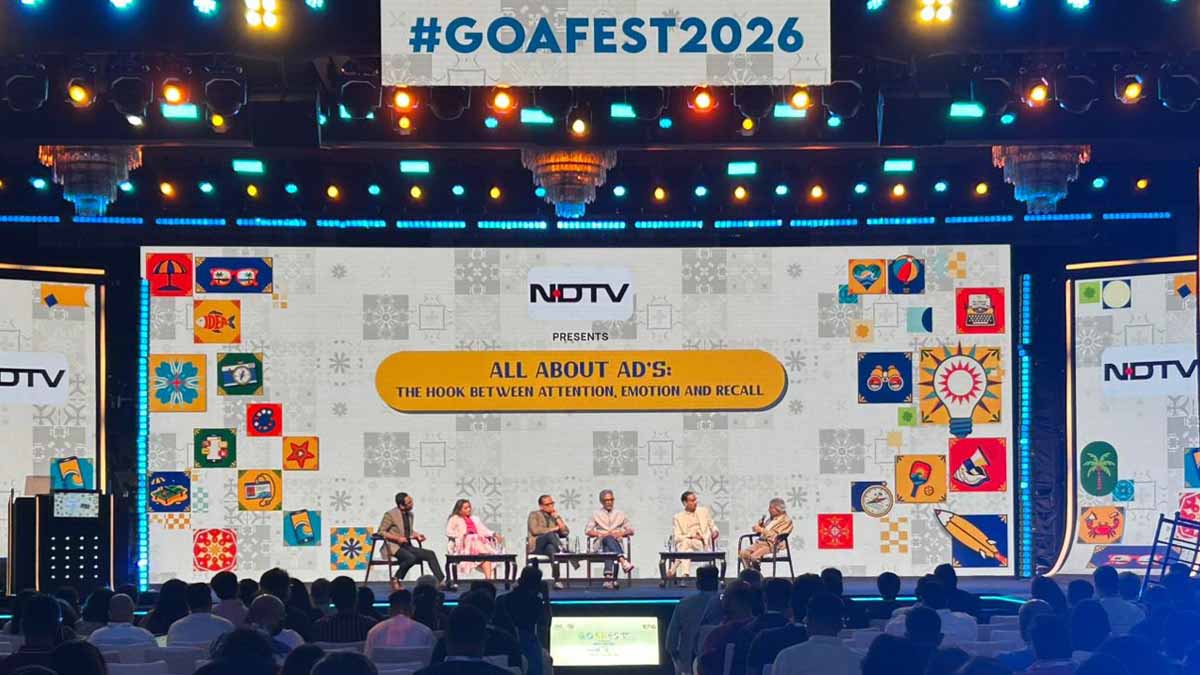
MUMBAI: In the battle for attention, India’s advertising heavyweights made one thing clear at Goafest 2026: brands may need a viral hook to stop the scroll, but long-term trust still seals the deal.
At a packed session titled All About Ads: The Hook Between Attention, Emotion And Recall, hosted by NDTV, Aditya Birla Capital chief marketing officer Darshana Shah, NDTV CEO and editor in chief Rahul Kanwal, Havas India group chief executive officer for India, Southeast Asia and North Asia Rana Barua, Swiggy chief executive officer Rohit Kapoor and Madison World chairman Sam Balsara joined NDTV Profit associate executive editor Alex Mathew for a discussion on the changing grammar of modern advertising, where brands are expected to trend today and still be remembered tomorrow.
The discussion repeatedly circled back to a central tension facing marketers: how to remain culturally relevant in an era of shrinking attention spans without sacrificing the slower craft of brand building. Panellists argued that while virality may deliver quick visibility, lasting consumer connection still depends on consistency, recall and emotional resonance.
The session explored how younger audiences are shaping advertising language itself. Brands today are increasingly positioning themselves around youth culture, relatability and rapid-fire content cycles. Yet the panel stressed that relevance cannot come at the cost of respect or authenticity. Campaigns rooted in cultural moments, festivals and everyday Indian experiences were highlighted as examples of how brands can remain playful while still retaining emotional depth.
The conversation also turned to the mechanics of modern consumer behaviour. Marketers today are navigating what was described as a “four-screen” reality of scrolling, streaming, searching and shopping, all happening simultaneously. With digital platforms compressing attention windows from seconds to mere moments, advertisers are now under pressure to establish a memorable hook almost instantly before earning the right to tell a deeper story.
Still, the panel warned against becoming overly dependent on performance marketing metrics alone. Several speakers noted that brands focused entirely on short-term conversion risk disappearing the moment advertising spend is reduced. The argument was that while performance marketing delivers measurable outcomes, it cannot replace the slower accumulation of brand equity built through familiarity, trust and cultural association.
That distinction between “content” and “campaign” emerged as a recurring theme throughout the discussion. Viral memes, moment marketing and reactive social content may create immediate spikes in visibility, but enduring campaigns are often built over years of consistent messaging. Legacy examples from Indian advertising were cited as proof that repetition, continuity and emotional memory still carry enormous value in an increasingly fragmented media landscape.
The panel also reflected on how certain accidental moments can become branding gold. Cultural references, spontaneous internet trends and public conversations can propel products into the spotlight overnight, but sustaining that momentum requires distribution, strategy and disciplined storytelling beyond the initial buzz.
Artificial intelligence, unsurprisingly, loomed large over the conversation. While AI was acknowledged as a powerful tool for speeding up production and democratising creativity, the consensus in the room was that technology still cannot replace human insight. The emotional intelligence required to understand culture, language nuance, regional sensitivities and consumer behaviour was framed as fundamentally human work.
Rather than replacing creative professionals, AI was positioned as a productivity layer that could lower production costs and increase the frequency of content creation. Speakers noted that younger audiences now expect campaigns and creatives to refresh far more quickly than in previous decades, forcing brands to produce more content at a faster cadence.
The panel further highlighted the unique pressures facing financial services marketers, where regulatory constraints, pressure for immediate ROI and boardroom scrutiny often make long-term brand building more difficult. Unlike consumer goods brands that naturally lend themselves to emotional storytelling, financial brands frequently default to functional messaging and performance-led communication. Yet even here, the need for emotional connection and trust was described as critical.
As the session drew to a close, one message lingered louder than any slogan: in a world overflowing with content, brands cannot afford to merely interrupt consumers. They must earn attention, sustain relevance and deliver consistently on the promises they make. In the attention economy, it seems, the real currency is still memory.