
iWorld
How Assam is turning live music into a Rs 700 crore tourism opportunity
Post Malone concert generated Rs 43 crore as Assam builds a concert-led growth model


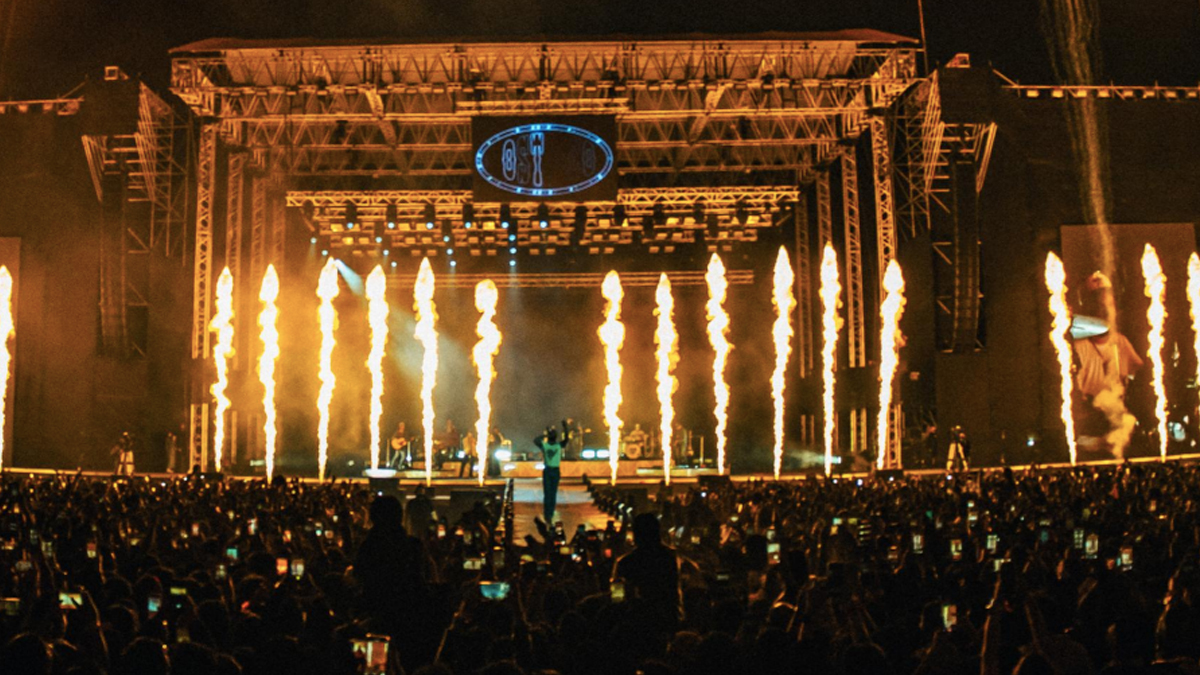
GUWAHATI: When international hip-hop heavyweight Post Malone performed in Guwahati, he did not just hit high notes, he generated massive revenue for the local treasury. For decades, the North-Eastern state of Assam was primarily known for its tea estates and wildlife sanctuaries. However, a joint report by live entertainment platform BookMyShow and EY-Parthenon, titled The Assam Blueprint: Turning Live Music Economy into a Tourism Multiplier, reveals that the state is successfully leveraging large-scale music events to drive substantial economic growth.
By treating live music events as vital economic infrastructure rather than occasional entertainment, Assam is converting audience enthusiasm into measurable financial gains. The outcomes of this strategy demonstrate that when global stars perform, the state’s economy benefits significantly.
The financial returns from the Post Malone concert offer a detailed look at how a single headline act stimulates multiple sectors. The event generated a total economic impact of Rs 43 crore across various industries, injecting Rs 32 crore directly into the local Assamese economy. Furthermore, the state government collected Rs 5 crore in direct GST revenue from the event alone.
The spending dynamics reveal a strong consumer multiplier effect. Data from BookMyShow shows that for every Rs 100 spent on a concert ticket, attendees contributed an additional Rs 899 into adjacent ancillary sectors, including accommodation, transport, retail, and dining.
The precise breakdown of this normalized spending per Rs 100 ticket shows exactly where consumer funds were directed:
Accommodation accounted for Rs 235
Interstate travel accounted for Rs 204
Food and beverage saw an injection of Rs 104
Concert-specific shopping took Rs 103
Adjacent entertainment options cost Rs 76
General local shopping reached Rs 67
Official merchandise took Rs 61
Grooming services claimed Rs 26
Local transportation pulled in Rs 23
The concert attracted approximately 20,000 attendees, drawing 53 per cent of its crowd from outside Guwahati. These outstation travelers arrived from over 200 cities and towns across India, creating a substantial surge in demand for local hospitality.
Among these out-of-town visitors, 67 per cent booked paid accommodation, spending an average of Rs 10,236 on their stays. Demonstrating that live music extends trip durations, 64 per cent stayed for more than one night, with 17 per cent spending upwards of Rs 15,000 on lodging. Regarding accommodation choices, 39 per cent stayed in a Guwahati hotel, 27 per cent opted for homestays like Airbnb or MakeMyTrip, 22 per cent stayed with friends or relatives, 11 per cent did not require overnight accommodation, and 1 per cent checked into hotels just outside the city boundaries.
Hotel general managers reported a 30 per cent increase in occupancy over the concert weekend. Guests arrived from domestic metros such as Mumbai, Bengaluru, and Hyderabad, alongside international music tourists flying in from the UK and Germany. This high demand caused room tariffs to reach peak annual pricing brackets. Visitors stayed for an average of two nights, increasing in-room dining volumes and driving inquiries for local tours.
Interstate transit represented a major expense, with attendees spending an average of Rs 8,864. Those traveling by air recorded the highest average spend at Rs 17,538, despite operational hurdles experienced by IndiGo during the period. Road mobility was highly favored, with 37 per cent choosing to travel via personal cars, cabs, or taxis.
Overall, passenger traffic rose by over 35 per cent during the concert window. This contributed to a 10 per cent year-on-year rise in general travel demand for Guwahati alongside routes connecting Delhi, Mumbai, Bengaluru, and Shillong, culminating in a 28 per cent increase in the final quarter of 2025 compared to 2024.
Local transport services experienced near-universal participation, with 99 per cent of attendees utilizing local transportation during their stay, spending an average of Rs 1,002. Cabs and taxis were the preferred choice for 51 per cent of riders, causing ride demand to increase by over 50 per cent. This required local operators to source additional fleets from nearby towns and neighboring states to manage the influx of metro and international riders. Intercity travel demand onwards to Shillong and Kaziranga National Park also increased by 20 per cent.
The culinary and retail sectors experienced an equivalent financial lift. Inside the concert arena, 88 per cent of respondents spent an average of Rs 2,404 on food and beverages. Outside the venue, 92 per cent spent an average of Rs 2,126 at city restaurants and street vendors. Local eateries saw customer footfalls rise by over 33 per cent during pre- and post-concert hours, with group dining inflating average bill values. Food delivery platforms like Swiggy and Zomato recorded a 25 per cent increase in order volumes. Despite the rush, 44 per cent of diners reported securing tables easily, 42 per cent faced manageable wait times, 7 per cent experienced waits over 30 minutes, 5 per cent struggled to find tables, and 3 per cent did not look for dining options.
Fashion and lifestyle spending also rose due to the event. To prepare for the concert, 72 per cent of attendees made event-specific purchases, spending an average of Rs 4,497. Apparel led the purchases at 42 per cent, followed by shoes at 17 per cent, accessories at 15 per cent, and personal care or makeup at 6 per cent, while 20 per cent bought nothing new.
Additionally, 36 per cent of attendees purchased authentic regional items, spending an average of Rs 2,934 per person on local crafts and heritage goods. Nearly half of these shoppers (48 per cent) were under the age of 25, marking a youth-led interest in traditional Assamese manufacturing. This drove a 30 per cent increase in general retail footfalls across regional shopping streets and city malls.
Behind the scenes, a large operational workforce was deployed to manage the event. The concert mobilized a workforce of over 2,400 people. Safety and security personnel comprised the largest portion of the labor force at 31 per cent, highlighting tight coordination with local police for crowd control. Food and beverage teams accounted for 28 per cent of the staff, followed by production and technical crews at 10 per cent, and venue logistics operations at 10 per cent. This gig-economy surge provided short-term income for thousands of local semi-skilled and skilled workers, while giving regional suppliers experience handling staging, branding, quick-service technology, and waste management to international standards.
The broader reach of the concert extended across digital and traditional media channels. The event achieved a media coverage reach of over 5.1 billion across national and regional publications. On social media, the combined reach reached approximately 185 million. While official promotional content reached 1.3 million users, organic, user-generated content from fans, creators, and travel influencers generated an additional 175 million in digital reach, increasing Assam’s visibility as a travel destination.
This initiative is part of a broader, sustained economic plan. Over the past year, Assam has hosted 55 ticketed live events, marking a 222 per cent growth over the previous year. Ticket platform data shows a 188 per cent rise in live event footfalls in Guwahati during 2025 alone.
To sustain this growth, the state has introduced a formalized Concert Tourism Policy. Managed by the Assam Tourism Development Corporation (ATDC) as a single-window clearing house, the policy provides regulatory relaxations, such as open-ground excise permissions, alongside a Viability Gap Funding cushion of up to Rs 5 crore per event to mitigate promoter risks. The state is executing this vision via a strategic Public-Private Partnership (PPP) model with BookMyShow, where the platform handles curation, ticketing, production, and marketing, while the government provides logistical, administrative, and safety infrastructure.
The target over the next five years is to host fifteen to twenty major concerts across designated urban hubs like Guwahati, Dibrugarh, and Jorhat, maintaining a minimum attendance threshold of 20,000 spectators per event. This predictable event pipeline is projected to generate a cumulative economic impact of over Rs 700 crore within the state.
To support this projected influx, major infrastructure upgrades are underway. Passenger terminal capacity at the local airport is expanding from 6.5 million to 13 million travelers by 2032. Additionally, the state has approved the Asom Mala 3.0 road development program, investing Rs 3,217 crore into constructing 36 new bridges and over 850 kilometers of high-speed transport corridors. The hospitality sector is expanding concurrently, with 11 new luxury five-star properties under consideration from international brands including Marriott, Taj, Westin, and Wyndham.
By developing a dedicated, purpose-built concert park over the next five years and integrating local cultural expressions like Bihu, Bagurumba, and Sattriya dance forms into international opening acts, Assam is establishing a scalable model for regional economic development through the experience economy.




