
MAM
The creator economy’s next chapter: From viral videos to sustainable businesses
CII Big Picture Summit explores how digital-first ventures are challenging legacy media models


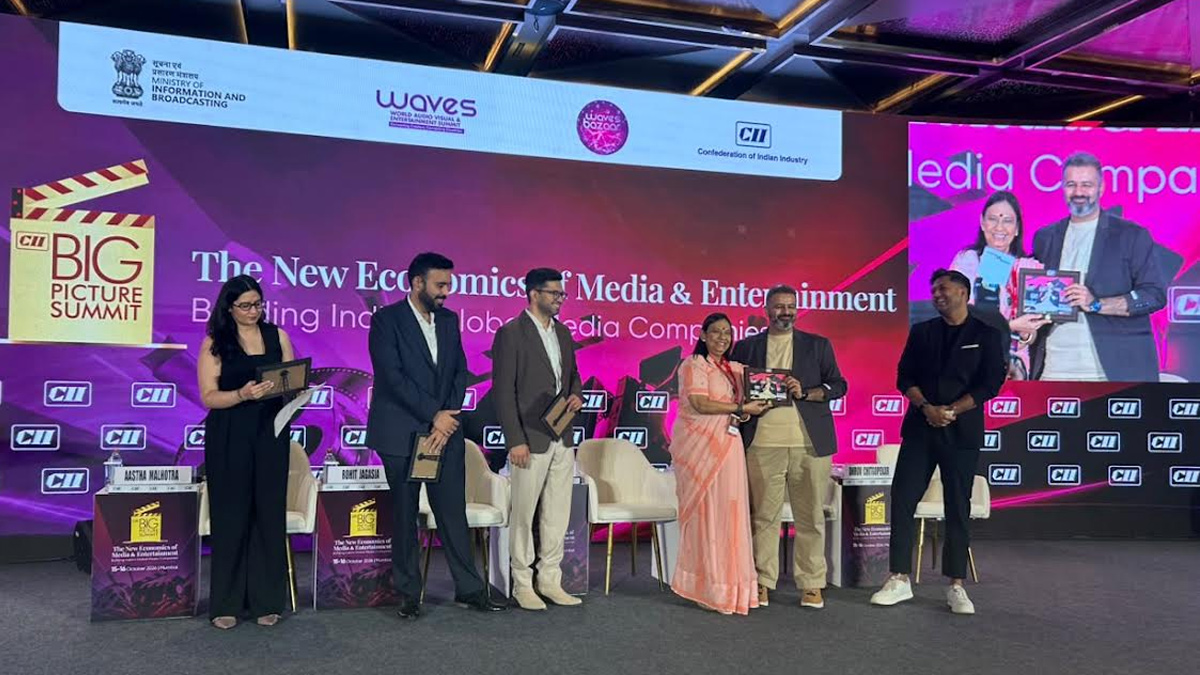
MUMBAI: The media business is no longer a closed club. With a smartphone, a strong idea and an audience willing to listen, creators can build entertainment brands, develop intellectual property (IP) and turn digital followings into sustainable businesses. As distribution barriers fall, ownership, community engagement and audience insights are emerging as key advantages for India’s next generation of media entrepreneurs.
These shifts were at the heart of the session Entrepreneurs are Rewriting Entertainment at the CII Big Picture Summit 2026, held at JW Marriott Juhu, Mumbai, on 15 and 16 October. Moderated by YouTube strategic partnerships manager Aastha Malhotra, the discussion featured Revenant eSports chief executive officer Rohit Jagasia, Pocket Aces co-founder Vinay Pillai, Yuvaa chief executive officer and co-founder Nikhil Taneja, and Collective Artists Network founder Dhruv Chitgopekar.
The panel examined how digital-first and creator-led businesses are challenging established entertainment models by building owned IP, using technology and data to understand audiences, and developing direct relationships with communities. The conversation also explored monetisation, creator-led brands, gaming, talent management and the structural changes allowing smaller ventures to compete with established media companies.
Traditional entertainment businesses often relied on large production budgets, established distribution networks and a handful of decision-makers to determine which ideas reached audiences. Digital platforms have changed that equation, allowing creators to test concepts, publish content and build followings without first securing approval from a broadcaster or studio.
This shift has also changed the definition of a media entrepreneur. Rather than depending primarily on distribution controlled by other businesses, entrepreneurs can build assets they own, including original formats, characters, shows and communities that can generate value over time.
India’s fragmented audience landscape presents an opportunity for ventures targeting specific languages, cultural groups and interests. A niche no longer necessarily means a commercially limited audience. Creators who understand a particular community can build distinctive businesses around its needs and preferences.
The scale of the opportunity is reflected in the number of digital channels gaining traction. The discussion cited more than 18,000 YouTube channels with over one million subscribers, illustrating how the creator economy has expanded beyond a small group of established publishers.
The challenge is no longer simply finding a route to distribution. It is developing a distinctive proposition, building an audience and converting that relationship into lasting commercial value.
A major difference between traditional broadcasting and digital-first entertainment is the ability to engage audiences in two-way conversations. Viewers can respond to content, share feedback and influence the direction of future programming.
This makes community engagement central to the creative process. Rather than producing content based solely on assumptions about audience preferences, media businesses can use comments, conversations and participation to understand what resonates and where new opportunities lie.
For youth-focused platforms, this relationship can extend beyond entertainment. Content can address emotional, social and cultural needs, helping audiences feel understood and represented.
Yuvaa’s development illustrates how audience research can shape a media proposition. Before launching its first video, the organisation undertook research across 150 campuses in 35 Indian cities, engaging with more than 15,000 young people to understand their aspirations and concerns.
The insights helped inform programming around emotional vulnerability, loneliness and the need for safe spaces, particularly for young men to discuss their experiences openly. Longer conversations and lighter, more entertaining formats can serve different purposes, allowing a platform to build both meaningful engagement and wider reach.
The approach demonstrates how offline research and digital feedback can work together. Audience understanding can shape the initial idea, while subsequent responses help refine the format and identify new ways to serve the community.
Digital distribution has also made it easier to experiment with concepts before committing to expensive productions. Short videos, memes, image posts and audience polls can help creators assess whether an idea has potential before developing it into a larger entertainment property.
The evolution of Pocket Aces illustrates this route from digital experimentation to mainstream programming. Starting as a YouTube channel, the company developed youth-oriented stories that challenged assumptions about what younger audiences wanted to watch. Smaller videos exploring relationships and contemporary social experiences helped test ideas that could later become more substantial shows.
The journey from online content to larger productions demonstrates how digital platforms can serve as testing grounds for intellectual property. Concepts that resonate with viewers can be developed further and potentially travel to streaming services or television.
Raw, relatively informal content can also have an advantage. Without the cost and complexity of traditional production, creators can experiment quickly and establish a direct connection with viewers. Production quality remains important, but polish alone does not guarantee that a story will resonate.
The growing availability of distribution channels therefore creates opportunities for unconventional ideas to find an audience. It also raises the stakes for creators, as greater access brings more competition for viewers’ time and attention.
Audience data has become an important tool for deciding what to make, how to present it and where to find potential viewers. However, the discussion highlighted the need to distinguish between information that helps content reach new audiences and feedback that deepens an existing relationship.
Algorithms can help surface videos to viewers who may not yet know a creator, while comments and community responses can reveal whether the content feels relevant, relatable or meaningful.
Creators can also study successful content in their chosen genres, examine audience reactions and use AI tools to analyse patterns before testing their own ideas. Setting clear expectations for a video’s likely reach, target audience and engagement can make it easier to evaluate whether an experiment has worked.
The emphasis is on purposeful measurement rather than chasing numbers in isolation. A video that performs well may not necessarily deliver the intended result, while an unexpected success may not offer a repeatable formula. Understanding what was being tested, and why it worked or failed, is essential to making better decisions.
For businesses developing long-term IP, this feedback loop can influence scripts, production choices and formats. It can also help creators decide when to retain a successful core concept and when to introduce lighter or shorter versions to attract new audiences.
As digital channels grow, the next opportunity lies in turning creator-led platforms into more substantial enterprises. Brand collaborations and sponsored videos can provide initial revenue, but long-term growth may depend on developing products, services and intellectual property that extend beyond individual campaigns.
This requires creators to think beyond their personal identities and build the infrastructure needed to operate a business. Content production, audience development, commerce, partnerships and operations all become part of the equation.
Talent agencies and operating partners can help bridge the gap between creative influence and business management. Their role can extend to helping creators understand emerging platform tools, explore social commerce and build ventures around their existing audiences.
The discussion pointed to the potential for creator-led brands to challenge established consumer businesses. Creators often have direct relationships with specific communities, giving them an opportunity to identify unmet needs and develop products around the trust they have built.
For entrepreneurs, the creator economy can also open unexpected routes to visibility. Digital platforms can bring business founders and subject experts into the public eye, creating opportunities to collaborate with brands and develop new commercial ventures.
Gaming and esports represent another important part of the digital-first entertainment ecosystem. As communities form around games, players, teams and competitive events, businesses can develop content and commercial models that extend beyond gameplay itself.
The discussion also touched on the importance of a more structured industry environment and policy support in helping India’s gaming ecosystem develop. Greater clarity and stronger industry frameworks can help businesses engage with international publishers and build relationships across markets.
The broader economic contribution of the digital media ecosystem was highlighted through figures cited during the session, which put its contribution to India’s gross domestic product at more than Rs 18,000 crore and the number of full-time equivalent jobs it supported at over 9.6 lakh in 2025.
These figures underline the potential for digital-first businesses to create employment and economic value beyond content production alone. Their growth also depends on the availability of talent, viable monetisation models and an environment that encourages experimentation.
For aspiring creators and media entrepreneurs, the discussion pointed towards the importance of understanding their audience while remaining clear about their own purpose and strengths. Community, product and personal branding are all important, but they work best when built around an authentic point of view.
Creators need to identify what they can offer that is distinctive, whether that is entertainment, a particular area of expertise, emotional connection or a fresh way of telling stories. That clarity can help them develop a loyal audience before expanding into new formats or commercial ventures.
As digital distribution continues to open doors, the competitive advantage will increasingly lie in what businesses own, how well they understand their communities and how effectively they turn that understanding into sustainable IP and revenue.
The message from the session was clear: the next generation of media leaders will not simply create content for existing platforms. They will build businesses around their ideas, audiences and intellectual property, reshaping the economics of entertainment in the process.






