MAM
T20 WC 2026 ad volumes rise 4 per cent despite fewer brands: TAM report
Fewer brands, bigger bets: India matches and top players drive ad surge
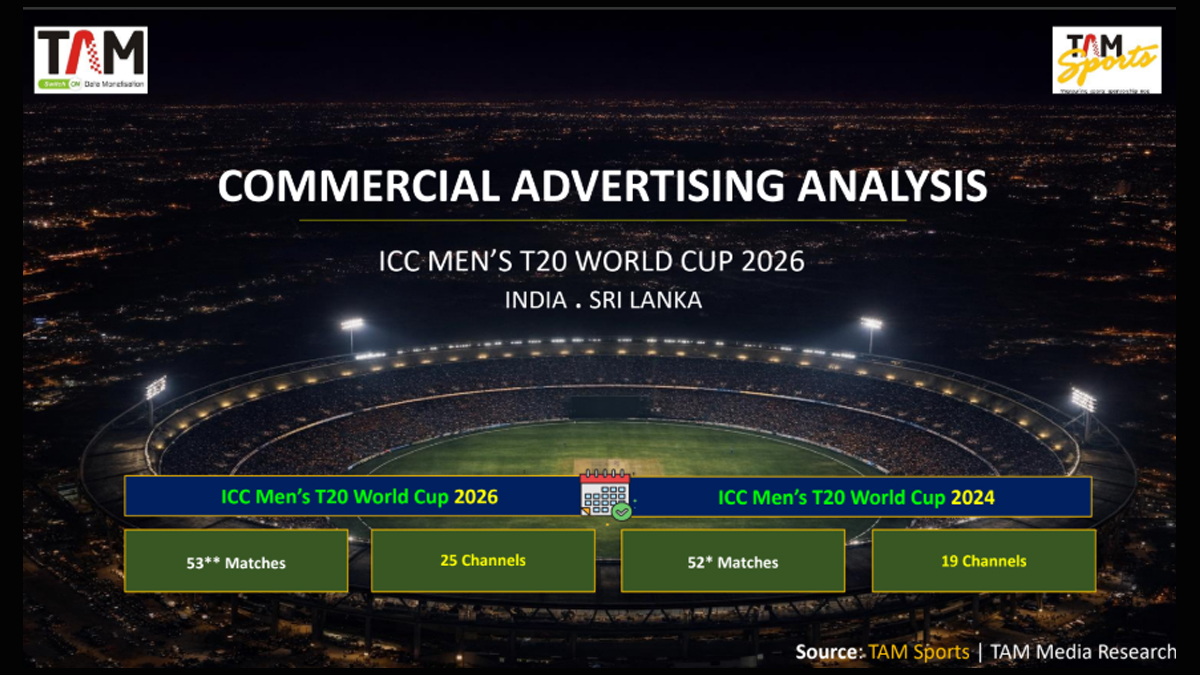
MUMBAI: Advertising during the ICC Men’s T20 World Cup 2026 may have become leaner in participation, but it certainly packed a stronger punch. A new analysis by TAM Media Research shows that ad volumes per match rose by 4 per cent compared to the 2024 edition, signalling sharper spending even as the advertiser base narrowed.
The numbers tell a tale of two trends. On one hand, the overall count of categories, advertisers and brands dropped steeply by 55 per cent, 63 per cent and nearly 68 per cent respectively versus the ICC Men’s T20 World Cup 2024. On the other, those who stayed in the game appeared to spend more aggressively, driving higher ad intensity across matches.
India’s pulling power remained unmistakable. Matches featuring the Indian team generated 66 per cent higher ad volumes than non-India games, underlining the country’s outsized influence on cricket’s commercial engine. The tournament final also saw an 18 per cent jump in advertising volumes compared to 2024, pointing to stronger monetisation at the business end of the competition.
The shift towards concentration was equally striking. The top five advertisers accounted for 39 per cent of total ad volumes, unchanged from the previous edition, but the names themselves saw a complete shake-up. OpenAI emerged as the leading advertiser with a 12 per cent share, followed by Coca-Cola India at 9 per cent and Mahindra & Mahindra at 8 per cent. Apollo Tyres and Reliance Consumer Products rounded off the top five.
A similar churn played out at the brand level, with no overlap in the top five brands between 2024 and 2026. At the same time, leading categories tightened their grip, with the top five accounting for 53 per cent of ad volumes, up from 42 per cent earlier. The cars category led the pack with a 15 per cent share, followed closely by e-commerce services at 14 per cent and aerated soft drinks at 11 per cent.
When it came to format, brevity ruled. Ads between 11 and 20 seconds dominated commercial breaks, making up over half of all spots, while shorter sub-10 second creatives followed as the next preferred choice.
The broader takeaway is clear. Even as fewer players entered the arena, those that did were willing to spend bigger and smarter. In a tournament where every over counts, advertisers seem to be playing a more focused, high-impact innings, betting on scale, timing and the enduring magnetism of cricket’s biggest stage.

MAM
Barista partners Ginny Weds Sunny 2 with mango campaign
Cafe chain blends cinema buzz with summer menu and 20 per cent offer.
MUMBAI: Love may brew slowly, but marketing clearly doesn’t especially when coffee meets cinema and mangoes steal the spotlight. Barista Coffee Company has partnered with the upcoming hindi film Ginny Weds Sunny 2 as its official beverage partner, in a move aimed at tapping into youth culture through entertainment-led engagement. The collaboration is not just a logo placement exercise. Instead, Barista is translating the film’s high-energy vibe into its cafés with a themed summer menu titled “Main Hoon Mango”, accompanied by a limited-period 20 per cent discount on combo offerings across outlets.
Actors Medha Shankr and Avinash Tiwary feature in the campaign, seen engaging with the mango-themed menu inside Barista cafés, a visual cue designed to blur the lines between reel and real-life consumption moments.
The strategy reflects a broader shift in how consumer brands are leveraging hindi film industry not just for visibility, but for immersive, on-ground engagement. By embedding the film’s narrative into its product experience, Barista is aiming to drive footfall, especially among younger audiences who increasingly seek experiential touchpoints over traditional advertising.
Barista Coffee Company CEO Rajat Agrawal described the partnership as both a branding and growth play, focused on expanding reach beyond the existing customer base and aligning with evolving consumer preferences.
The emphasis on a seasonal, flavour-led hook mango, one of India’s most culturally resonant ingredients adds a timely layer to the campaign, aligning with summer consumption trends while riding on the film’s promotional momentum.
For Barista, the move is part of a larger positioning shift. Rather than operating purely as a coffee retail chain, the brand is increasingly framing itself as a lifestyle destination, one that intersects with entertainment, conversation and shared experiences. By integrating cinema into its physical spaces, Barista is effectively turning cafés into micro-extensions of the film’s universe, where consumers do not just watch a story unfold but participate in it sip by sip.
The 20 per cent offer further nudges trial, lowering the barrier for consumers to engage with the themed menu while amplifying recall through a tangible incentive.
Brand-film collaborations are hardly new, but their execution is evolving. Where earlier partnerships relied on co-branded ads or product placements, the current playbook leans towards immersive storytelling and retail integration.
In that sense, Barista’s “Main Hoon Mango” push is less about promotion and more about participation inviting consumers to experience a slice of the film within a familiar, everyday setting. As the film industry continues to act as a cultural amplifier, such partnerships underline a growing truth, in today’s attention economy, it is not enough to be seen brands must be experienced.
And if that experience comes with a mango twist and a cinematic backdrop, all the better.