MAM
Sorrell’s exit could lead to a breakup of the large agency structure says John Hegarty

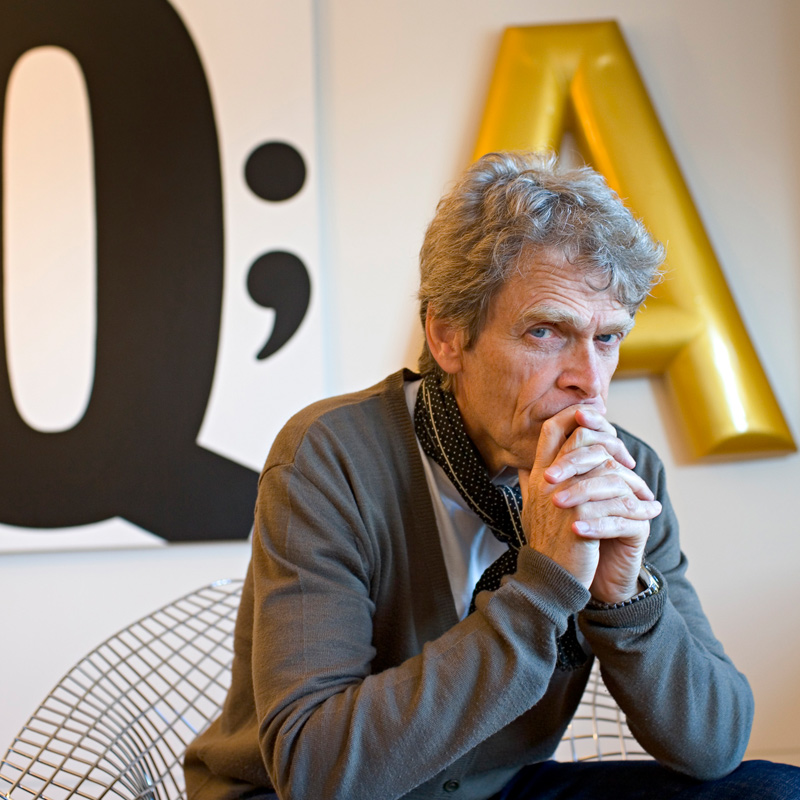
MUMBAI: He’s seen it all – print, radio, TV and now digital. With over six decades of advertising industry under his belt, John Hegarty has had the privilege of being knighted by the UK for his services. With early days at Saatchi and Saatchi (then called Cramer Saatchi) to co-founding global media agency, Bartle Bogle Hegarty (BBH), the septuagenarian is still as youthful and optimistic as he was in the 1960s.
After co-founding TBWA, he teamed up with partners John Bartle and Nigel Bogle to launch Bartle Bogle Hegarty in 1982. The agency swiftly became one of the most talked about and awarded advertising agencies in the world.
The advertising mogul was in Mumbai, India recently where he spoke his heart out about creativity and advertising industry at large. The creator of acclaimed campaigns for brands such as Levi’s, Audi, BA and Johnnie Walker, Hegarty thinks that brainstorming as a concept at the modern workplace can kill creativity. According to him, just 10 per cent of the creativity today is good and advertisers inflict that tiny amount on the audience. For him, the advertising industry has a great responsibility to shoulder.
He first came to India 25 years ago to meet Piyush Pandey. Admitting that he isn’t a hardcore follower of Indian advertising, he still believes that Indian creativity is far better than other parts of the world.
Hegarty warned of the danger of globalisation that has led to a bland advertising world where ad execs and brand managers from one part of the country want to target the entire world with global campaigns rather than creating local campaigns. One reason they resort to this mass targeting is their constant search for cost-effectiveness. But they don’t realise that they lose out on communication efficiency. Instead, all ad work should be more representative or reflective of the local culture.
Hegarty’s response to nineteenth century Philadelphia retailer John Wanamaker’s famous oft-stated quip – ‘Half the money I spend on advertising is wasted; the trouble is I don’t know which half’ – is that those who exclaim this don’t know what they’re doing. “Brands need to go out and converse with people. Advertising is all about conversations,” he said.
“A brand is made not just by the people who buy it but also for the people who know about it. Agencies today have forgotten that brands need to persuade the consumer and not promote the product. We have confused persuasion and promotion, persuasion will yield long-term results whereas promotion will only last for a short term,” he said.
While the world lauds the power of digital, Hegarty thinks that brands and agencies are still in the dark about the best way to approach the medium. Light heartedly cracking a joke at his age, Hegarty said that he won’t be around long to watch machines take over man, referring to artificial intelligence increasingly being used to help take advertising and creative decisions. “Machine-made ideas are easy to recognise and it can’t get the nuances correct all the time.”
A writer from BBH London recently publicly accused sports television channels group Sky Sports and its agency, Sky Creative, of ripping off a recruitment video. Hegarty was not disturbed by this theft and responded by stating that plagiarism will always happen in the industry where an artist is inspired by another and has happened forever and will continue to take place ad infintum. He added, “Everything gets plagiarised today and I don’t think we need a body to regulate it.”
He rubbished the concept of the word ‘content’ calling content marketing a boring topic. “What exactly is content? My garbage bin is full of content. I wonder who invents these words! They are completely meaningless. I think content should only be informative and useful,” he said.
A recent major shakeup in ad world was the departure of ad mogul Sir Martin Sorrell from WPP. Hegarty said that the legend’s eviction could be a harbinger of a fission of WPP and other ad behemoths.
“With his exit, the talk is that the company will now be broken up and the groups are now also under threat because of the value they are giving clients. It could be a serious problem for them unless they get back to basics and the core of the advertising profession: focus on creativity.”
Well said John!