
AD Agencies
AI is already here, the real opportunity is making it accessible to all: WPP’s Niraj Ruparel at Goafest 2026
The creative technology lead makes the case for inclusion, value systems and human spark in an age where man and machine are already working side by side


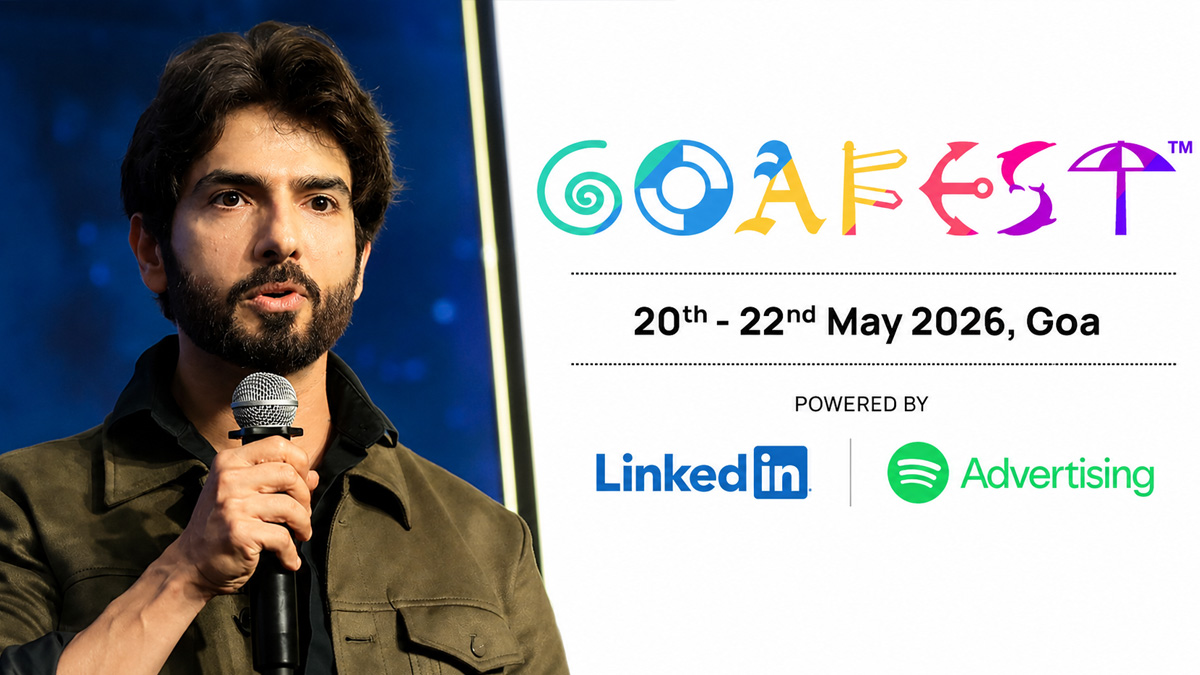
GOA: Niraj Ruparel does not need to convince anyone that AI is the future. As far as the creative technology lead at WPP is concerned, that argument is already over. The adoption numbers have settled it. The only question left, he says, is whether people are paying attention.
Speaking on the sidelines of Goafest 2026, Ruparel was characteristically direct. Today’s generation of young professionals, he argued, has been handed something his own generation could only dream of: an intelligent co-worker available at all times, capable of executing complex tasks on command, and getting sharper by the month. Where his cohort spent years cutting paper and waiting for 3G to arrive, today’s entrants are working with full-throttle AI across multiple platforms from day one. The privilege, in his telling, is being underappreciated.
The generational comparison was pointed. His father’s era wrote everything by hand. His own generation graduated to Microsoft Office and called it automation. The current one has WPP Open, proprietary GPT environments and an array of agents ready to take instruction. What will separate those who thrive from those who merely survive, Ruparel said, is the willingness to genuinely master these platforms rather than simply coexist with them.
On the question of AI sceptics, he was measured rather than dismissive. Each to their own, he said more than once. He acknowledged the legitimate concerns around compute costs, energy consumption and water usage tied to large-scale AI infrastructure, framing sustainability as a genuinely open question rather than a talking point to be swatted away. But he drew a clear distinction between thoughtful concern and reflexive resistance.
The conversation took a longer arc when it turned to what Ruparel called quantum living, his term for the next phase of technological empowerment, where computing power will be exponentially greater and the potential for both creation and disruption will dwarf anything available today. His argument was that the most important investment to make right now is not in platforms or infrastructure but in the value systems of the next generation. When young people acquire powers of that magnitude, what they choose to do with them will depend entirely on what has been built into them long before they open a laptop.
It was an unexpectedly philosophical turn from someone whose day job sits at the intersection of creativity and technology. But Ruparel seemed comfortable in that territory. He spoke about the growing intersection of AI, governance, and large-scale impact, referencing leaders working closely with national institutions and technology policy. His own ambition, he shared, is to move in a similar direction over time.
While brand marketing continues to be a powerful playground for innovation and scaled application of technology, he believes the same capabilities can extend far beyond—contributing to nation-building, inclusion, and bridging access gaps. The opportunity, as he sees it, is to take what is being built for brands today and apply it to larger public systems and societal challenges.
When asked what question nobody at Goafest 2026 was asking but should be, he did not hesitate. “Inclusion”, he said. “AI for all.” It is a line the government has been pushing at every AI summit, he observed, and one the brand marketing industry has been slower to absorb. That, he suggested, is the conversation worth having. In an industry that talks endlessly about reach and relevance, the most important audience it may be ignoring is the one it has not yet thought to include.






