MAM
Same match, different ads: the operator’s playbook for targeted TV advertising
Viaccess-Orca’s experts explain how one ad slot can be sold to many brands, and where the potholes lie


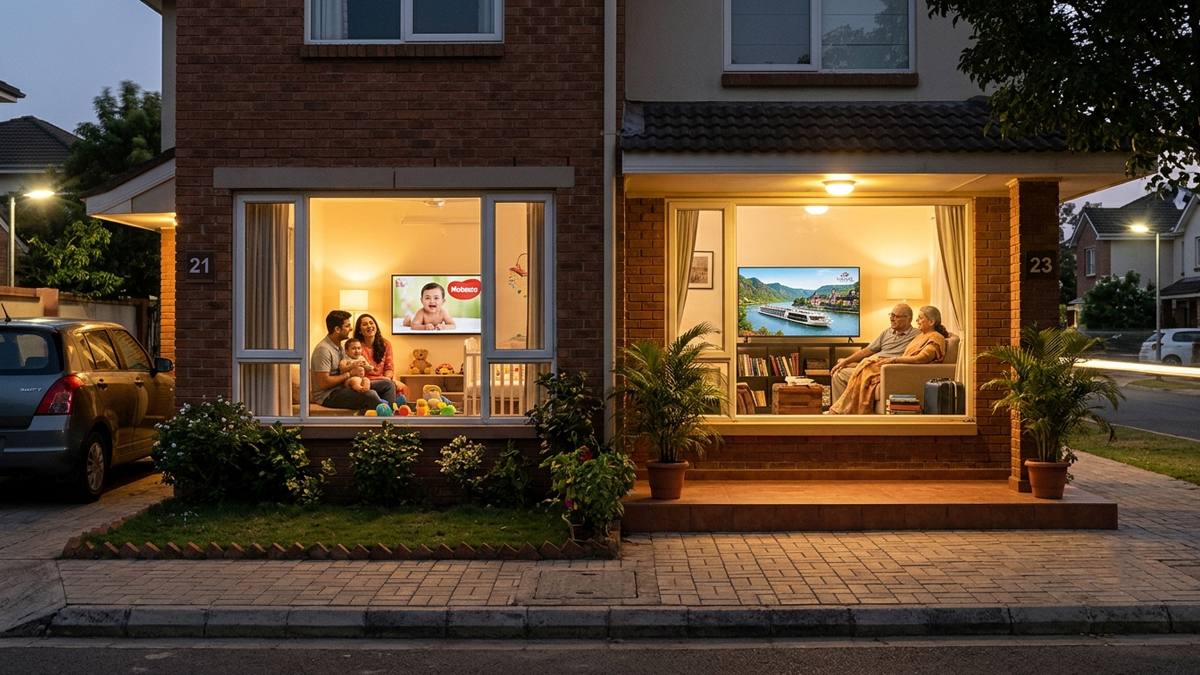
MUMBAI: Picture two homes on the same street, both glued to the same cricket match. The over ends, the break rolls. In one living room a young couple with a newborn sees an ad for nappies. Next door, a retired pair gets a pitch for a river cruise. Same match. Same break. Different ads.
Welcome to targeted TV advertising, also known as addressable TV. It tears up one of television’s oldest rules, that everyone watching a programme sees the same commercials. The ad break stays put. What plays inside it changes from home to home, based on where the viewer lives, what they watch and the device they watch it on.
Digital giants have grown fat selling relevance. Addressable TV finally lets broadcasters and operators play that game on their own turf. This playbook pulls together the thinking of Viaccess-Orca (VO) and two of its specialists: Hadar Tel Mizrahi, senior product manager, targeted ads and recommendations, and Dror Mangel, vice president, TV products and solutions.
How the trick works
The engine room is dynamic ad insertion, or DAI. It swaps targeted ads into the stream at the point of delivery while the programme itself carries on untouched.
Linear broadcast and cable can do it too, either by switching the ad inside the set-top box or by blending broadcast with broadband. But streaming and connected TV (CTV) are where addressable ads truly come alive. Every stream already travels to a single home over the internet, so in principle every ad break can be targeted. No legacy pipes sit between the distributor and the couch, which goes a long way to explaining why CTV has taken off around the world.
The commercial break is not the only shop window either. Operators can target banners on the home screen and programme guide, ads inside TV apps, overlays during live shows and ads that pop up when the viewer hits pause. These formats create fresh inventory instead of slicing up existing slots. And since nothing has to be spliced into a live stream, they dodge one of the hardest technical headaches in the business.
Follow the money
The cash is already moving. WARC Media forecasts that global CTV ad spend will hit $44.7 billion in 2026. Linear TV will slip to $139.1 billion, or 11.3 per cent of total ad spend, its lowest share since 2005.
Advertisers are lining up. Research by Advertiser Perceptions for industry body Go Addressable found that 78 per cent of US advertisers expect addressable TV to feature in their 2026-2027 upfront negotiations, up from 67 per cent a year earlier. Another Go Addressable study found 43 per cent of large advertisers planned to raise addressable spending in 2026.
Viewers are warming to it as well. They tend to find targeted ads less irritating than random ones and remember the brands better. That gives sellers a case for charging a premium, and it is helping streaming services roll out cheaper tiers carrying ads.
One minute, ten ads
Here is the maths that makes operators sit up. Instead of selling one ad per slot, they can split that slot among several advertisers, each speaking to a different audience. VO puts it plainly: rather than running two commercials in a one-minute break, an operator can run 10, each aimed at a different, highly relevant segment built from its own usage data. Each advertiser reaches fewer homes, but the right ones, and pays more for the privilege.
For pay TV operators the timing could not be better. Subscription prices are under pressure, content rights keep getting dearer and cord-cutting is chipping away at their old role as the home’s gateway to TV. VO expects 5G to speed that up. Targeted ads give operators a fresh revenue line from inventory they already own.
The seven potholes
The appetite is clear. The road is bumpy. VO’s experts flag seven hurdles operators must clear before the money flows.
1. Complexity. Competing technologies, rival standards and ad tech built for the web make the whole exercise a tangle. A 2019 study found marketers juggle an average of 28 technologies in their ad stack, and 70 per cent expected that number to grow. TV-first fixes are coming, such as the DVB Targeted Advertising specification (DVB-TA) being developed by DVB and HbbTV. They are still works in progress.
2. Data and privacy. Audience segments must be properly anonymised so that other players in the ad chain cannot simply lift them and retarget the same viewers. A built-in consent management system keeps personal identifiers secure as they travel. Done right, this builds a walled garden of exclusive audiences that advertisers can only reach through the operator. It also makes life easier under the EU’s GDPR and the wave of privacy laws following it around the world.
3. The viewer’s patience. Pile on too many ads and viewers walk, now that they know alternatives exist. A smart system caps how often each viewer sees ads, and can adjust the hourly ad load to how long someone has been watching. The same tools let operators build tiers running from ad-free subscription video at the top to ad-supported and FAST channels at the bottom. Netflix does exactly this, keeping perks such as Ultra HD and extra simultaneous screens for its priciest plan while offering a cheaper plan with ads.
4. Staying agnostic. Some ad tech players try to lock media companies into their own ad server, openly or quietly, until switching means ripping everything out and starting again. Many content owners already have their own ad server or vendor deals. Any targeted ad system worth buying must plug into several ad servers. That also keeps vendors honest on price.
5. Advertising rights. The same show plays live on a big-screen TV and on demand on a phone, and ad rights can differ by platform. Many ad tech tools are born digital and struggle with this. The average operator runs between seven and 12 video platforms, from smart TV apps to set-top boxes. Managing each one separately would be ruinously inefficient, so operators need a single control panel that serves the right ad in the right format with the right rights.
6. Selling the slots. Inserting the ad is half the job. The system must also take the inventory to market and turn it into cash. TV operators are not ad networks, and they should not have to become one.
7. Measurement and trust. CPM, or cost per thousand impressions, is the usual way to bill. It is a blunt tool. Advertisers pay even if an ad is skipped or fails to load. A fulfilment model bills only for ads played to the end, which takes the guesswork out and is winning fans among buyers. The industry uses both, so the tech must handle both and leave room for whatever comes next.
The bigger cracks
Zoom out and a few industry-wide gaps remain. Data quality is shaky. A Truthset study for CIMM and Go Addressable found that in the US, matching an IP address to a postal address was accurate just 13 per cent of the time on average, and matching an IP address to an email address only 16 per cent. That is a long way short of the precision advertisers are paying for.
Measurement is a mess of rival currencies, platform-specific metrics and walled gardens. Until buyers can compare results across linear, streaming and addressable campaigns, premium prices will be hard to hold. And live remains the toughest nut. DAI on demand is well understood, but live sports demand split-second timing and a reliable fallback when something breaks. Frame accuracy, linear viewing peaks and creaky legacy kit all add to the load.
Privacy as a trump card
Data privacy looks like a headache. For TV operators, VO argues, it is an opening. TV is a trusted, closed environment for viewers and advertisers alike. Operators can make sure no personal data leaves the building and stay in full control of it at all times.
GDPR and its cousins have made first-party data scarce and therefore precious. Operators hold a strong hand here. Viewers already trust them and hear from them every day, which makes asking for consent far simpler than it is for a faceless ad network.
AI: the brain behind the break
Artificial intelligence turns raw viewing data into segments advertisers will pay for. VO says it has spent a decade building its AI and machine learning muscle, and sorts the insights it produces into five buckets.
What viewers like. The interests of the people in a household. Real Madrid fans, gadget hunters, foodies.
Where and how they watch. Which devices, at home or on the move, and whether they binge.
Who is in the house. How many viewers, and what stage of life they are at. A young family looks very different from an elderly couple.
What they have already seen. Past exposure to a campaign, which matters to big brands and lets linear and targeted ads work as a tag team.
Life moments. A new baby, a retirement, a graduation, a house move. Big life changes that make an ad suddenly relevant.
Stitched together, these insights let operators deal with the ad tech world on premium revenue-share terms. The same analysis also shows which content sources are pulling their weight, which helps operators decide what to buy and what to recommend to viewers.
Big inventory or none at all
Targeted ads work for operators of every size. VO’s Targeted TV Advertising platform serves ads across live, VOD, cloud DVR, OTT, IPTV, cable and satellite, on set-top boxes and connected devices.
Operators that already own inventory can use AI insights to optimise ads in real time, target local audiences and keep viewers watching longer, which opens up more slots to sell. Operators with no inventory can plug into ready-made infrastructure that connects to TV channels and multiple ad servers. That lets them cash in on their first-party usage data from day one.
There is a bonus for viewers too. Because each ad is more relevant, operators can show fewer of them. Unhappiness with ad load is a known driver of churn, so lighter breaks can mean fewer cancellations.
The road ahead
No single company can crack this alone, and the industry is starting to accept it. Broadcasters and operators are pooling inventory so that small and medium businesses can buy TV ads that once only big brands could afford. As these tie-ups grow from services into ecosystems, they are becoming more standardised and better at talking to each other.
Scale is still a work in progress. But the core ad tech works. The media companies that build unified addressable capability now, inside their own groups and alongside rivals, will be first in line for the spoils.
The ad break is still the ad break. Two minutes, give or take. The difference is that every home on the street can now get its own version. Operators who learn to sell that minute ten times over will be laughing all the way to the bank. Those who don’t will be stuck selling it once.
Note: Based on articles by Hadar Tel Mizrahi and Dror Mangel of Viaccess-Orca