MAM
Print ad space grows 21 per cent in 2025 over 2021, TAM AdEx reveals
Auto sector leads with 16 per cent share, sales promotions reach 33 per cent amid festive surges in print medium.

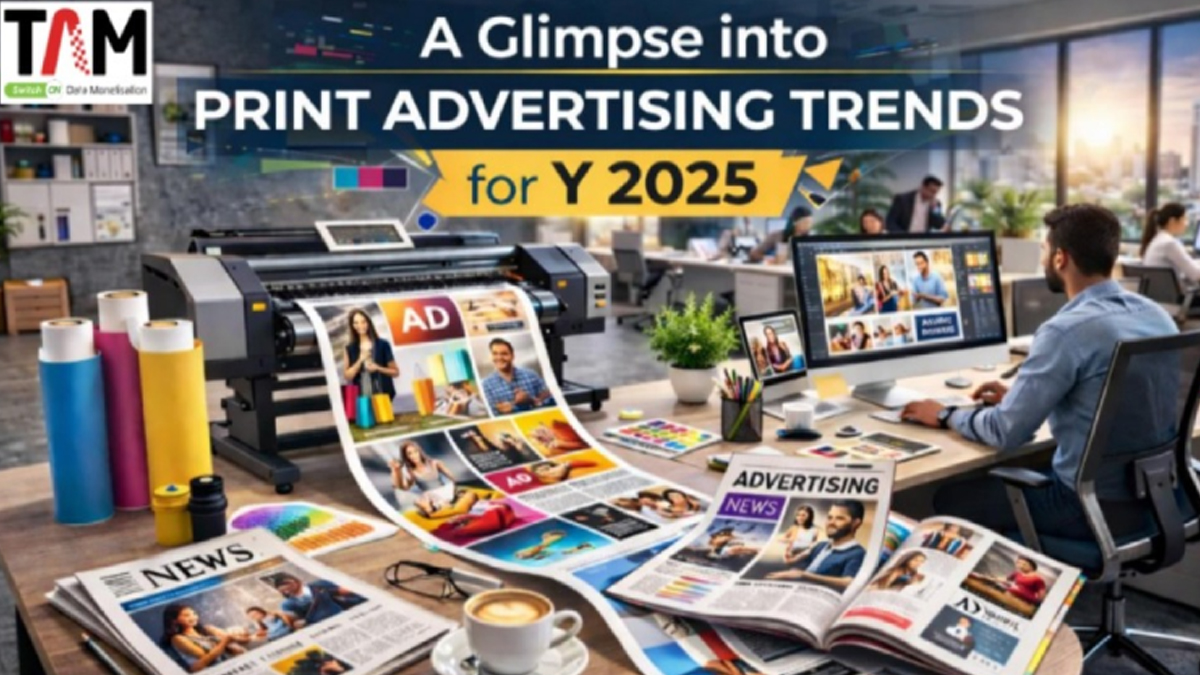
MUMBAI: Don’t write off print just yet, it’s inking a remarkable resurgence, splashing a 21 per cent surge in ad space per publication in 2025 compared to 2021, with a cheeky 2 peer cent nudge over 2024, as per TAM AdEx’s fresh insights into the paper chase. In a world gone digital, print proved its staying power, clocking steady consolidation after earlier leaps, think 19 per cent up in 2024 from 2021 levels. Quarterly vibes? Q3 and Q4 stole the show, dishing out 13 per cent more ad space per publication than a sluggish Q1, perhaps thanks to those cosy winter reads or blockbuster events.
Sectors-wise, the auto crowd revved to the front with a commanding 16 per cent slice of total ad space, tailed by services at 15 per cent and education at 14 per cent. Banking/finance/investment grabbed 11 per cent, retail 8 per cent, personal accessories 7 per cent, food & beverages 4 per cent, durables 3 per cent, personal healthcare 3 per cent, and corporate/brand image 2 per cent, with the ragtag “others” mopping up 15 per cent. The top 10 sectors hogged a whopping 85 per cent of the ink, and notably, the first eight including personal accessories and durables held their spots steady from 2024.
Zooming into categories (over 665 in play), cars zoomed ahead with 9 per cent share, properties/real estates at 6 per cent, two wheelers matching that 6 per cent, multiple courses 5 per cent, retail outlets-jewellers 5 per cent, hospital/clinics 4 per cent, retail outlets-electronics/durables 3 per cent, coaching/competitive exam centres 3 per cent, schools 2 per cent, and retail outlets-clothing/textiles/fashion 2 per cent. The rest? A sprawling 55 per cent. Education claimed three spots, auto and services two each, retail two, all adding up to 45 per cent for the top 10.

Advertisers (219K plus strong) saw Maruti Suzuki India cruising at pole position, followed by Hero Motocorp, Reliance Retail, Tata Motors, TVS Motor Company, Samsung India Electronics, LIC of India, Honda Motorcycle & Scooter India, Titan Company, and Bajaj Auto, the latter leaping from 29th in 2024 to 10th. Together, they splashed 13 per cent of ad space.
Brands? Over 179K jostled, but Maruti Car Range led the pack, with Smart Bazaar, Allen Career Inst, Bajaj Pulsar Range, Samsung Galaxy S25 Ultra, Hyundai Car Range, Vishal Mega Mart, Veena World Travels, Honda Activa Range, and Maruti Suzuki Victoris trailing. The top 10 claimed 5 per cent, five from auto, and five fresh faces shaking up from 2024.
Growth stories sparkled, Over 320 categories bloomed positively, cars accelerating 26 per cent, branded jewellery glittering 60 per cent, multiple courses 11 per cent, retail outlets-jewellers 9 per cent, properties/real estates 7 per cent, mutual funds 52 per cent, retail outlets-departmental stores 25 per cent, FMCG products range exploding 3.1 times, schools 13 per cent, and ecom-online shopping 42 per cent, a mix of steady climbs and explosive jumps over 2024.
Exclusives added flair, 72K plus advertisers and 95K plus brands went print-only in 2025 vs 2024, topped by West Bengal Industrial Devp Corp and Samsung Galaxy S25 Ultra respectively, with gems like Oravel Stays, Navi Mumbai International Airport, and Mahindra Electric Car joining the solo act.
Innovations kept it fresh: Masthead integration led at 0.2 per cent share, augmented reality 0.1 per cent, figured outline 0.1 per cent, French window 0.1 per cent, print format inv 0.1 per cent, top five nabbing 0.6 per cent, plus 36 more quirks at 0.32 per cent. Teasers, bookmarks, seamless jackets, and figure outlines exemplified the creative twists grabbing eyeballs.
Ad positions? Jacket-full page ruled with 32 per cent, full page (np) 29 per cent, half page-horizontal (np) 21 per cent, solus 9 per cent, half page-vertical (np) 2 per cent, over 8800 brands favouring jackets, Samsung Galaxy S25 Ultra topping that list.
Promotions punched hard, Sales promo ads snagged 33 per cent of space, multiple promotions dominating 51 per cent, discount 38 per cent, add-on 4 per cent, contest 2 per cent, volume 2 per cent, others 3 per cent, top two gobbling 88 per cent.
Festive fever? Deepavali dazzled with 41 per cent, Navratri/Durga Puja 17 per cent, Christmas/New Year 10 per cent, Independence Day 9 per cent, Republic Day 6 per cent holidays proving print’s party trick.
All stats exclude house ads, measured in Col*Cms, a snapshot that shows print’s not fading, it’s just turning the page with clever flair.




MAM
Lego brings Messi, Ronaldo, Mbappé, Vinicius together
Campaign clocks 314 million views ahead of FIFA World Cup 2026 buzz.
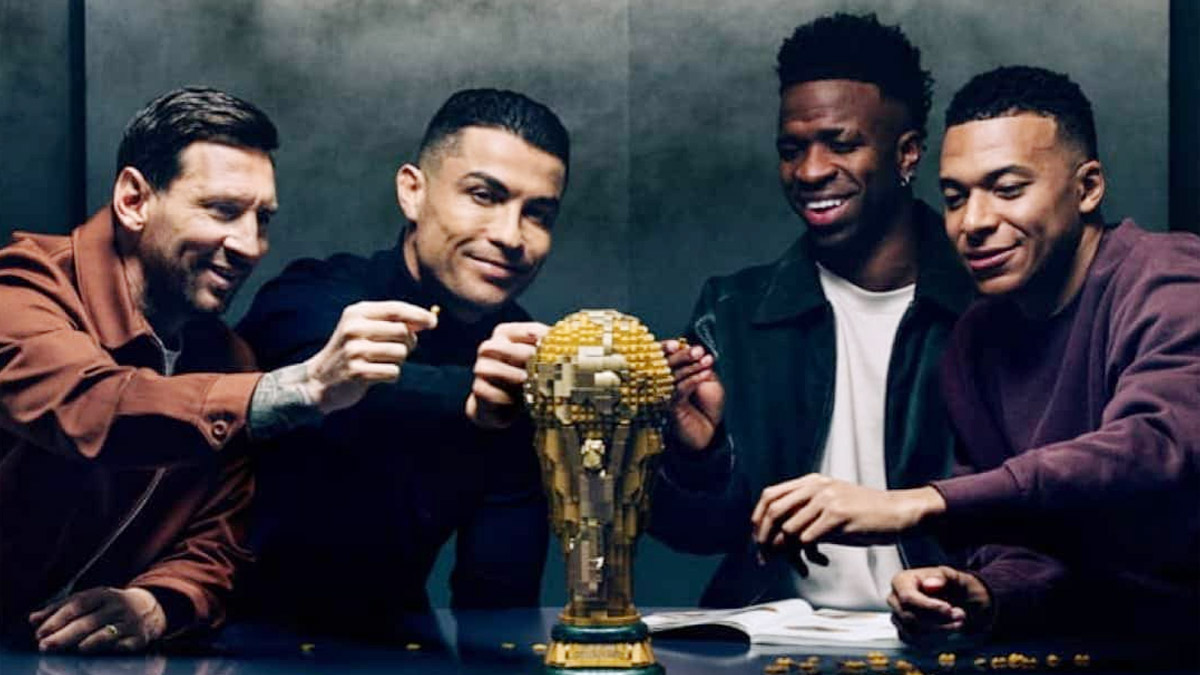
MUMBAI: Four legends, one frame and not a single tackle in sight. Lego has pulled off a crossover few thought possible, uniting Lionel Messi, Cristiano Ronaldo, Kylian Mbappé and Vinícius Júnior in a single campaign ahead of the FIFA World Cup 2026 only this time, they’re building dreams brick by brick.
Titled “Everyone wants a piece”, the campaign features the quartet assembling a Lego version of the World Cup trophy, before placing miniature versions of themselves atop it, a playful nod to football’s ultimate prize. Shared widely across social media, the ad carries a pointed disclaimer: it is not AI-generated, a subtle but telling signal in an era where even reality is often questioned.
The numbers tell their own story. The campaign has already crossed 314 million views on Instagram across the players’ accounts, with fans hailing it as a rare, almost nostalgic moment particularly for the reunion of Messi and Ronaldo, whose last shared campaign ahead of the 2022 World Cup became one of the platform’s most-liked posts.
Beyond the film, Lego is extending the play with exclusive, player-themed sets tied to each of the four stars, part of a broader football-led programme designed to ride the global momentum building towards 2026. The idea, as echoed by the players themselves, leans into the parallels between football and play experimentation, creativity, failure, and triumph.
Messi described the sets as a way to bring on-pitch moments into an imaginative, hands-on world, while Ronaldo called the transformation into a Lego figure a rare honour, blending sport with storytelling. Vinícius, meanwhile, struck a more personal note, recalling childhood moments of building with Lego and framing creativity as a universal language that transcends borders.
The timing is no accident. With the 2026 World Cup set to run from June 11 to July 19 across the United States, Canada and Mexico, and featuring an expanded 48-team format, global anticipation is already building. Argentina, led by Messi, will enter as defending champions, adding another layer of intrigue.
For Lego, the campaign does more than celebrate football, it taps into its mythology. Because when icons become figurines and rivalries turn into play, the beautiful game finds a new kind of pitch. one built, quite literally, by hand.






