MAM
Media 2030: AI, creators and content-to-commerce to reshape India’s entertainment industry
CII Big Picture Summit explores the forces driving audience engagement, creativity and new revenue streams


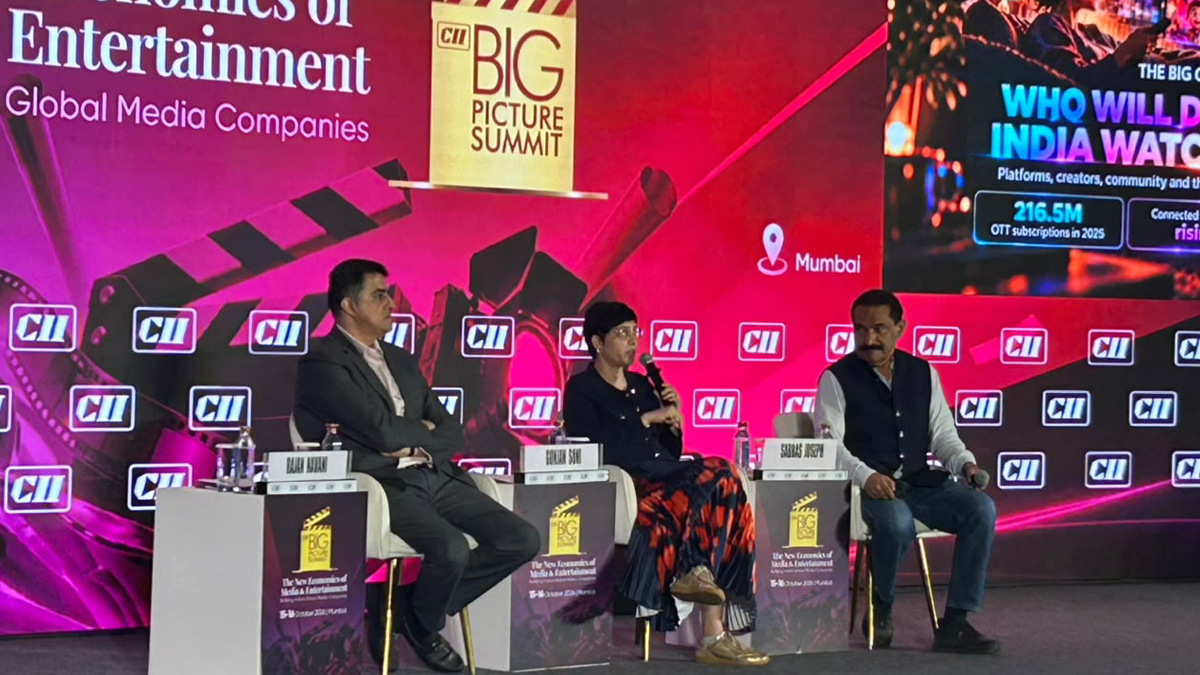
MUMBAI: The future of entertainment is not just about capturing eyeballs, but winning hearts, empowering creators and turning screen time into shopping time. As India looks towards 2030, authentic storytelling, artificial intelligence (AI) and the convergence of content and commerce are emerging as key forces that could reshape its media and entertainment landscape.
These themes formed the focus of Media 2030: What the Next Generation Will Watch, Make and Play, a session at the CII Big Picture Summit 2026, held at JW Marriott Juhu, Mumbai, on 15 and 16 October. The discussion brought together CII National Council on Media & Entertainment co-chair and JetSynthesys managing director and chief executive officer Rajan Navani, and CII National Council on Media & Entertainment co-chair and YouTube India country managing director Gunjan Soni to examine how changing audience habits, new technologies and evolving business models could define the industry’s next decade.
The conversation explored how young India will discover and consume entertainment, the changing relationship between creators, studios and broadcasters, AI’s growing role across the content value chain, and the opportunities emerging from gaming, interactive experiences, connected television and commerce. It also highlighted the importance of measurement, intellectual property rights and talent development in building a sustainable creative economy.
As short-form videos compete with podcasts, live events and long-form entertainment, the industry’s focus is shifting from the duration of content to its ability to connect with audiences. The popularity of a format increasingly depends on whether it offers an engaging story, a meaningful experience or a shared moment.
Music concerts, sporting events, watch-alongs and other communal viewing experiences illustrate how entertainment can bring people together. Audiences are not merely consuming content; they are also experiencing it through their own perspectives and those of creators and communities they trust.
This creates opportunities across formats, from quick videos designed for mobile viewing to longer programmes that encourage deeper engagement. Rather than assuming that audiences will universally prefer shorter content, media businesses must understand what different viewers value and how they want to experience it.
The shift also places greater emphasis on trust and authenticity. As the volume of content expands, the ability to establish a genuine connection with viewers could become an important differentiator for platforms, broadcasters and individual creators.
The next generation is expected to play a more active role in creating entertainment, blurring the traditional distinction between audiences and content producers. AI could accelerate this transition by making creative tools more accessible and helping people turn ambitious ideas into finished productions.
An experiment involving students creating 30-minute films using AI demonstrated the range of possibilities. Given creative freedom, participants developed stories spanning mythology and science fiction, illustrating how technology can help bring complex concepts to life.
Such tools could lower some of the barriers associated with conventional production, allowing emerging storytellers to experiment with ideas that might otherwise require substantial resources. The implications extend beyond filmmaking to regional storytelling, music, lifestyle content and esports.
However, wider access to technology will also make originality and individual perspective more important. As more people gain the ability to produce content, identifying what makes a creator distinctive will be essential to building an audience and establishing a sustainable career.
Entrepreneurship will play a complementary role. Turning creative ideas into viable businesses requires ambition, innovation and the ability to bring different skills together. AI could become a readily available creative partner, while collaboration between industry and government could help strengthen training, develop talent and expand opportunities across the ecosystem.
The resulting creative economy is broader than the traditional film, television and streaming industries. It includes independent creators and entrepreneurs who use their skills to build communities, influence decisions and generate livelihoods.
India’s diverse audiences provide fertile ground for stories that reflect different languages, cultures and interests. Regional content, music, lifestyle-led formats and competitive gaming offer avenues for creators to build distinctive identities and reach communities that may be underserved by mainstream entertainment.
The industry’s growth will depend partly on its willingness to experiment rather than follow a fixed formula. Different formats and distribution models can find success in unexpected ways, while unsuccessful ventures can provide valuable lessons for subsequent projects.
This flexibility will be particularly important as the boundaries between studios, broadcasters, digital platforms and independent creators become less rigid. The traditional content pipeline is giving way to a more interconnected environment in which ideas can originate with individuals, develop through technology and reach audiences across multiple platforms.
Connected television will remain another important part of this transition. As viewing habits span mobile screens and the living room, media businesses will need to create experiences that work across devices while accounting for differences in audience behaviour.
Gaming, interactive formats and community-based experiences could further expand the definition of entertainment, giving audiences more opportunities to participate rather than simply watch.
One of the clearest commercial opportunities lies in the convergence of entertainment and shopping. Audiences increasingly discover products through videos, creator recommendations and lifestyle content, creating opportunities to move from inspiration to purchase with fewer steps.
YouTube’s shopping ecosystem illustrates this approach. The platform began experimenting with content-led commerce through a partnership with Flipkart around two years ago, allowing creators to tag products featured in their videos and direct interested viewers to the retailer’s shopping experience.
The ecosystem has since expanded through partnerships with Amazon, Nykaa, Myntra and Ajio, broadening the range of shopping destinations available to viewers. The model allows YouTube to facilitate product discovery and purchase journeys without becoming an e-commerce retailer itself.
The opportunity is built around creator-audience relationships. Recommendations from trusted creators can help viewers discover products, while product tags make it easier to explore items without abandoning the entertainment experience entirely.
The scale of interest is already substantial. Around 450 million searches for shopping products were made on YouTube in the two months preceding the discussion, while watch time for shopping-related content grew 25 per cent year on year.
These trends point to the potential for content platforms to influence purchasing decisions more directly. For brands, shoppable content can connect storytelling with commercial outcomes. For creators, it offers another potential revenue stream, while e-commerce companies gain access to audiences whose purchase interest may already be developing.
The challenge will be to preserve the credibility of creator recommendations while making the shopping experience convenient and relevant. Done effectively, content-to-commerce could become a more integrated part of digital entertainment rather than a separate activity that begins only after viewing ends.
As the media landscape becomes more fragmented, businesses will also need stronger ways to measure audience engagement and understand the commercial value of content. Intellectual property rights, talent development and sustainable monetisation models will remain central to ensuring that the benefits of innovation reach creators as well as platforms and distributors.
The growing overlap between entertainment, technology and commerce will require businesses to work across traditional industry boundaries. Platforms will need to balance audience engagement with commercial opportunities, while creators will need to develop distinctive voices and understand how to build lasting relationships with their communities.
By 2030, India’s media and entertainment industry could be defined by a more participatory audience, a wider pool of creators and technology that makes ambitious storytelling more accessible. The opportunity lies in combining these forces with sustainable business models, ensuring that the next phase of growth delivers not just more content, but more meaningful experiences and greater value across the creative economy.