MAM
India Inc has no-deal with Covid stress on working minds

Mumbai: So, May was mental health awareness month. Not surprisingly, along with everything else, Covid-19 has taken a toll on our anxiety and stress levels too. As the pandemic’s second wave sweeps across the country, it is inducing a considerable degree of fear, distress, and alarm in the population at large, and especially among the working professionals.
The economic repercussions of the ongoing pandemic have made Indian professionals vulnerable to job uncertainty, financial instability, and bleak company outlook while continuing to work remotely, according to a LinkedIn workforce confidence index (WCI) report on mental health.
“The ongoing stress around the three Rs — Remote work, Return to work, and Risk of exposure — are adversely impacting the mental health of Indian professionals,” said LinkedIn, India country manager Ashutosh Gupta.
The pandemic also impacted, in particular, working women and their ability to focus on work, with a major part of the household and childcare responsibilities falling on their shoulders at home- further highlighting the gender disparity in our society. Many professionals experienced financial uncertainty with salary cuts, lay-offs, job instability, and unemployment looming large.
PRE-COVID
It is a known fact that even pre-Covid, workplaces added to mental health concerns while doing little to address them.
“Indians are among the most overworked workers globally while earning the lowest minimum statutory wage in the Asia-Pacific region, barring Bangladesh”, as per a study on the state of mental health in Corporate India by Gi Group India. The report does a comparative analysis of the working hours per week in India, as against the US and the UK. India stands at 48 – 50 hours while the US is at 40 and the UK a cool 33 hours.
“There are 1.2 million registered companies in India out of which only 1,000 provide EAPs (employee assistance programmes) for mental health. How India Inc fares on the mental health index is very clear by this statistic. It is also a cry for help as the magnitude of mental health issues among Indian workers is increasing at an alarming rate.” GI Group MD Marcos Segador Arrebola told ET.
So how does India Inc fare on the mental health index ?
The Covid-19 impact
As per the GI group survey, due to the Covid-19 lockdown: 29 per cent of the employees surveyed suffered due to erratic work schedules and 21 per cent suffered due to reduced salaries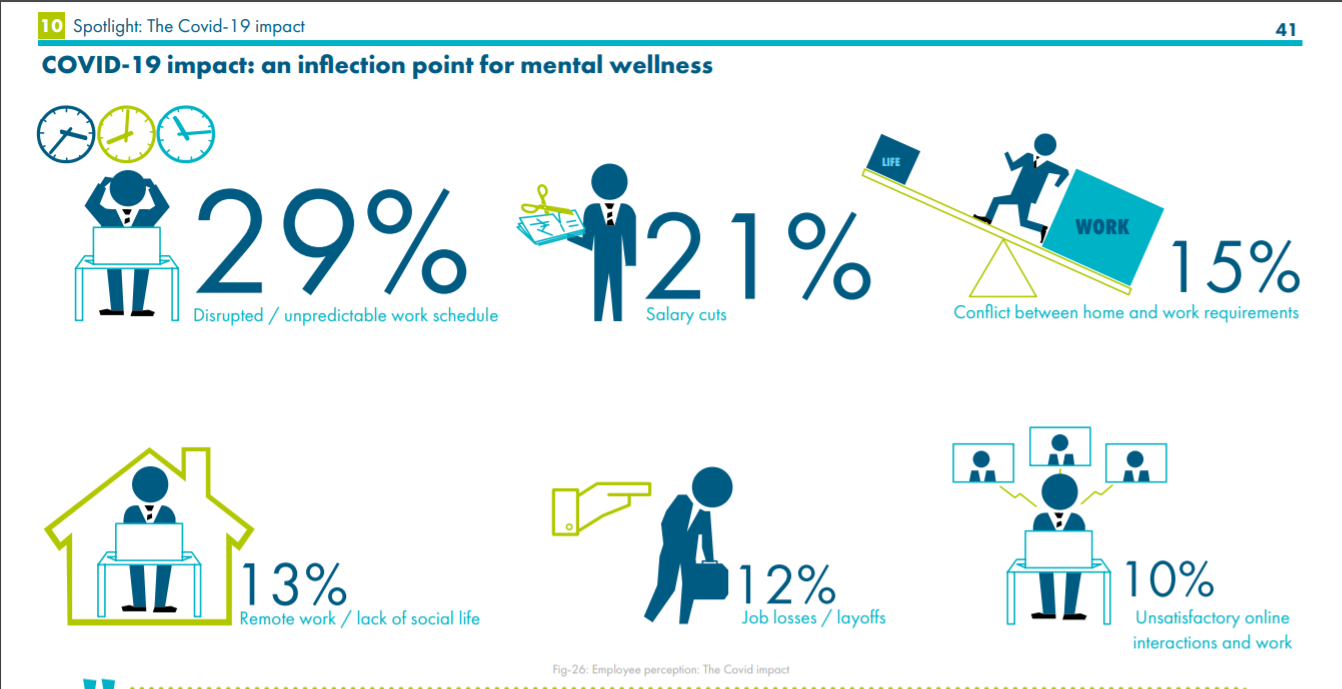 PIC:
PIC: 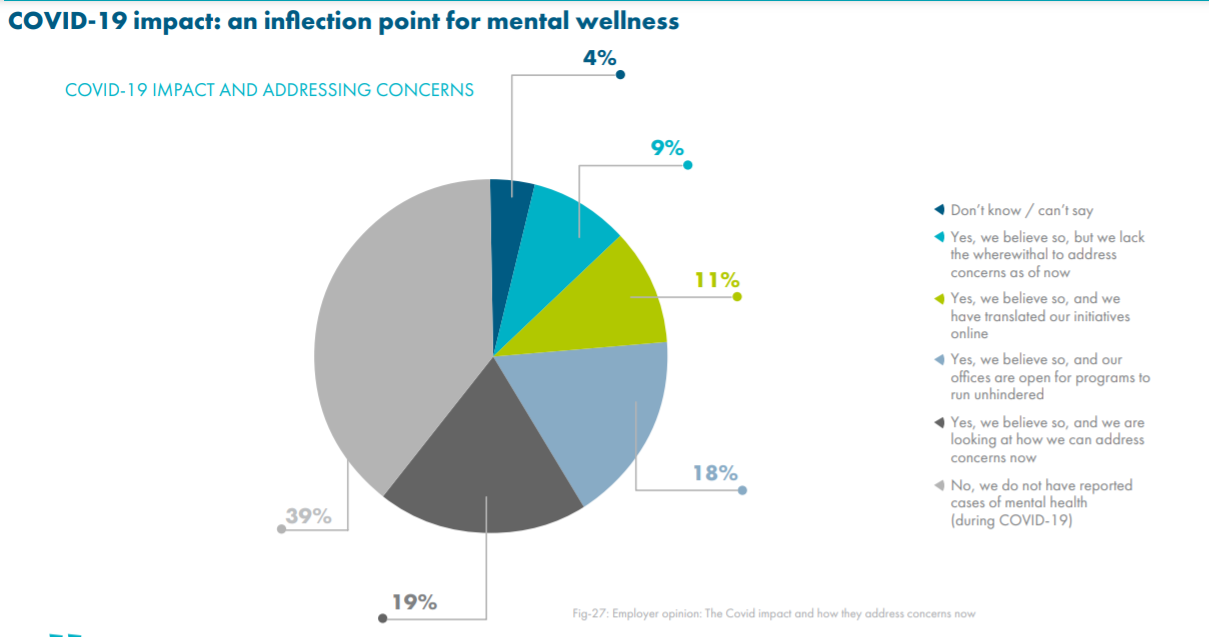
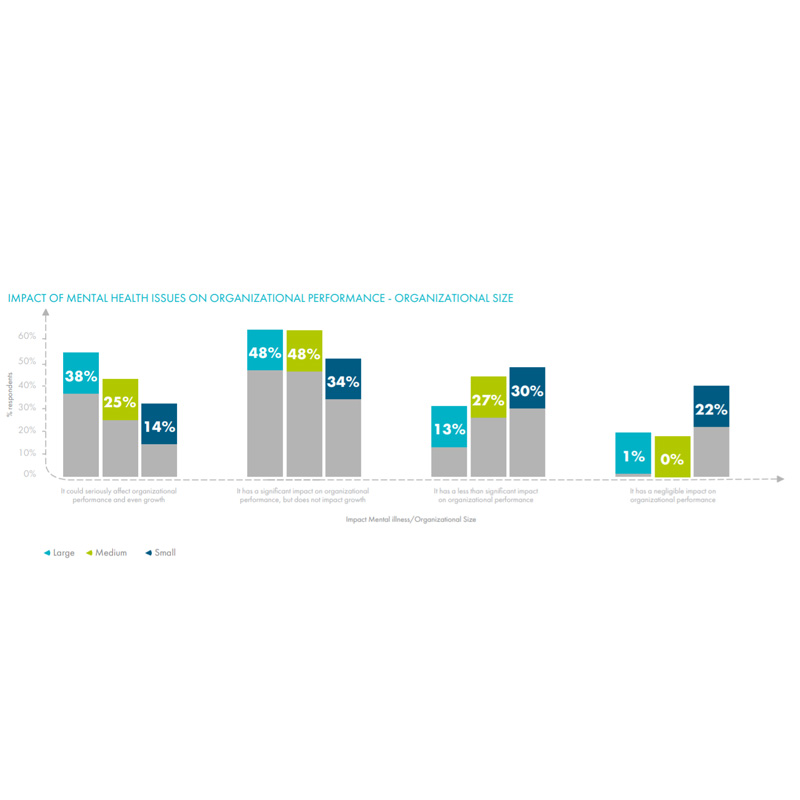
The contingency did affect organizations to the point of being a serious call-for-action. And, 48 per cent of the employers surveyed reported having taken cognizance of mental wellness concerns. Of this, 29 per cent believe they have been able to identify issues and provide an appropriate form of assistance. While the rest are at various stages of inadequacy, 9 per cent of the employers seem helpless in this regard.
According to PeakMind.in-Empowered Emotionally, clinical psychologist Shefalika Sahai, the pandemic situation threw most of our coping mechanisms out of the window with anxiety and panic taking over. “According to the data from the Center for Disease Control and Prevention(CDC), the number of adults reporting symptoms of anxiety or depressive disorder increased from 11 per cent during the pandemic, which also resulted in many organisations launching free mental wellbeing helpline numbers.”
We are seeing many organisations leading creative and innovative engagements and collaborations with experts to build the morale and mental wellbeing of the employees. In that sense, Covid-19 has been a mixed bag for issues concerning mental wellness. Awareness and accessibility leapfrogged and taboos surrounding it significantly diminished.
Hospitality firm Oyo rolled out a set of initiatives for its employees to alleviate their stress levels amid the coronavirus pandemic, including four-day working in a week and flexible infinite paid leaves. OYO Rooms CEO Ritesh Agarwal wrote about the company’s new initiatives on Twitter.
1/ COVID continues to test our physical + mental well-being. One thing that truly matters is having more time for our loved ones and ourselves. Inspired by startups & large companies alike, we began a few initiatives this week at OYO …
— Ritesh Agarwal (@riteshagar) May 12, 2021
The online food tech unicorn Swiggy also announced that it will be moving to a four-day work week for May.
Gi Group Head for Staffing Business Sonal Arora said, “Although raising awareness is an essential part of the solution, the concept of a well-defined action plan has been lacking and a majority still struggle due to restricted sources of assistance.”
Given the rising anxiety levels among employees, several organisations are revealing their compassionate side by offering staff a much-needed break from work. Many companies acknowledge that in such dark times, it’s essential to go beyond mere words of being a ‘people-first organisation’ and ensure that caring actions towards each and everyone’s well-being are prioritised.
Realty developer Godrej Properties provided its employees a five-day complete break from office work to allow its teams to “recuperate emotionally” in the backdrop of the ongoing pandemic.
“The work from home burnout is real and the last thirteen months of Covid and the second wave have taken a toll on people; emotionally and mentally. As a company, it is our responsibility to be with our employees and we understand that in tough times like these, everyone deserves a break,” said Godrej Properties MD and CEO Mohit Malhotra. This applied to nearly 2,000 permanent employees of the company and around 600 contract employees working across all its locations in India.
Ericsson India has launched an employee wellness programme that is focused on interventions around their physical, financial, emotional, and social wellbeing. In addition, the organisation has set up a 24X7 Employee Assistance Programme to provide one-to-one support to its employees.
Visionet Systems set up a dedicated helpline for its employees, providing free mental health professionals, via phone or text.
“We have close to 4500 employees across three centres in India and unless they are all moving in the same direction, are feeling safe, appreciated and financially protected, we cannot expect the company to do well,” Visionet Systems MD and country head Alok Bansal told Businessworld.
Vestige Marketing started a Covid-19 support initiative, called SAMVAAD- a platform wherein the HR and the management regularly connect with teams and departments to acknowledge their efforts, listen to their concerns, provide support and inspire and motivate them.
While these and many other companies have set the ball rolling and taken some initiatives towards employees’ mental wellness the question remains, is it enough for a country as vast as India?
There is a dire need for corporates to factor in mental wellbeing in their regime and inculcate measures for the mental well-being of employees. Covid-19 is a wake-up call for employers to sensitize their organizations and formalize their mental wellness approach.