MAM
GUEST COLUMN: What 2026 holds for AI in marketing and advertising

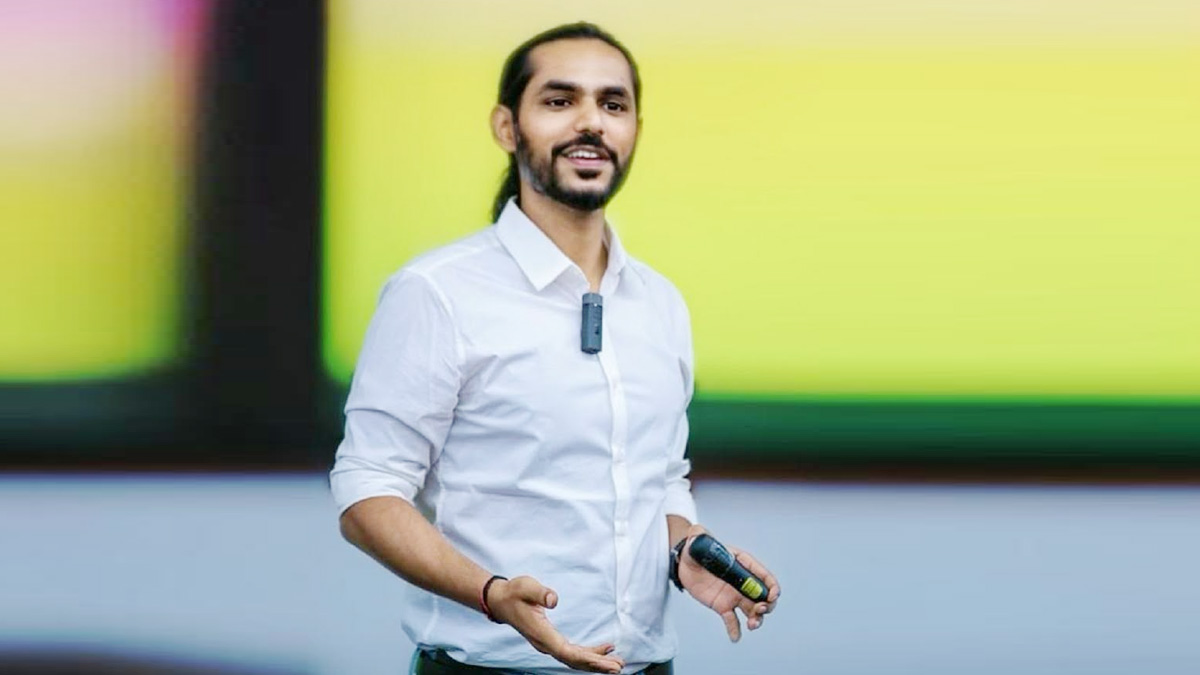
MUMBAI: Marketing has entered a transformative phase where technology is not just a tool, but the operating system of the industry. Written by Abhinav Chetan, founder of Digicated.ai, this article explores how AI is reshaping the four pillars of marketing, targeting, creative, bidding, and measurement, simultaneously, creating opportunities for precision, scale, and predictive insight. It examines how brands are moving from reactive campaigns to predictive strategies, leveraging AI to personalize experiences, optimize spend, and forecast outcomes. The piece highlights both the potential and the challenges of this shift, arguing that marketing’s future is no longer about adopting tools, it’s about understanding and navigating the underlying transformation with judgment and responsibility.
Every Industry has its invisible architecture; you only see it when you look very closely. In marketing the structural tenets are targeting, creative, bidding and measurement. Targeting defines who you reached. Creative determines what you said. Bidding controls what you paid. Measurement tells you whether it worked. These four functions existed irrespective of what brands bought whether it was radio spots or newsprint or tv ads or digital which is now the largest medium of advertising.
The pillars endure because they describe something fundamental about how marketing works at scale. The specific tools, tactics change with every platform but the underlying logic remains the same.

Every leap of technology has impacted marketing in myriad ways across these aspects until now. Enter AI and all four four pillars are transforming at a rapid pace simultaneously. And crucially, each shift compounds the others.
AI isn’t a tool bolted onto marketing anymore. It’s becoming the operating system on which all four pillars run. The question for 2026 isn’t whether to adopt AI. It’s whether you understand what’s actually changing beneath the surface and can keep pace with it. Let’s take a closer look at each of the pillars outlined:
Targeting: From segments to signals
The old campaign model was straightforward. Define your audience by age, income, location, interests. Buy media against those demographics and hope enough of the right people saw your message.
But AI is making that approach obsolete.
Platforms like Swiggy now use neural search that anticipates what you want before you articulate it. The system isn’t matching keywords anymore. It’s predicting cravings. Zomato’s AI-powered notification system reportedly achieves 60 per cent email open rates, triple the industry average, by learning inpidual behavior patterns and timing messages accordingly.
The shift is from reactive to predictive. Traditional targeting asked: who fits our customer profile? AI targeting asks: who is about to need what we sell? That’s a fundamentally different question, and it requires fundamentally different data infrastructure to answer.
For brands, this creates both opportunity and challenge. The opportunity is precision at scale. The challenge is that the targeting advantage increasingly belongs to platforms with the richest behavioral data. Brands that rely solely on third-party audiences will find themselves competing for attention that AI-native competitors anticipated weeks earlier.
But knowing who to reach is only half the equation. The other half is what you say when you get there, which leads us to creative.
Creative: The machine as collaborator
This is where the transformation gets tangible, if done right a well-crafted creative can create growth, build legacy and establish brands in the consumer’s mind. Think “Paytm Karo”, Ariel’s “share the load” or Airtel’s “Har ek friend zaroori hota hai”. While these are iconic campaigns from the last decade Coca-Cola’s holiday campaign offered a glimpse of what’s coming.
The ad, generated using AI, scored 5.9 out of 6 stars in System1 testing, ranking among the brand’s top-tested campaigns ever. Viewers achieved 98 per cent brand recognition within 15 seconds. The remarkable part: audiences responded positively when they didn’t know it was AI-generated. The backlash came only after the production method was revealed to be AI.
This highlights how production economics are shifting dramatically. Traditional campaigns for large brands required crews, long timelines, and budgets that locked out smaller players. Now any brand can now test hundreds of creative variations at a pace that was impossible a year ago.
Keep in mind that the winners in AI-augmented creative won’t be the brands that automate everything. They’ll be the ones who understand what AI handles well, such as volume, iteration, and variant testing, and what still requires humans i.e. strategic direction and emotional intelligence.
Of course, even the most compelling creative means little if it reaches audiences at the wrong cost which brings us to bidding.
Bidding: Algorithms that learn value
Media buying has always been about efficiency. The adage is to get the right message to the right person at the right cost. What’s changed is how “right cost” gets calculated.
The evolution of bidding followed a predictable arc. Fixed rate cards gave way to auctions. Auctions became real-time bidding. Real-time bidding evolved into smart bidding. Each step gave marketers more control and more efficiency. AI represents the next leap, systems that don’t just optimize for the bid, but learn what a customer is actually worth.
Google’s AI Max for Search, launched in May 2025, offers early evidence. L’Oréal reported double the conversion rate with 31 per cent lower cost-per-conversion. MyConnect, an Australian telecom provider, saw 16 per cent more leads at 13 per cent lower cost, with 30 per cent of conversions coming from search queries the team had never targeted. The machine found customers the humans were previously unable to uncover.
The deeper shift is from transaction optimization to relationship optimization. Legacy bidding asked: what’s the cost per conversion or return on ad spend ? AI bidding asks: what’s this customer worth over time? That reframes the entire economics of acquisition.
And once you’re optimizing for relationships, you need measurement systems sophisticated enough to track them, so let’s explore what’s happening there.
Measurement: From attribution to prediction
When you’re optimizing for customer value rather than transaction value, the old framework breaks down.
Measurement started simple. With offline mediums, one had to believe reported or sampled data on distribution. With the advent of digital came tracking impressions, count clicks, calculating cost per acquisition. And in this version for years, last-click attribution ruled. Whoever touched the customer last before conversion got all the credit. It was crude but easy.
But today’s best practice goes further because with AI the questions measurement can answer themselves are changing. Companies are now triangulating sophisticated methods: MMM for strategic budget allocation, multi-touch attribution for tactical decisions, and incrementality testing to prove what actually drove results. Mondelez used this approach with Walmart Connect to increase engagement 53 per cent year-over-year while improving incremental ROI by 29 per cent.
In fact, McKinsey’s research shows companies using AI in marketing achieve 20-30 per cent higher campaign ROI through better segmentation, personalization, and predictive analytics. The shift from descriptive to predictive is underway. AI doesn’t just tell you what worked. It forecasts what will work and recommends what to do next.
But here’s the challenge these systems surface. They’re only as good as the people interpreting them. And that raises a question marketers can no longer avoid.
The question very few are asking
Here’s a troubling question I ask myself often. We have systems that can target, create, bid, and measure better than most marketing teams could a few years ago. But we’re not educating enough people who know how to harness them, and how to rein them in when required.
The technology is racing ahead but the judgment to use it wisely is not. I’ve spent fifteen years in digital marketing watching marketers chase the next platform, the next tool, the next hack.
What I’ve rarely seen is someone pause to ask: Do we have adequate understanding and maturity to use what’s available? That question matters more now than ever because the consequences of not getting it right are considerable.
In fact Marketing Week’s 2025 survey found over three-quarters of marketers identify AI expertise as a major skills gap in their organizations. And this is only the beginning. Marketers need to become both AI enabled and more responsible as this transformation accelerates the very underpinnings of this field.
The four pillars that have defined marketing for decades are being rebuilt simultaneously. The disruption is here and for marketers AI competence is no longer optional. The only question is whether you’re keeping pace or catching up to it.
Note: The views expressed in this article are solely the author’s and do not necessarily reflect our own.






Brands
Beep App launches Gen-Z career platform, clocks 30,000 plus placements
Pune startup turns scrolling into career action with learn-explore-earn model
PUNE: Beep App has rolled out its newly positioned career-focused app aimed at Gen-Z users, as it looks to bridge what it calls a growing gap between exposure and employability among young Indians.
Formerly known as EventBeep, the platform is built around a simple but timely idea: turning everyday scrolling into meaningful career action. The app targets students and early professionals, offering a unified space to explore career options, learn relevant skills and access internships and job opportunities.
At a time when short-form content dominates screen time, Beep is attempting to flip the script by embedding structured, career-oriented insights within a familiar scroll-based interface. The idea is not to disrupt user behaviour, but to redirect it.
The platform spans a wide range of fields, including artificial intelligence, product management, design and data analytics. It provides users with insights into role expectations, required skills and step-by-step career pathways, supported by inputs from industry practitioners.
At the heart of the offering is a “learn, explore, earn” model that integrates discovery, skill-building and hiring into one ecosystem. The company says this closed-loop approach is already gaining traction, with over 30,000 placements facilitated so far.
“Gen-Z does not lack ambition; what they often lack is structured direction,” said Beep App founder and CEO Saurabh Mangrulkar. “The Beep App is designed to organise that exposure into actionable pathways so users can move from intent to execution with greater confidence.”
The launch comes amid a broader shift in India’s job market towards skills-first hiring, where practical experience and demonstrable capabilities are increasingly valued alongside academic qualifications.
Founded in 2021, Beep App has grown steadily within the student ecosystem, connecting over 6.5 million users with opportunities across more than 1,500 colleges and 7,800 hiring companies.
Looking ahead, the company plans to deepen its content across emerging sectors, expand its hiring network and build more personalised career pathways tailored to user behaviour.
As Gen-Z continues to navigate a complex and fast-evolving job market, platforms that can turn curiosity into clarity may well shape the next wave of career discovery.






