
MAM
Gen Z rewrites the marketing rulebook as brands rethink strategy
Authenticity, creators and trust now matter more than ads for young consumers.


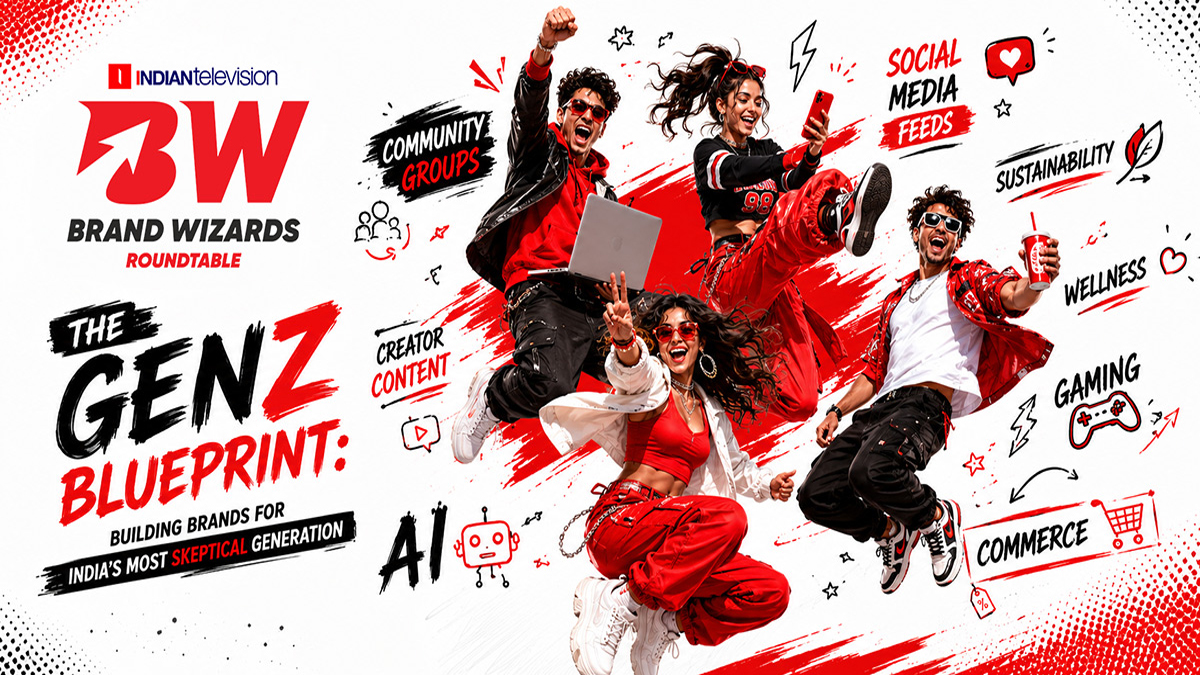
MUMBAI: The generation that scrolls the fastest may also be forcing brands to slow down and listen. For decades, marketers perfected the art of telling consumers what they should want. Glossy advertisements, celebrity endorsements, aspirational messaging and carefully controlled brand narratives defined how products were sold. Then came Gen Z, a generation that doesn’t simply consume marketing but interrogates it.
At IndianTelevision.com’s roundtable discussion, The Gen Z Blueprint: Building Brands for India’s Most Sceptical Generation, marketing leaders from sectors including mobility, beauty, food, jewellery and retail agreed on one thing: the traditional marketing playbook is rapidly becoming obsolete.
India’s Gen Z population, estimated at more than 375 million people, already accounts for 43 per cent of consumption and commands roughly $250 billion in direct spending power. By the next decade, that figure is expected to touch nearly $1.8 trillion, making Gen Z one of the most influential consumer groups the country has ever seen.
Yet what makes the generation remarkable is not just its size or spending power. It is the respect brands increasingly afford its opinions.
Often stereotyped as impatient, distracted or chronically online, Gen Z is viewed very differently inside boardrooms. Marketers increasingly see them as informed, research-driven consumers capable of influencing not only their own purchases but also those of entire households.
“The biggest unlearning is that when you’re building a brand, you can’t market it in the traditional sense. It has to come from a place of authenticity,” said Gayatri Chona, Founder of Phab.
That single observation captures one of the biggest shifts underway in modern marketing.
Unlike previous generations, Gen Z consumers arrive armed with information. Before making a purchase, they compare reviews, watch creator videos, scroll through Reddit threads, study customer comments and consult peers. The result is a consumer who is significantly harder to influence through conventional advertising.
“Gen Z questions everything. They already know the brands. They filter information, ask questions and then decide what they want to buy,” said Akshay Deshmukh, Head of Marketing at PALMONAS.
For brands, this means trust has become more valuable than visibility. A decade ago, the objective was often to maximise reach. Today, the focus is increasingly on credibility. The shift is particularly visible in categories such as beauty and personal care.
Stuti Sethi, Brand Lead at Plum BodyLovin’, said one of the industry’s biggest misconceptions was assuming millennials would continue to dominate consumer spending.
“The huge unlearning for us was that millennials hold the purchasing power. But Gen Z consumers are incredibly vocal about what they want and are willing to spend significantly on categories that help express their personality,” she said.
That willingness to spend is reshaping entire product categories.
Whether it’s skincare, fragrances, fashion, fitness or technology, Gen Z consumers are proving that they are prepared to invest in products that align with their identity, values and lifestyle. Unlike older generations, who often prioritised utility and price, younger consumers frequently evaluate products through the lens of self-expression.
The beauty industry offers perhaps the clearest example of this transformation.
According to recent data shared by Flipkart, Gen Z now accounts for nearly 60 per cent of purchases in its beauty and personal care category. Premium beauty products grew more than 60 per cent year-on-year on the platform, while fragrances expanded by over 45 per cent, underscoring the generation’s willingness to spend on products that help define personal identity.
Technology and mobility brands are witnessing a similar evolution.
Adil Lokhandwala, Creative Head at Kinetic EV and Founder of creative agency BIRTHDAY, said Gen Z increasingly influences family purchasing decisions, particularly in technology-led categories.
“They have the decision-making power on behalf of their families when it comes to tech-oriented products because they are highly research-driven and extremely knowledgeable,” he said.
That insight fundamentally changed how Kinetic EV approached communication.
“Halfway into making it, we realised that EVs are no longer automobiles; they’re gadgets,” Lokhandwala explained.
The distinction is important. Traditional automobile advertising has historically focused on performance, mileage or engineering. But younger consumers increasingly evaluate electric vehicles through the same lens they use for smartphones and consumer technology looking at design, software, innovation and lifestyle compatibility.
Brands are also discovering that information alone is no longer enough.
“TMI is a real thing,” Lokhandwala observed, referring to the phenomenon of information overload.
In a world where consumers are bombarded by content every second, marketing success increasingly depends on emotional relevance rather than informational depth. Consumers no longer want brands to tell them everything; they want brands to tell them something meaningful.
This changing behaviour is also disrupting the creator economy. For years, celebrity endorsements dominated advertising budgets. Today, many brands are reallocating those investments towards creators and micro-influencers.
“Consumers believe people over brands,” said Chona, noting that micro-influencers often drive stronger engagement because audiences perceive them as more authentic.
The logic is simple. A creator sharing a genuine experience often feels more trustworthy than a celebrity appearing in a scripted advertisement.
Sethi believes the new generation of creators has another advantage.
“The new creators know how to craft stories. They are able to connect with people in a way traditional celebrities often cannot,” she said.
As a result, marketing campaigns are becoming less polished and more conversational. The old formula rewarded perfection. The new formula rewards relatability. Brands are adapting not only what they say but how they say it.
At WickedGud, the focus has shifted away from traditional product marketing towards solving real-life problems.
“The good thing happening with Gen Z is that we don’t need to tell them to eat healthy,” Chona noted. “They already know that. What they want is something healthy and convenient that fits into their lives.”
That change reflects a broader evolution in consumer behaviour. Previous generations often relied on brands to educate them. Gen Z expects brands to understand them.
Rather than broadcasting messages, companies are increasingly creating communities. Running clubs, creator collectives, gaming communities, campus programmes and social-first experiences have become powerful marketing tools because they allow brands to participate in culture rather than simply advertise around it.
For food brands, emotional relevance often matters more than product features.
“Our communication is more about moments than products because moments are what stay with people,” said Sayantani Das, Head of Marketing at Jumboking Foods.
That insight helps explain why some of the most successful Gen Z campaigns today focus less on products and more on experiences, communities and cultural moments.
The shift is also forcing marketers to rethink content creation itself. For years, brands would invest heavily in a handful of major campaigns. Today, many prefer creating hundreds of pieces of content across platforms.
“Putting all your eggs in one basket is a recipe for failure,” said Sethi.
The approach reflects the realities of modern consumer behaviour. With audiences fragmented across Instagram, YouTube, Snapchat, Reddit, Discord and emerging platforms, marketers can no longer rely on a single message reaching everyone.
Instead, success comes through experimentation, agility and constant iteration. Perhaps the biggest lesson emerging from the discussion is that Gen Z does not want to be marketed to in the traditional sense. They want transparency instead of exaggeration. Participation instead of persuasion. Community instead of corporate messaging. Most importantly, they expect brands to earn their attention rather than demand it.
In many ways, Gen Z is forcing companies to become better versions of themselves. They are rewarding honesty, punishing inauthenticity and pushing brands to engage in genuine conversations rather than one-way communication.
The irony is that while society often portrays Gen Z as difficult to please, marketers increasingly see them as remarkably clear about what they want.
The challenge for brands is not understanding Gen Z, The challenge is unlearning everything that worked before them.






