MAM
Brands must earn Gen Z trust, not demand attention, say marketers
Authenticity, creators and consistency trump trends for sceptical Gen Z consumers


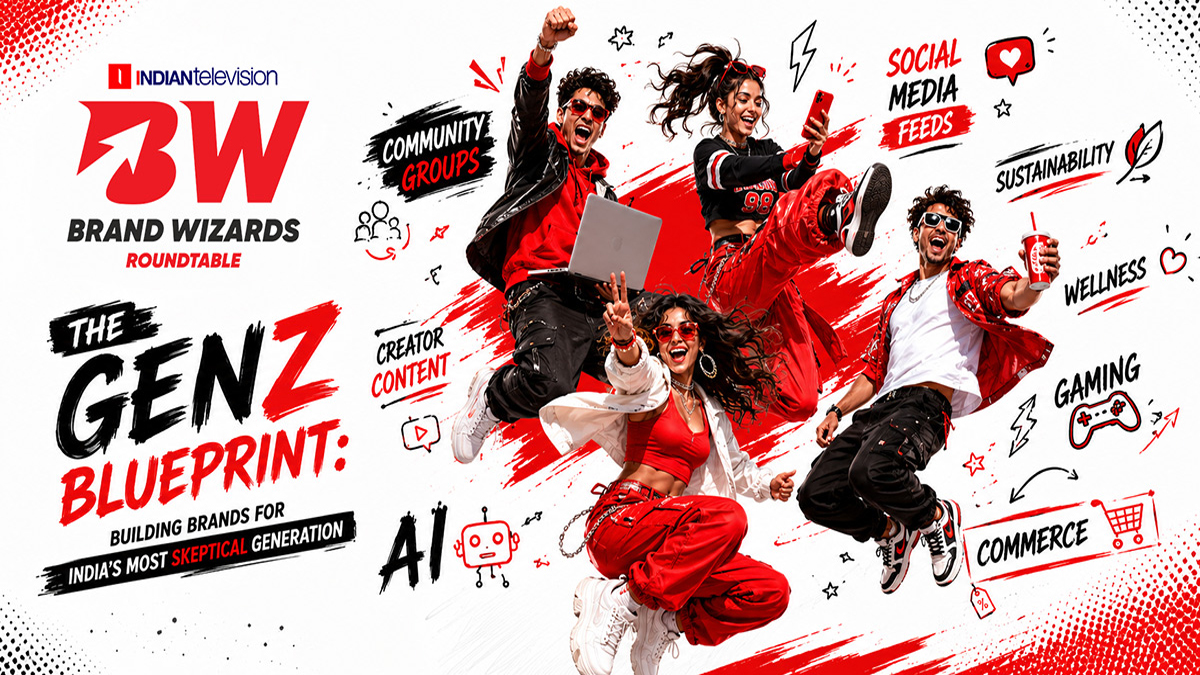
MUMBAI: The generation that scrolls fastest is also the hardest to fool. That was the clear takeaway from IndianTelevision.com’s roundtable, The Gen Z Blueprint: Building Brands for India’s Most Sceptical Generation, where marketing leaders agreed that winning over Gen Z is less about flashy campaigns and more about authenticity, relevance and trust.
Industry leaders from sectors spanning beauty, food, jewellery, retail and mobility highlighted how Gen Z has fundamentally altered the rules of brand building, forcing marketers to rethink everything from storytelling and influencer partnerships to product positioning and community building.
Gayatri Chona, founder of Phab, described authenticity as the biggest lesson brands have had to learn. “The biggest unlearning is that when you build a brand it cannot be without authenticity and for Gen Z it has to be something they can relate to,” she said. Chona also argued that consistency matters more than chasing every viral trend, noting that brands that repeatedly show up with the same message build stronger trust over time.
That sentiment resonated across the discussion. Adil Lokhandwala, creative head at Kinetic EV and founder of BIRTHDAY, said brands often underestimate how selective younger consumers have become in a world flooded with content.
“TMI is a real thing,” Lokhandwala observed, adding that today’s consumers are looking for emotional connections rather than information overload. For Kinetic EV, that shift has led to a more subtle approach to Gen Z marketing, where the product often takes a back seat to cultural relevance and storytelling.
The rise of creator culture emerged as another recurring theme. Chona pointed out that consumers increasingly trust people more than brands, making micro-influencers a powerful force in shaping purchase decisions. Stuti Sethi, brand lead at Plum BodyLovin’, echoed that view, arguing that many newer creators are better storytellers than traditional celebrities because they connect with audiences in a more relatable and authentic way.
Sethi also highlighted a major shift in content strategy. Rather than betting heavily on a handful of campaigns, brands are now producing content at scale, accepting that not every piece will succeed.
“Putting all your eggs in one basket is a recipe for failure,” she said, explaining that generating hundreds of pieces of content increases the chances of finding messages that resonate with audiences.
For Akshay Deshmukh, head of marketing at PALMONAS, authenticity is no longer optional. He noted that Gen Z consumers are highly aware of brand behaviour and quick to call out anything that feels forced or manufactured.
“They have zero tolerance for bad marketing,” Deshmukh said, adding that younger consumers are adept at filtering information and evaluating brands on their own terms.
Health and wellness brands are also adapting their messaging. Chona said Phab has moved away from telling consumers what they should eat and instead focuses on solving real lifestyle challenges. Today’s Gen Z consumer, she noted, is already aware of the importance of healthy eating but wants options that are both convenient and relevant to their daily routines.
Sayantani Das, head of marketing at Jumboking Foods, argued that memorable moments often matter more than product features. “Our communication is more about the moments than the product because moments are what stay with people,” she said, highlighting the growing importance of emotional storytelling in brand communication.
Community-building also emerged as a key differentiator. Several panellists pointed to the importance of creating loyal communities rather than simply acquiring customers. Whether through campus activations, creator networks, social platforms or niche interest groups, brands increasingly view communities as a source of advocacy, feedback and long-term engagement.
As the discussion unfolded, one message became difficult to ignore, Gen Z may be sceptical, but they are not impossible to win over. Brands simply need to stop talking at them and start speaking their language, one built on authenticity, relevance and genuine connection rather than marketing jargon and fleeting trends.