MAM
Full funnel marketing works best when brands show up where it matters: WPP Media’s Ritika Taneja
Don’t chase every channel, play the right ones, and let growth do the rest.


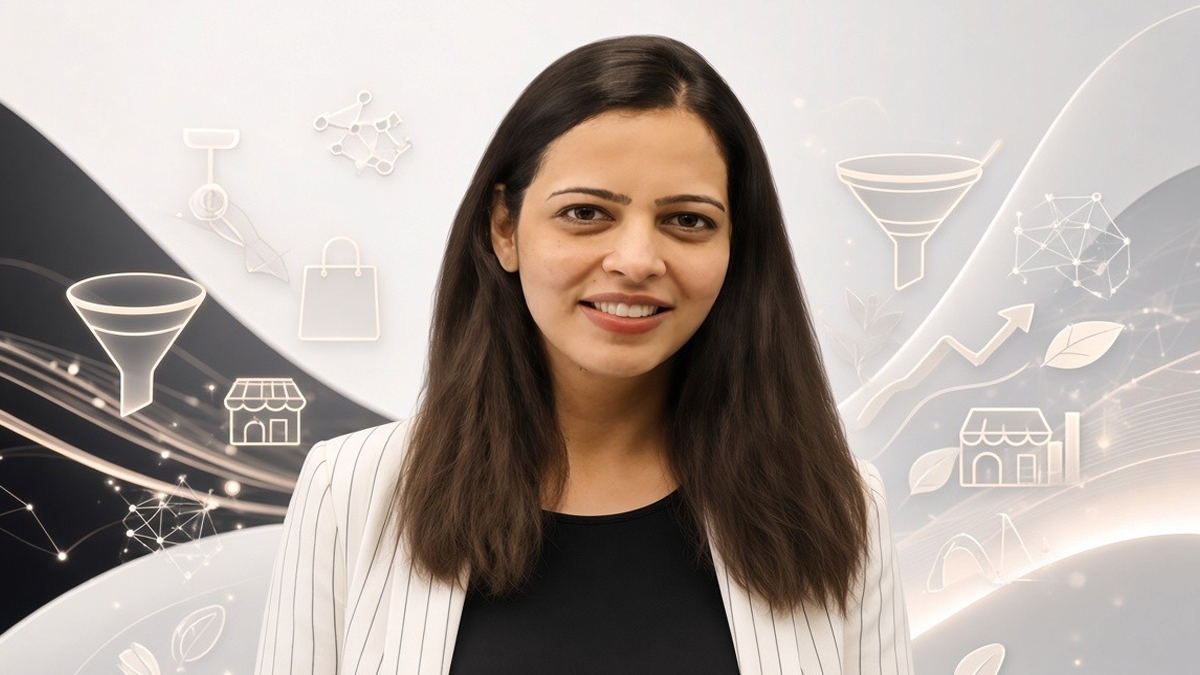
MUMBAI: Marketing has been talking about the “full funnel” for years, and the phrase has been poured into so many presentations that it has started to leak. So when Ritika Taneja was asked what is actually different this time, she admitted the question caught her off guard.
“This question hit me hard. I loved it. It’s a kind of googly on us.”
Her answer was that shoppers can now discover, explore and buy in a single session, and advertisers can finally link what people see with what they buy. Brands, however, still tend to run those moments as separate jobs. Taneja pointed to the survey in the playbook: 82 per cent of advertisers say they are not yet fully executing full funnel, and 67 per cent blame the lack of unified measurement.
“What’s different now is our ability to connect media exposure with shopping behaviour more closely. Consumers can discover, explore and buy within the same session or at the same time. Yet, brands often manage those activities separately.”
The playbook, she said, is meant to turn a familiar idea into connected decisions on audiences, investments and business results.
Taneja, senior vice president and head of strategy, eCommerce at WPP Media India, was at the launch of From Fragmentation to One View: A Marketer’s Playbook for Full-Funnel Growth, on 9 October 2026, held at SMARTIES Unplugged India at Taj Lands End, Mumbai. The playbook is a joint release from the Marketing + Media Alliance (MMA Global India), WPP Media and Amazon Ads.
Everywhere? Hardly
If every touch point matters, should a brand simply be everywhere? Taneja says no. Her rule is to pick touch points by their contribution to growth, not by how many fit on a media plan.
“So, that 12 to 21 finding that we put forward in our report describes how purchase influence is spreading across more touch points.”
The finding is stark. According to the playbook, the number of distinct touch points needed to influence 80 per cent of a consumer’s purchase decision has nearly doubled, from 12 in 2018 to 21 in 2024. The road to the shopping basket, in other words, has become a far longer commute.
With influence spread so widely, the temptation is to chase it all. Taneja would rather brands choose with care.
“Each brand needs enough reach to build future demand alongside the interactions that help people choose and buy. The decision is where each point adds value and how the selected touch points work together to drive the larger outcomes of the brand, which essentially is growth.”
Put plainly, brands should not be everywhere. Taneja agreed, “I think where it matters.” What counts as mattering depends on the brand, its stage of maturity and the ambition it holds.
She also took the pressure off the size of the cheque, recalling what Sairam Ranganathan, head of commerce at WPP Media, had pointed out during one of the panel discussions: that it is not about 10 crore or 100 crore.
“It’s about what maturity you have, you know, and therefore you go and invest.”
Once the ambition is growth, she argued, budget stops being the sticking point. What matters is which channels a brand should be on and what role each must play, so that KPIs follow from that role. “It’s not about the number of channels, it’s about the role of each channel and therefore the larger ambition.”
The solo-act problem
Is the industry guilty of counting channels when it should be following consumers? Taneja did not hedge.
“Yes, we often reward individual channels without understanding their combined contribution.”
Think of a relay race. Video may introduce the brand, creator content may build confidence and search may collect the purchase. Give each runner a separate target and they end up competing instead of passing the baton. Her fix is shared responsibility for the growth outcome across brand, media and commerce teams, working together “not in silos”.
That also means breaking down the budget walls. Social, media and retail media each tend to have their own pot, but everything needs to come together, and “that system needs to be orchestrated towards a unified objective.”
Measuring the unglamorous stages
Awareness does not ring the till the moment it lands, so how should marketers prove its worth? Taneja’s rule is that every stage answers for its own job.
“Awareness should reach additional relevant buyers and strengthen brand reform. Consideration should increase the likelihood of choosing the brand. Conversion should deliver additional customers and profitable sales.”
Brand studies and control tests can link these effects over the right period, she said, and long-term value still needs evidence when it takes time to grow.
The biggest mistake in the book
Asked to name marketers’ biggest measurement blunder, Taneja gave a line that sounds like a tongue-twister but carries real weight.
“The biggest mistake is confusing sales credited to advertising with sales credited by advertising.”
She unpacked it with a simple scenario. Some customers would have bought anyway, yet the final ad takes the bow. That can lead brands to keep targeting people who were already at the checkout.
“So, we should ask what additional sales and customers the investment delivered, beyond what would have happened without it.”
The word for that, she said, is incrementality. It matters most when a customer meets a brand through many touch points, which is why she urged caution.
Retail media grows up
Retail media has largely been seen as the last stop before purchase. Taneja wants it to do more. Brands should use commerce insights to spot future buyers and reach them with discovery formats such as video, then support consideration and purchase.
“Success should include stronger brand consideration and new customers alongside sales.”
For that to work, brand and commerce teams must plan together, with budget behind the overall objective.
Where the money goes next
If full funnel planning goes mainstream, will budgets drift from performance to brand? Taneja expects a more nuanced move.
“I expect budgets to move towards channels that can show both brand and business results. Not in a simple swing from performance to brand.”
The playbook warns against putting 80 per cent or more of spend at the bottom of the funnel, because that captures existing demand without creating new demand. Advertisers are already adjusting: 80 per cent of brands in the survey plan to increase retail media spend in 2027. The right split, she added, depends on the brand. “A launch may need more awareness while a well-known brand may need better conversions.”
AI: more content, same need for a plot
Artificial intelligence can now churn out personalised ads at scale. Does that make full funnel easier, or riskier? Taneja’s answer fits on a poster.
“AI makes the work easier but not the coherence.”
It can improve relevance, she said, provided the brand stays recognisable, and it helps adapt a strong idea to different audiences and moments in the journey. The danger comes when every channel creates and optimises messages on its own, leaving consumers with a patchy picture of the brand. Her advice is to settle the central brand idea, and the purpose of each message, before production scales up.
“It’s not about how much you’re able to scale, but how coherently and systematically you’re able to scale and use AI to best be relevant to your consumers.”
More creative versions also mean more to measure, and Taneja agreed that measurement and learning can become the bottleneck, because each version needs enough exposure to show what worked and why. She would rather organise testing around meaningful questions: which messages build consideration, strengthen preference or bring in additional buyers. Test those ideas first, then decide on execution, and scale what improves brand choice and business outcomes.
“So, addressing the objective first and then using AI. I would say not absolutely leaning on AI but utilising it for the right objectives, because measurement is the key and being relevant is the key.”
The funnel, it seems, still works. It just needs everyone to stop pouring into different ends of it.