MAM
EdTech sees exponential growth during pandemic

Mumbai: Education has been one of the severely-hit sectors during the lockdown as the entire education system had to go online overnight. But on the other hand, the Covid-19 pandemic also led the education sector to an unplanned demonstration of e-learning methods, which was not possible otherwise. Interestingly, remote learning, which started as a substitute for offline classes for some time, emerged as a complementary and supplementary mechanism.
The latest ZEE5 Intelligence Monitor Report gave evidence of the speed and scale of business activities in online education. Conducted on a cross-section of ZEE5 viewers in over 146 cities and towns across rural and urban India, the primary survey included parents who were also regular ZEE5 viewers from tier I, II, and III cities.
ZEE Entertainment Enterprises chief operations officer Rajiv Bakshi said, “Innovation lies at the epicenter of our business. Coupled with our consumer-centric approach, we endeavored to introduce a property that will educate and empower our audiences as well as partners. ZEE5 Intelligence Monitor knowledge series offers the tenets, roadblocks, and insights of the sectors that have witnessed a massive change in the last two years.”

The ed-tech report is the first in the series and highlights the disruption witnessed in the Indian education sector, fuelled by tech solutions, convenience and a new-age mindset. “We are confident that the report would benefit brand custodians and product leaders and provide new information and insights for them to make advertising and business decisions,” said Bakshi.
The report aimed to gauge the changes in consumption patterns and consumer attitudes towards e-learning in India. This survey by ZEE5 unearthed some interesting insights about online education. Let’s take a look!
E-Learning Grows As A Nationwide Trend
As the schools shifted to remote learning, 46 per cent of the survey respondents considered e-learning applications for their children during the pandemic. While 50 per cent of the parents in metro cities embraced e-learning for their children, the corresponding figure for non-metro parents stood at 40 per cent. The figures indicate that e-learning has accelerated nationwide.
Same Quality of Education For All
One significant benefit of e-learning apps is that they ensure a similar quality of education for all, which is impossible to imagine in offline classrooms. “E-learning platforms offer the same quality of education across the country, from tier I cities to tier II and tier III locations to the farthest corners of India,” said Toppr founder and CEO Zeeshan Hayath.
Parents Adopt E-Learning Methods for Kids
Millennials who were among the early adopters of computers and the internet have also emerged as the first group of parents to adopt e-learning applications. The ZEE5 report highlights that 55 per cent of millennial parents adopted e-learning platforms for their children. As millennial parents include people born during the 1990s, they have grown to see significant disruptions in technology. Hence they were quick to adapt to the e-learning applications.
Parents See E-learning Cost As An Investment In Child’s Future
The parents are quick to adopt e-learning and are also open to spending on the platform. As per the report, 63 per cent of parents don’t consider the cost of e-learning as a limiting factor; instead, they see it as an investment in their child’s future. According to ZEE Entertainment Enterprises’ chief operations officer, revenue, Rajiv Bakshi, parents’ willingness to adapt and invest in the new e-learning mechanism is a testimony to the efficacy and value of ed-tech.
Internet Connectivity Still Remains A Big Barrier
The applications offering e-learning services interact and participate in activities via computer; thus, robust internet connectivity becomes critical to this new learning mechanism. But even after winning the trust of the majority of parents, ed-tech platforms cannot effectively reach many due to the unstable internet connectivity across the country. With all family members working from home and students studying remotely, internet connectivity is insufficient. Even while mobile phones are available across the nation, the bandwidth it offers doesn’t support e-learning platforms.
At least 40 per cent of parents feel that internet connectivity is a barrier to effective e-learning. They find internet connectivity even a more significant challenge than the cost of e-learning applications.
Moving Towards A Hybrid Future Of Learning
While the lockdown has disturbed human lives like never before, it has forced us towards the things that we couldn’t even think of otherwise- for example- an MNC operating entirely from home or an education system performing remotely. While we all wish to get rid of the pandemic soon, the behavioral changes it has brought will stay with us for life. As far as the education system is concerned, the ZEE5 Intelligence Monitor Report clearly illustrates that e-learning has become very effective.
E-learning empowers individual learners and has the potential to improve access to education at a broader level when used in conjunction with the traditional class-based model, commented Bakshi on the findings of the ZEE5 survey.
The e-learning industry trends suggest that teachers and learners have become comfortable with e-learning, they even like this system over the traditional classroom setting. And while the e-learning applications are becoming more immersive, parents also like the fact that they can monitor their children’s academic progress throughout. However, the school environment and physical interaction are crucial for children’s overall growth. We can expect the learning system to move towards a hybrid model where e-learning platforms support classroom learning.







Brands
YES Bank appoints S Anantharaman as chief risk officer
Former Jio Financial Services group chief risk officer takes charge of enterprise-wide risk at the embattled private lender
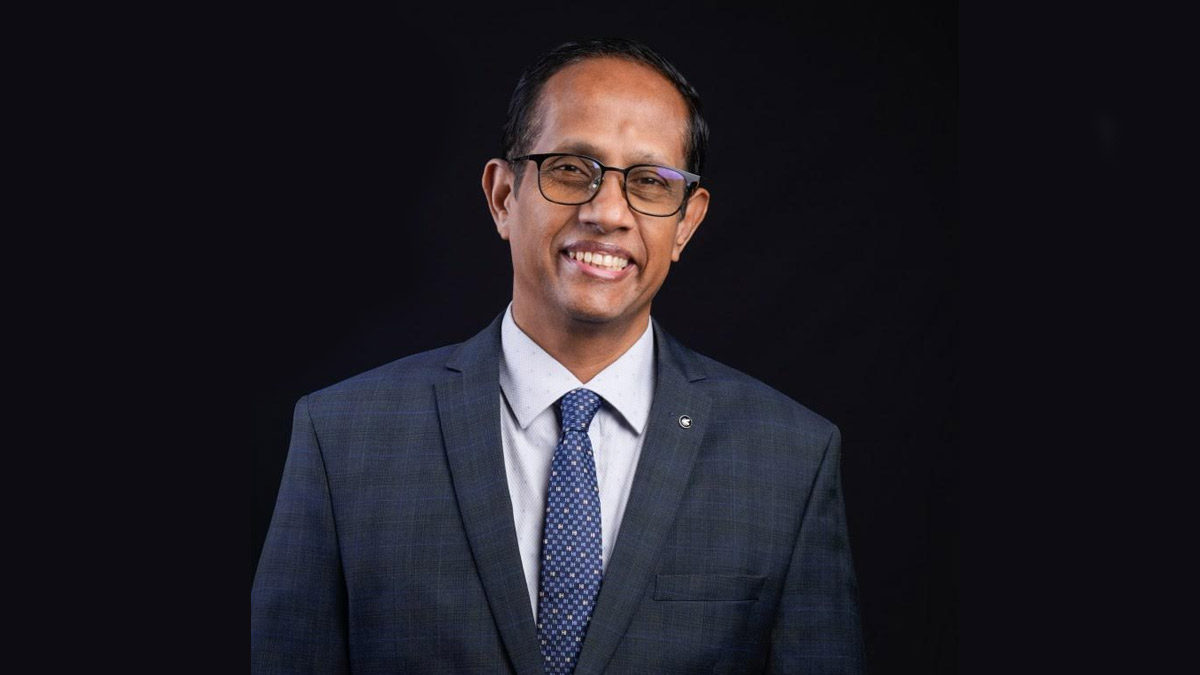
MUMBAI: YES Bank is not taking chances with risk anymore. The private lender has appointed S Anantharaman as its chief risk officer, a hire that signals the bank’s continued effort to rebuild credibility and tighten the controls that once famously slipped.
Anantharaman arrives from Jio Financial Services, where he served as group chief risk officer and built a risk management architecture spanning lending, payments, insurance broking and asset management from the ground up. Before that, he held the chief risk officer role at Bank of Baroda and senior leadership positions at HDFC Bank and L&T Finance Holdings. Three decades in banking and financial services, in other words, with scars and qualifications to match. He is a chartered accountant and a CFA charterholder.
At YES Bank, his brief is considerable. Anantharaman will oversee the bank’s entire enterprise-wide risk framework, covering credit policy, market risk, operational risk, information security, data governance, analytics, model governance and data privacy. It is, in short, every lever that matters when a bank is trying to prove it has grown up.
YES Bank’s turbulent past needs little rehearsing. What it needs now is exactly what Anantharaman has spent thirty years building: the kind of risk culture that stops problems before they become headlines. The appointment suggests the bank knows it.






