MAM
AET Displays: Redefining LED brilliance and leading India’s DOOH revolution

MUMBAI: Marketing isn’t just getting smarter; it’s getting flashier—and DOOH is proof that advertising is no longer a static affair. According to recent market reports, India’s DOOH (Digital Out-of-Home) market is currently valued at around USD 282.6 million in 2024, with expectations to reach USD 630 million by 2030 at a CAGR of 13.8 per cent.
Forget peeling billboards that fade into the background; today, LED-powered displays are turning streets into visual feasts. Bright lights, big impressions, and data-driven campaigns—what’s not to love? AET Displays, the wizards of outdoor advertising, are leading this transformation.
Curious why India’s DOOH market is shining brighter than ever, with a staggering 13.8 per cent CAGR? Want to know how AET Displays is capturing eyeballs (and wallets)? Keep reading for insights, strategies, and a touch of LED magic that’s redefining advertising.
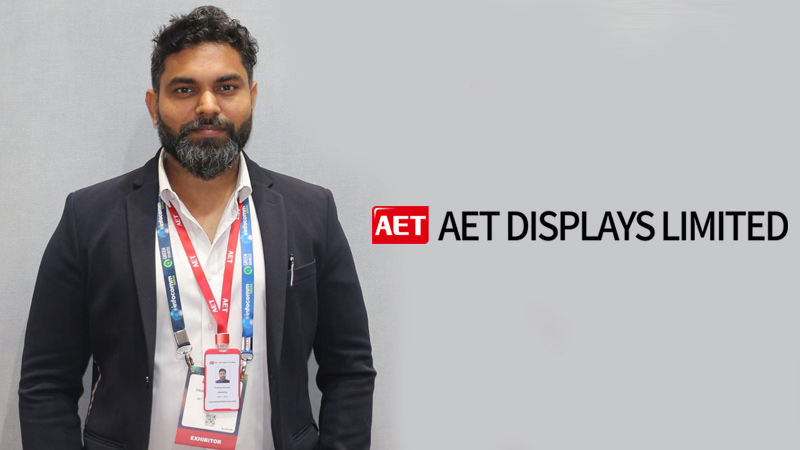
Indian Television’s Suman Baidh and Sreeyom Sil recently sat down with AET Global’s international marketing head, Prashant Srivastava for a candid chat on India’s buzzing DOOH advertising market. From billion-dollar projections to the latest LED wizardry, Srivastava didn’t hold back. Want to know how AET Displays plans to light up the competition, one screen at a time? Let’s dive into the trends, the opportunities, and maybe even a few trade secrets (if we’re lucky!).
Edited Excerpts
The DOOH market in India seems to be on fire right now. What’s fuelling this growth?
India’s DOOH market is witnessing a transformative phase, growing at an estimated CAGR of 14 per cent and poised to reach $1 billion by 2027. Key trends include the integration of programmatic advertising, real-time analytics, and the rise of interactive displays. However, challenges such as infrastructure gaps and regulatory inconsistencies persist. The opportunities lie in expanding to Tier 2 and Tier 3 cities, where the adoption of digital solutions is accelerating, and in catering to smart city initiatives that demand high-quality, weather-resistant displays.
Challenges and opportunities always go hand in hand. What’s your strategy for tackling them?
Our AET Spark Program is a transformative initiative designed to elevate the LED display industry by providing a seamless, end-to-end experience for our partners. This program goes beyond just supporting our clients; it also focuses on skill development by training employees to enhance their expertise in the LED display industry.
With a strong network of over 80 partners and distributors across 34 countries, the program helps extend AET’s global footprint while addressing local market needs. We also offer comprehensive product training to empower customers to fully utilise their LED displays and maximise their potential. The program ensures high-performance maintenance and minimal downtime while committing to sustainability with advanced packaging technologies like MIP and COB.
That’s a solid approach. So, what makes AET’s displays stand out in this competitive market?
AET is not just a seller of LED products, but a leader in LED technology. Our displays stand out due to their technological superiority, durability, and customisation options. We incorporate cutting-edge technologies such as Micro LED (COB & MIP Technology), Quantum Dot Chip on Board (QCOB), and Transparent LED with AM Technology.
Our products are built to withstand India’s diverse climates, from Rajasthan’s searing 49°C heat to the monsoon-heavy Mumbai. They’re dustproof, waterproof, UV-resistant, and consume 20 per cent less energy than industry standards. This aligns with global sustainability goals while delivering top-notch quality.
Advertisers must love that level of innovation. How do they leverage AET’s displays for campaigns?
Advertisers leveraging AET displays understand that times have changed, and today’s campaigns demand real-time insights to ensure their ads are capturing consumer attention. Our LED displays are not just products but a promise of quality, consistency, and innovation. From seamless installations to ongoing support, we provide a comprehensive service that sets us apart.
With AET, advertisers gain more than just a display; they gain a dedicated partner committed to their success. Our displays integrate real-time analytics and interactive features, ensuring maximum engagement and deepening consumer relationships.
Let’s talk tech—how is AET revolutionising outdoor advertising in India?
AET Displays is at the forefront of revolutionising digital outdoor advertising in India by driving a significant shift from traditional static advertising to dynamic, interactive, and data-driven solutions.
Our transparent LED displays are a prime example of innovation, offering visually captivating mediums for high-traffic areas while maintaining the surroundings’ aesthetic. Additionally, our Quantum series, built on cutting-edge MIP technology, delivers superior image quality and energy efficiency for large-scale installations.
We empower brands with real-time analytics, allowing for campaign optimisation on the go. By integrating interactive features, advertisers can create unforgettable experiences for their audiences. We’re also contributing to smart city projects, ensuring our displays enhance urban connectivity and innovation.
Sustainability seems to be a buzzword across industries. How is AET walking the talk?
At AET Displays, sustainability is at the core of our business strategy. Our LED displays consume up to 20 per cent less energy compared to industry standards, reducing carbon emissions while cutting operational costs for our clients.
Our advanced packaging technologies like MIP and COB ensure safer deliveries while minimising waste. Additionally, our displays are designed for durability, reducing the need for replacements and cutting down on electronic waste. These efforts align our operations with global sustainability standards, ensuring a greener and more sustainable future.
Looking ahead, what does the future hold for India’s DOOH industry and AET Displays?
The future of the Digital Out-of-Home (DOOH) industry in India looks extremely promising. The market is projected to double by 2030, driven by advancements in technologies such as AI, IoT, and 5G connectivity. These innovations will enable more personalised, dynamic, and interactive advertising experiences.
As for AET Displays, 2024 was a landmark year with 40 per cent growth in India. In 2025, we plan to expand aggressively into Tier 2 and Tier 3 cities, launch new product lines with enhanced capabilities, and strengthen our partnerships through initiatives like the AET Spark Program. Our mission is to remain at the forefront of this transformation and help brands captivate audiences like never before.
As AET Displays paves the way with tech-savvy brilliance and sustainability-driven innovation, India’s DOOH market is truly lighting up—literally. The future of outdoor advertising is bright, and it’s undoubtedly LED-powered. So, the next time you walk past an LED display, don’t just admire its shine—wonder if it’s plotting world domination with programmatic ads and AI analytics. Will the old-school billboard ever make a comeback? Doubtful. But as Srivastava cheekily puts it, “In the battle of the billboards, it’s clear—LED always outshines paper. It’s bright, it’s dynamic, and most importantly, it’s the future of how we connect with audiences.”