
iWorld
Pocket FM pulls the plug on Pocket TV, doubles down on audio and global play
Microdrama experiment exits stage left as audio giant sharpens focus on profitability, overseas growth and IPO ambitions


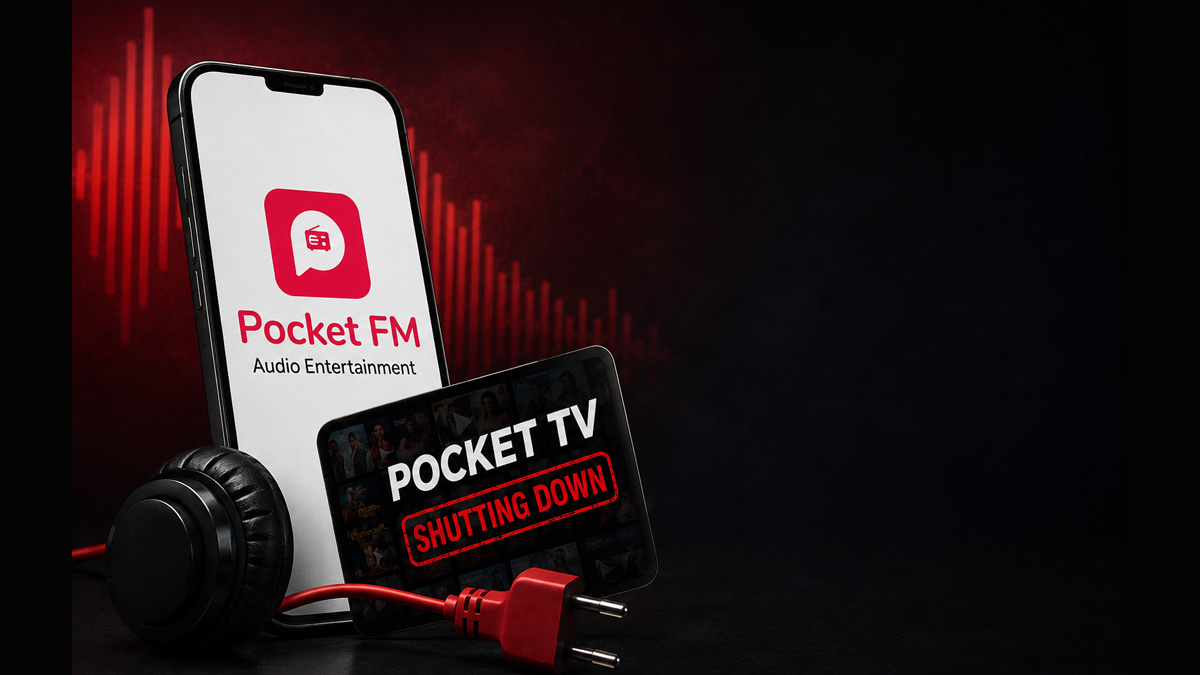
MUMBAI: The drama is over before the credits could roll. Audio entertainment platform Pocket FM has shut down Pocket TV, its foray into the booming microdrama space, choosing instead to stick to what it knows best: audio storytelling at scale. The closure was reported first by The Economic Times earlier today.
The move comes even as India’s microdrama gold rush gathers pace, with deep-pocketed rivals and ambitious startups piling into the short-form content arena. But Pocket FM appears to have decided that not every trend is worth chasing.
“Pocket TV was launched as a beta product to explore the emerging microdrama category and is not a material contributor to Pocket FM’s business,” a company spokesperson said. “As with any product experiment, we periodically evaluate performance and strategic fit.”
The spokesperson added that the company remains focused on building “the world’s leading audio entertainment platform”, with audio continuing to account for the overwhelming majority of its business. The company also stressed that no layoffs were linked to the closure, with team members redeployed to its core audio operations.
The retreat from microdrama comes as the category becomes increasingly crowded. Rivals including Kuku FM, ShareChat, JioHotstar, and a host of startups have been betting big on snackable, vertical-video storytelling. Earlier this year, gaming company Zupee acquired microdrama startup Vertical TV to strengthen its short-form content ambitions.
Pocket FM, however, is choosing to stay in its own lane. Founded in 2018 by Rohan Nayak, Prateek Dixit and Nishanth KS, the company claims to host more than 100,000 audio series spanning romance, drama, thriller, fantasy and science fiction. It says its platform serves over 250 million listeners globally, who spend an average of more than 125 minutes a day consuming content.
In April, Nayak revealed that Pocket FM had crossed a $400 million annual recurring revenue run rate in March 2026, more than doubling over the previous 12 months. The company also said it was free cash-flow positive and operating at nearly 5 per cent EBITDA margins.
The startup’s financial story has been equally loud. Pocket FM claimed FY25 revenue surged 68 per cent to Rs 1,768 crore from Rs 1,052 crore a year earlier. Backed by investors including Lightspeed, StepStone Group, Tencent and Times Internet, it has raised $196 million to date and was last valued at $750 million following its $103 million Series D round in 2024.
Meanwhile, the company’s leadership bench is being strengthened ahead of its next act. Former Bank of America Merrill Lynch executive Abhilash Padival is set to join as chief financial officer, while former Meta AI scientist Vasu Sharma has been brought in to lead artificial intelligence initiatives. Earlier this year, Lalit Gangwar was elevated to chief operating officer.
The timing is notable. Arch-rival Kuku FM has already confidentially filed draft papers for an IPO expected to raise between Rs 2,500 crore and Rs 3,500 crore at a valuation of around Rs 15,000 crore. Pocket FM, too, is widely believed to be laying the groundwork for a market debut, although it has yet to reveal a timeline.
For now, the company is turning down the volume on microdramas and cranking up the audio. In the battle for listeners – and eventually investors – Pocket FM is betting that its biggest hit is still the one playing through the headphones.






