
iWorld
Netflix bets on bolder genres as Lock Upp Reloaded returns
FICCI FRAMES panel calls for riskier genres as Netflix unveils Lock Upp’s next chapter


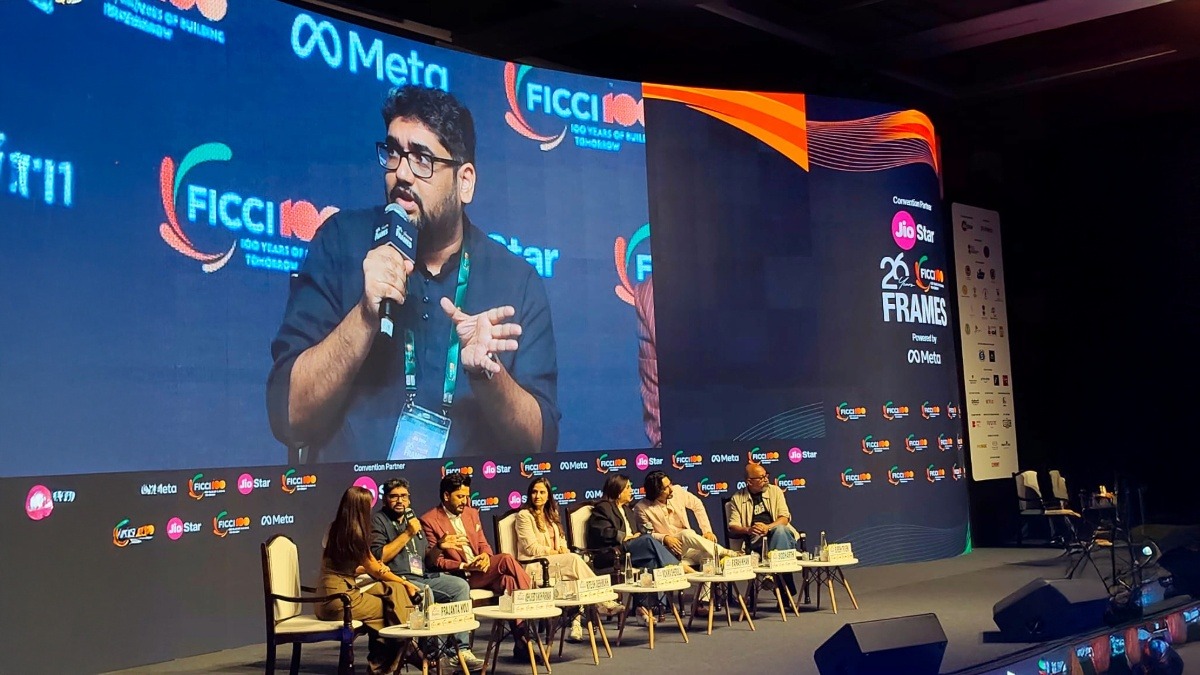
MUMBAI: The next big story may not come with a tried-and-tested script and that, perhaps, is precisely the point. From romance and sci-fi to reality television that turns uncomfortable conversations into popular culture, creators and streaming executives at FICCI FRAMES 2026 made a case for taking bigger creative swings as audiences find themselves spoilt for choice in an age of almost infinite content.
The session, ‘The Next Big Story: What audiences want, what creators are imagining and how bold programming choices are shaping what comes next’, brought together Prajakta Koli, Netflix India Vice President – Content Monika Shergill, actor Siddharth, director Suresh Triveni, Operation Safed Sagar writer, creator and showrunner Abhijeet Singh Parmar, Ritesh Deshmukh and Farah Khan.
While the conversation travelled across genres, creators, changing audience tastes and the increasingly crowded entertainment landscape, it also delivered a piece of programming news: Netflix is bringing Lock Upp back with Lock Upp Reloaded.
The announcement followed a discussion around the reality show’s ability to turn entertainment into a wider conversation, with its participants’ vulnerabilities and personal experiences becoming as central to the programme as the competitive format itself. Netflix said the previous edition generated more than 5 billion social views, over 7 billion conversations and more than 125 million viewing hours in just six weeks.
For an industry constantly hunting for the next franchise, format or breakout hit, the numbers also underlined a larger point running through the session: audiences are no longer simply consuming programmes. They are clipping them, discussing them, sharing them and carrying them into conversations far beyond the platform on which they first watched them.
Reality television became one of the clearest examples of how an established genre can be reworked rather than merely repeated.
The discussion around Lock Upp focused on its attempt to move beyond the usual reality-show machinery of conflict, competition and celebrity personalities. The programme’s conversations often travelled into personal trauma, secrets, relationships and other aspects of human behaviour, giving viewers subjects to discuss beyond individual contestants.
Farah Khan reflected on how the programme dealt with difficult experiences while remaining firmly within an entertainment format, arguing that entertainment could be an effective vehicle for communicating serious ideas. Ritesh Deshmukh similarly described the experience as being as much about human nature and vulnerability as conventional reality television.
That ability to spill outside the confines of an episode emerged as one measure of contemporary programming success. A show can begin on Netflix, but its second life may unfold through Instagram reels, conversations, memes and discussions among viewers.
Prajakta Koli offered a glimpse of precisely that effect, recalling being drawn into the programme within about six minutes despite initially not knowing all of its participants. She also described how people around her would leave to watch new episodes as they dropped, the sort of compulsive audience behaviour every streaming service would like its programming to generate.
Netflix is now trying to bottle that lightning again with Lock Upp Reloaded. The new edition was announced on stage as the second season on Netflix, although further details on its contestants, release date and format were not disclosed during the portion of the session provided.
The discussion also reflected how the boundaries that once separated so-called premium streaming programming from mass entertainment are becoming increasingly porous.
Farah Khan described Netflix’s recent programming mix as spanning both ends of that spectrum, joking that its reach now stretches “from Naigaon to South Bombay”. The remark captured a wider programming shift discussed on stage: streaming services cannot depend on a single urban, niche or prestige-content audience if they want to grow across India’s vast entertainment market.
The next stage, therefore, is less about deciding whether a programme should be ‘massy’ or ‘classy’ and more about finding stories capable of connecting strongly with their intended audiences.
That becomes especially important in a market where the definition of content itself has exploded. Films and long-form series now compete for attention not merely against one another, but against reality shows, short videos, social feeds and effectively anyone capable of pointing a camera at themselves.
For longer-form entertainment, the panel’s argument was that abundance raises rather than lowers the creative bar. If audiences can abandon one piece of content and find another within seconds, a film or series has to justify the time it asks viewers to surrender.
Perhaps the sharpest creative argument of the session was that algorithms can explain what audiences have already watched, but cannot be allowed to become the sole compass for what should be made next.
As the conversation turned explicitly to the “next big story”, the emphasis shifted towards creative bravery. The discussion argued for looking beyond genres that Indian entertainment already knows how to make successfully and establishing new storytelling territory rather than endlessly mining familiar formulas.
Comedy, horror-comedy, crime and gangster stories were cited as areas in which the industry has already developed a recognisable storytelling vocabulary. But the panel also pointed towards genres that remain comparatively under-explored.
Romance featured prominently in that conversation, alongside newer forms of horror and science fiction.
The proposition was not simply to make one experimental title in a less familiar genre and move on if it fails. Instead, the discussion suggested that the industry needs foundational films and shows that can establish the language of a genre, allowing audiences to become familiar with it before creators build further stories around it.
In an industry frequently tempted to chase whatever worked last Friday, that represents a more patient approach to programming: sometimes audiences have to be introduced to a storytelling language before a market can develop around it.
Romance emerged as one area where participants saw room for renewed experimentation.
Indian cinema has hardly been a stranger to love stories, but the discussion suggested there is scope for contemporary romance to regain greater space within the streaming and filmmaking mix. The panel noted that more romantic programming is beginning to emerge, while calling for greater exploration of the genre alongside other relatively under-served categories.
That is significant in a programming environment that has spent years leaning heavily on thrillers, crime, darker dramas and hybrid horror-comedies.
The larger argument was not that one genre should replace another. It was that India’s streaming ecosystem has become large enough to accommodate a broader creative menu.
The next breakthrough, therefore, need not look like the last one.
One of the defining realities raised during the conversation was just how radically the supply of content has expanded.
A person standing in front of a camera and filming themselves is now, in practical terms, a content creator. That puts professionally produced films, series and reality programmes into the same battle for audience attention as an almost bottomless stream of short-form material.
Netflix’s view presented during the session was that this makes quality even more important for long-form storytelling.
Films, series and reality programmes ask audiences for considerably more time than a short social video. Their competitive advantage cannot simply be duration or production expenditure; they have to offer an experience strong enough to make that time feel worthwhile.
The abundance of content has therefore produced a paradox. Making and distributing content has become easier, but earning sustained attention has arguably become harder.
The audience, rather than any particular format, platform or star, increasingly has the final word.
The conversation also placed India’s streaming ambitions in an international context.
Shergill said Netflix’s Indian content had reached the Top 10 in 82 countries during the previous year, pointing to the growing ability of stories originating in India to travel across markets and cultural boundaries.
That international movement changes the creative equation.
A story no longer necessarily needs to sand away its local identity in pursuit of an overseas audience. Streaming distribution can place distinctly Indian stories before viewers who might previously never have encountered them, while audience choice determines how far they ultimately travel.
The opportunity, as framed during the session, is consequently not merely to produce more content but to raise Indian long-form storytelling to a standard capable of competing for attention globally.
For Netflix, that means enabling writers, filmmakers, performers and other creative talent while accepting that the next breakout idea may arrive from somewhere unexpected.
If there was a recurring thread connecting reality television, romance, sci-fi and international reach, it was the diminishing usefulness of a fixed formula.
A cultural phenomenon cannot simply be ordered into existence because data says audiences enjoyed the last one.
Lock Upp illustrated the other possibility. A home-grown reality format that first emerged on MX Player was reworked for Netflix and, according to figures shared at the session, went on to generate billions of social views and conversations alongside 125 million-plus viewing hours in six weeks.
Its return as Lock Upp Reloaded is therefore more than a sequel announcement. It sits within the wider question FICCI FRAMES put before the panel: in a market where viewers can watch almost anything, what persuades them to care about something?
The discussion did not produce a neat recipe and that was arguably its point.
Audiences can reward an established genre one week and an unexpected idea the next. Algorithms can map yesterday’s behaviour, but creators still have to imagine tomorrow’s appetite. Platforms can provide distribution, budgets and reach, but none of those guarantees that a programme will break through the noise.
What appears to be changing is the willingness to cast the net wider: from reality formats capable of starting social conversations to a fresh wave of romance, unexplored horror and science fiction, while pushing Indian stories towards audiences far beyond their home market.
In an age of infinite content, the industry’s next big challenge may no longer be producing enough stories. It is finding the one viewers cannot scroll past.






