
ITV News
The dark mode Holi: When silence became a strategy
How India’s top advertisers turned a 100-year celestial hurdle into a masterclass in contextual intelligence and lunar-timed logistics


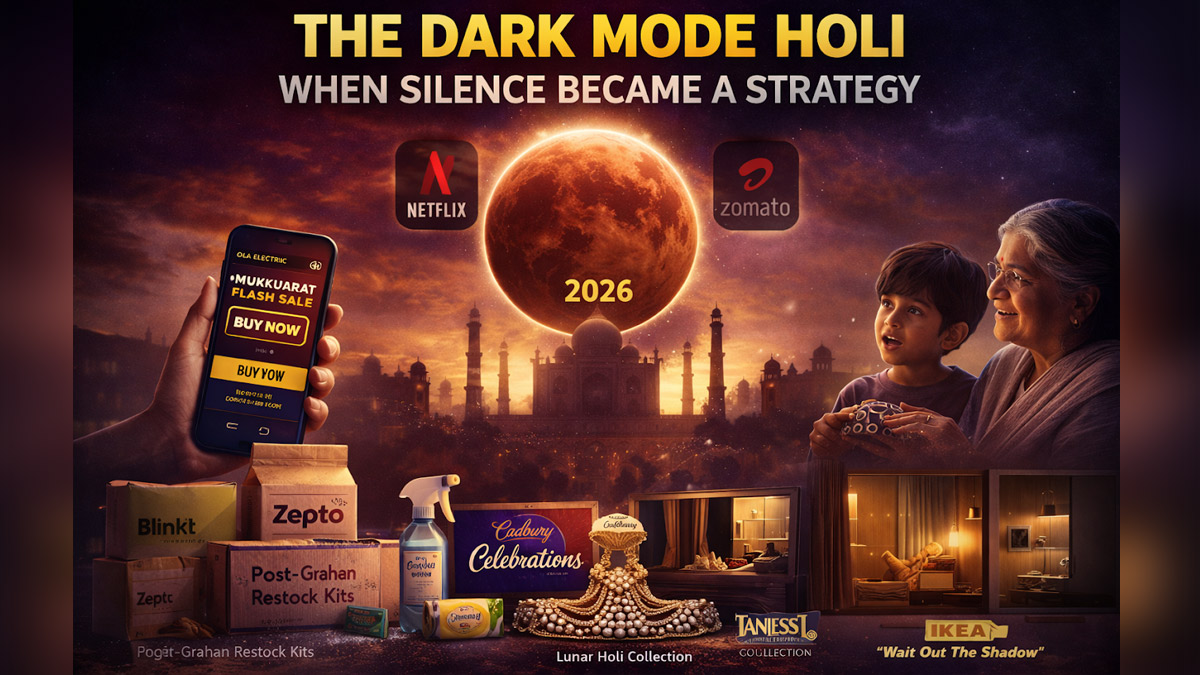
MUMBAI: In 2026, the Indian advertising landscape faced a unique cultural paradox. Holi, the festival of exuberant colour and unbridled joy, collided head-on with a “Total Lunar Eclipse” (Chandra Grahan). For the first time in nearly a century, brands had to sell celebration while navigating the somber silence of the Sutak—the inauspicious period preceding an eclipse where traditional households refrain from shopping, eating, or festivities.
Here is how the industry pivoted, turning a potential marketing blackout into a masterclass in cultural agility and contextual intelligence.
The “dark mode” aesthetic: A digital pivot
Traditionally, Holi campaigns are a loud, visual explosion of pinks and yellows. However, with the sutak beginning in the early hours of 3 March 2026, major digital players adopted what insiders termed “The Dark Mode Strategy.”
Netflix & Zomato: Instead of the usual morning “pichkari” notifications, these giants shifted their engagement to “post-eclipse parties.” They utilised a “blood moon” aesthetic—deep crimson, celestial blacks, and shimmering silver—to build anticipation for a moonlit Holi.
The Impact: By leaning into the eclipse’s visual drama, they effectively doubled the festive window, moving from a one-day “daytime riot” to a sophisticated “night-time rave.”
Ola Electric: Weaponising the “shubh muhurat”
Recognising that many Indian households pause high-value purchases during an eclipse, Ola Electric didn’t fight the tradition—they weaponised it.
The “Muhurat” Windows: They launched the “Holi Mahotsav” featuring strictly timed “purchase windows.”
The Strategy: Flash discounts expired the minute the sutak began and reopened the second the eclipse ended. By aligning their CRM (Customer Relationship Management) triggers with the exact astronomical timings provided by planetary calendars, they respected consumer sentiment while creating high-stakes, “ticking clock” urgency.
Quick Commerce: The “sutak” recovery squad
For Blinkit and Zepto, the challenge was logistical. Traditional beliefs often dictate the discarding of cooked food and the deep cleaning of kitchens following an eclipse.
The move: These platforms marketed “post-grahan restock kits” and “purity bundles.”
The narrative: Their ads focused on renewal. Instead of pushing Thandai and Gujiya in the morning, they pivoted to cleaning supplies, fresh organic grains, and Ganga-Jal infused wipes.
The results showed a 400% surge in orders within the 15-minute window following the Moksha Snanam (ritual bath) at 6:47 PM, proving that timing is more valuable than reach.
Luxury’s “celestial canvas” Trend
While mass brands dealt with logistics, luxury houses like Tanishq and Sabyasachi elevated the festival’s aesthetic. They released “Lunar Holi” collections, replacing the typical chaotic splatter of colour with “Moon-inspired” whites, iridescent pearls, and silver-foiled garments.
The Metaphor: The marketing narrative shifted from “getting dirty” to “emerging from the shadow.”This resonated with a younger, spiritual audience that views the eclipse as a time for internal reflection before the external explosion of Holi.
IKEA: “The safe haven” campaign
In a clever twist, IKEA India launched a campaign titled “Wait Out the Shadow”. Knowing that people stay indoors during the Grahan, they marketed cosy eclipse-viewing nooks.
The Hook: They showcased their dimmable lighting and blackout curtains, positioning the home as a sanctuary during the inauspicious hours. It was a rare instance of a brand successfully selling “staying still” during India’s most energetic festival.
Cadbury: “Sweetness after the shadow”
Cadbury Celebrations took a sentimental route. Their film featured a grandmother explaining the eclipse to her grandson, ending with the family sharing chocolate the moment the moon cleared.
The Message: It positioned the brand as the bridge between the “darkness” of the eclipse and the “light” of the festival. By acknowledging the Grahan as a period of patience, they earned immense “cultural brownie points” for appearing like a peer who understands the consumer’s lifestyle, rather than a rigid seller.
Why this matters for publishers
The Holi-Eclipse of 2026 will be remembered as the year moment marketing grew up. It wasn’t just about slapping a logo on a trending topic; it was about contextual intelligence. Brands that ignored the eclipse looked tone-deaf to the millions observing traditional precautions. Those that leaned into the shadow found that in a market as diverse as India, respecting a “pause” is often the fastest way to progress.
In 2026, the most successful brands weren’t the loudest; they were the ones who knew when to be quiet and when to burst into colour. — Extract from the Festive Marketing Report 2026.






