MAM
Partha Sinha & the art of monetisation at The ToI

NEW DELHI: As the government imposed strict lockdown restrictions for close to three months, the print industry was one of the worst-hit. If various reports are to be believed, they lost around 60-80 per cent of their revenues. A lot of them shut down editions, most of them let go of their employees, shaved salaries, and almost all of them dealt with a painful period where their resources just bled.
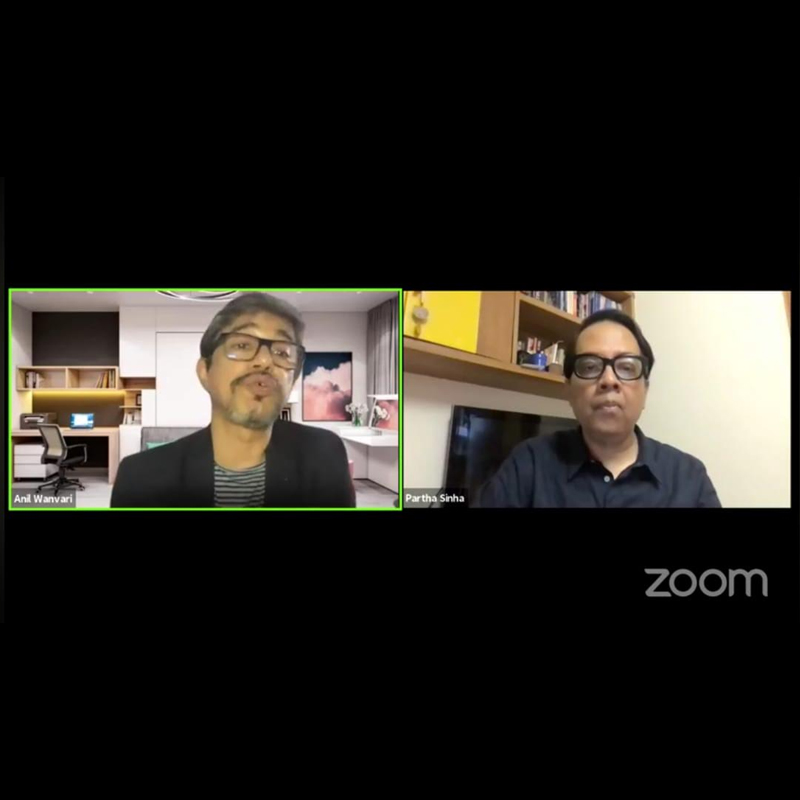
However, as the world starts getting back to normal and a new world order sets in, the print industry is looking forward to a better tomorrow, lined up with new opportunities and relevancy, Bennet Coleman & Co Ltd (BCCL) president–responses Partha Sinha shared in a virtual fireside chat with Indiantelevision.com founder, CEO, and editor-in-chief Anil Wanvari. On Monday evening, the duo sat across screens to discuss the impact of Covid2019 on print and the way ahead for the industry.
Sinha noted that the print industry has already reached a 70 per cent recovery in terms of the number of copies being delivered. “I think in some markets it has gone up to 90 per cent because, in the south or states like Kolkata, there was never a massive problem of circulation. Cities like Delhi, Mumbai, and a few more in the north were hit badly and I guess it has revived now, not just for us but for all the players.”
He indicated that it is a good sign for the industry and debugs the myth that print will shut down. “For three to four months, our main concern was consumer demand that was severely impacted. But coming out of it so quickly is absolutely brilliant.”
So, was it a knee-jerk reaction on the part of the industry to shut down some of the editions and let go of a number of employees, or as some of the unions say, an excuse, Wanvari questioned.
“I don’t think it was a knee-jerk reaction or an excuse. Even it was not for Covid2019 and something else would have happened, you would have got a consultant like McKinsey or BCG and asked them to optimise, right? This optimisation tells you if there is any cost reduction required and how can you improve profitability. Honestly speaking, as much as it's being talked about but it's quite a routine activity. Every organisation has optimised; when you find a new revenue opportunity, you hire people and if you find a revenue opportunity drying up, you optimise. I think this is a regular organization life cycle,” Sinha cleared the air.
So, what does the future of print seems like to him as digital and other mediums take centre stage?
Sinha insisted that there can’t be any substitute for the content that print generates and therefore the medium will stay here, but it might take just a slightly different role going ahead.
“I want to debug the myth that digital can replace or surpass print, or TV is a challenge to print. What is happening with both these mediums is that they are creating fragmented opinions, which lack credibility for the source and even for the brands. The news on television is so polarised, that it is sickening now. And obviously, if fake news becomes the business model, the credibility is hampered. Therefore, no amount of user-generated content or no amount of hair pulling on the camera will be able to substitute the credibility that print offers. Journalism will always remain about how deep you go, how sincere you are and whether you are you're taking all the points of views,” Sinha elaborated.
He added that the role of print, going ahead, will move on from being a medium of discovery of product to being involved in its purchase by the customer too because of the credibility associated with the medium. He cited the instance of a real estate developer Casa Gold out of Chennai. It sold 120 apartments during the peak of Covid over four days. The Times of India Chennai response team managed everything from the webinar, to virtual expo, to get the potential buyers to take part in the virtual display of the advertisements to front page jackets of the physical newspapers.
Sinha revealed that print media plays a big role in cultural marketing. "Cultural marketing works by creating truth and opinion and rallying people around the truth and opinion or finding emergent truth and opinion in society and making it bigger,” he explained. “Many branded efforts have almost become culture: Lead India, Teach India, Lead India led to Anna Hazare and the birth of AAP. Print can create a better narrative than any other medium. Another example is organ donation which has been driven by the Times of India.. The Times of India is the only way to create a culture with the affluent.
“With so much fragmentation, there is a lack of credibility in the domain now. Due to fake news being so prevalent, print has started playing a significant role in building credibility and a path to purchase. The advantage of the printed word is it doesn't come with a picture. Therefore, you are forced to use your brain, you're forced to use your opinion. And that's how culture gets created. The beauty of culture creation is that eventually brands will pay a premium to be closer to culture. Everything else is just a matter of discount because that's why the most popular method of advertising on the internet is programmatic led,” he shared.
He highlighted that cultural authority is the biggest asset a brand can ever own, because with that comes credibility. “These are the things that print media have to start thinking about, some like the New York Times has already done so,” he pointed out.
Further, to help the brands gain the maximum out of the exposure and credibility that print offers Bennet and Coleman has come up with a pricing engine, which is based on artificial intelligence and machine learning. It can make an umpteen number of parameters and churn out a very specific notation for the time, helping the brands understand the right channels and the right strategy to advertise. “We are backing culture creation with data and analytics and have huge amount of data analysis,” he revealed.
Sinha highlighted that all the assets of the Times of India group are brought into play while offering solutions to clients, whether its digital or TV or print or the social handles of these. “Thanks to the fact that we have all these assets, we can bring in 20 of our group assets or 30 of them,” he disclosed. “Let me also tell you we are open to look at assets outside the group to provide solutions to clients.”
Times have indeed changed things at The Times. As many clients and marketers say, the change has happened for the better.