iWorld
Meta reshuffles 7,000 staff as AI overhaul gathers pace
Tech giant plans 8,000 layoffs as teams pivot to AI-first structure.


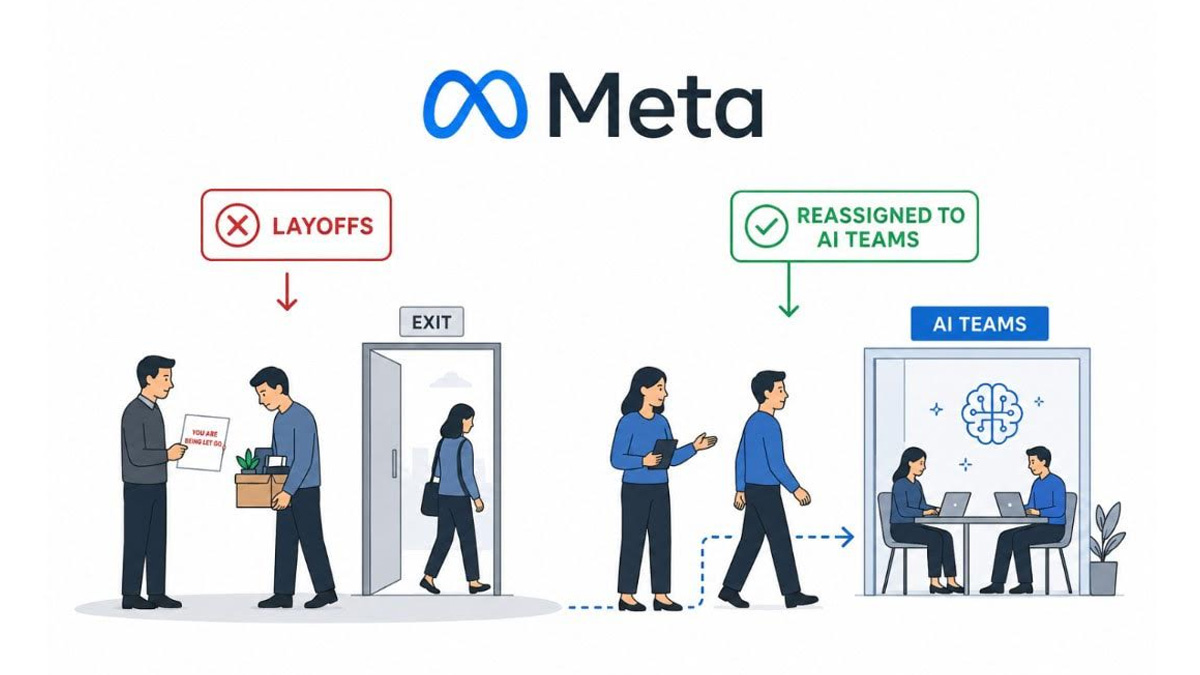
MUMBAI: At Meta, the org chart is getting a machine-learning makeover. Thousands of employees are being moved, managers are disappearing from diagrams, and AI is rapidly becoming the company’s new operating system rather than just another product vertical. The social media giant has begun a sweeping internal restructuring centred on artificial intelligence, with around 7,000 employees being reassigned to AI-focused projects ahead of a fresh round of layoffs expected this week, according to a Reuters report citing an internal company memo.
The memo, sent by Meta’s Chief People Officer Janelle Gale, outlined plans to reorganise teams around “AI native design principles”, flatten management structures and push smaller teams to move faster with greater ownership. Translation: fewer layers, more automation, and AI woven into almost every workflow.
The restructuring comes as Meta prepares to cut nearly 10 per cent of its workforce, or roughly 8,000 jobs, beginning Wednesday. The company had around 78,000 employees at the end of 2025. Further reductions are reportedly expected later this year, while Meta has already moved to shut around 6,000 open roles as part of the broader overhaul.
Employees are expected to receive detailed updates on Wednesday, with layoff notifications beginning at 4 a.m. local time in multiple global phases. North American staff were asked to work remotely on the day notifications begin. US employees affected by the cuts will receive 16 weeks of severance pay, alongside additional compensation tied to tenure.
But while some desks may be cleared, new AI teams are quickly being filled.
Among the newly prioritised initiatives are Applied AI Engineering and Agent Transformation Accelerator XFN, both tied to Meta’s wider “AI for Work” strategy. Another division, Central Analytics, is being reshaped to focus specifically on measuring productivity and tracking the performance of AI agents. A separate unit called Enterprise Solutions is also expected to be announced.
The shift underscores how aggressively Meta is pivoting towards AI under CEO Mark Zuckerberg, even as enthusiasm around the metaverse has cooled. Earlier this year, Zuckerberg told investors the company planned to spend between $115 billion and $135 billion in 2026, largely on AI infrastructure, chips and development.
Inside the company, however, the transition appears less smooth than the glossy AI demos shown on stage.
More than 1,000 employees reportedly signed a petition objecting to new mouse-tracking software being used to train AI systems. Staff have also raised concerns internally over privacy, workplace monitoring and the handling of layoffs, adding to already fragile morale across parts of the company.
For Meta, the message is becoming increasingly clear, the next chapter is being written by AI. The challenge now is whether employees feel they still have a meaningful role in the story.