Television
26 years since Star Plus rewrote the rules of Indian TV with KBC and Kyunki
How a quiz show and a saas-bahu saga, launched on the same evening in 2000, built the pay-television ecosystem India still lives in.

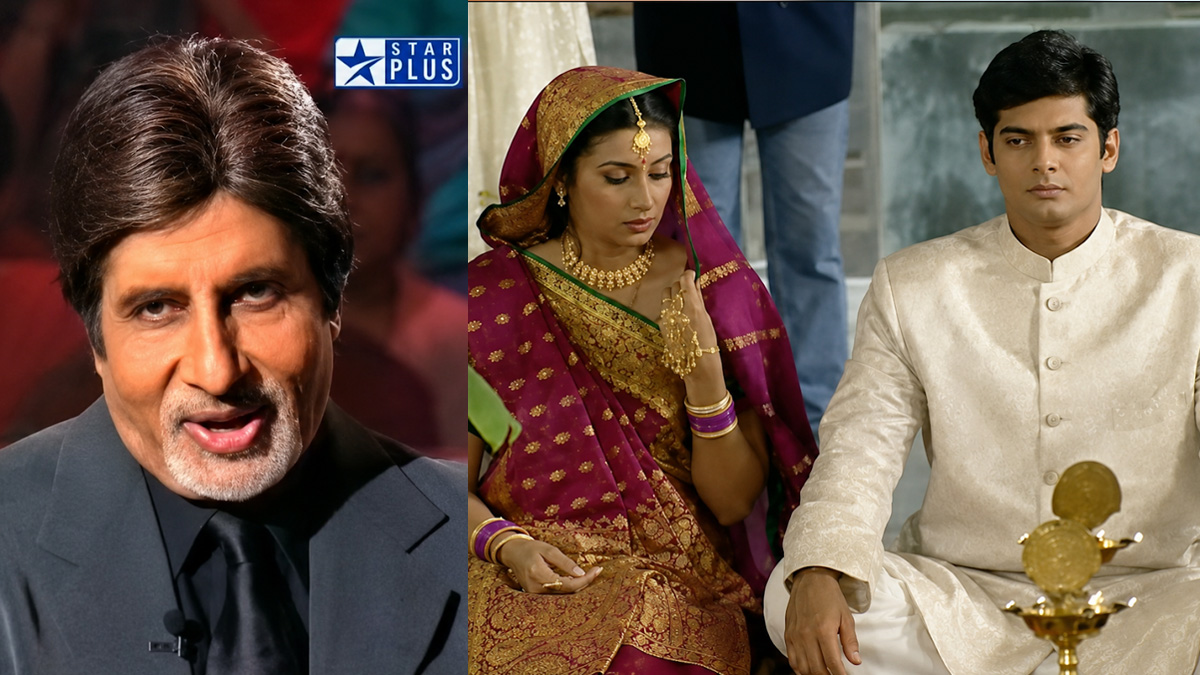
MUMBAI: Some anniversaries sneak up quietly. This one deserves a bang of cymbals. On 3 July 2000, Star Plus — until then a distant third behind Zee TV and Sony Entertainment Television — flipped a switch and became, almost overnight, the biggest beast in Indian general entertainment. Two shows did the flipping. Kaun Banega Crorepati, an Indian retooling of “Who Wants to Be a Millionaire?” fronted by Amitabh Bachchan, and Kyunki Saas Bhi Kabhi Bahu Thi, Ekta Kapoor’s saga of a Gujarati joint family ruled by the impossibly virtuous Tulsi Virani, went to air within hours of each other. Twenty-six years on, both are still standing, still drawing crowds, and both, remarkably, are still making and remaking careers.
The timing was no accident. Star had just ended its syndication tie-up with Zee and, from 1 July 2000, turned Star Plus into a wholly Hindi channel for the first time. Peter Mukerjea, chief executive of Star India since 1999, needed a bang, not a whimper, to mark the relaunch. His programming chief, Sameer Nair, had two big bets ready: a glossy quiz show borrowed from Celador’s British format, and a nightly soap from the Kapoor stable that nobody outside Balaji Telefilms much rated at the time. In 2000, Star Plus according to Nair, had a faintly “elitist” image — a channel of English reruns watched by people who felt they were above Hindi soaps. KBC and Kyunki demolished that snobbery in a single evening, and the pairing of these two, alongside the broader “K-factor” run that followed, as the moment Star India stopped being Rupert Murdoch’s expensive Asian experiment and started being a business that actually made money in India.
Credit belongs to more than two names. Mukerjea built and, crucially, kept a bench of lieutenants who would go on to run half the industry between them: Sameer Nair (later CEO of Star Entertainment India, then NDTV Imagine, now boss of Applause Entertainment), Raj Nayak (who moved from Star’s ad-sales desk to become the executive who turned Colors into a genuine number-one challenger), Tarun Katial (Star’s head of channels before he ran Sony’s own KBC seasons, then built Big FM from scratch, then took Z5 to more than 60 million monthly users as its founding chief executive), and Sumantra “Sumo” Dutta, alongside Ajay Vidyasagar, Jagdish Kumar, Megha Tata (then Monica Tata- who went on to become Turner International south Asia head, then HBO south Asia head, finally as managing director of Discovery India), and Tony D’Silva, who went on to senior roles across Viacom18, Sun TV and Balaji itself . Almost of Mukerjea’s entire senior team went on to lead other broadcasters, or production houses or studios – an unusually durable legacy for a chief executive in an industry known for eating its own.
Nobody’s life changed more dramatically that July than Amitabh Bachchan’s. By 2000 he was, in his own later telling, close to ruin: four flop films in 1999, and his production company, Amitabh Bachchan Corp Ltd, bankrupt after a disastrous Miss World pageant and a string of failed ventures, leaving him with debts reportedly running past Rs 90 crore. Friends warned him that hosting a television quiz show would finish off what was left of his big-screen aura. He took the job anyway, out of what he has since called financial compulsion rather than creative ambition. Within weeks, KBC had turned him back into the nation’s most trusted face, wiped out his debts, and given cinema’s original “angry young man” a second act as everybody’s favourite quizmaster — a reinvention he has called, more than once and rather movingly, “my lifeline.”
Smriti Irani’s transformation was, if anything, odder. A Miss India also-ran who had waited tables at India’s first McDonald’s outlet, she was, according to Balaji Telefilms folklore, initially rejected by the show’s own casting team as “not fit for TV.” She got the part of Tulsi Virani anyway, and for the best part of eight years was arguably the most recognisable woman on Indian television, winning five consecutive best-actress trophies at the Indian Telly Awards. She used the fame as a launchpad into the Bharatiya Janata Party, which she had quietly joined in 2003 while still in character as Tulsi. The trajectory from bahu to backbencher to Union cabinet minister — she has held the human-resource-development, textiles, and information-and-broadcasting portfolios, and in 2019 became the first non-Gandhi to win Amethi, defeating Rahul Gandhi in his family’s own pocket borough — is one of the more improbable second acts in Indian public life, and it began on the set Ekta Kapoor built for her in Powai.
None of this happens without Ekta Kapoor, who was 25 in 2000 and had already had six pilots rejected by broadcasters before Kyunki got the green light. Working with her mother, Shobha Kapoor, under the Balaji Telefilms banner, she built not just one hit but an assembly line: Kyunki was followed on 16 October 2000 by Kahaani Ghar Ghar Kii, a second Balaji soap about a Marwari joint family, fronted by Sakshi Tanwar as the improbably patient Parvati Agarwal. It, too, became a top-three fixture, and for a while three of India’s five most-watched shows all carried the Kapoor imprimatur.
Kapoor’s habit of naming every hit with a “K” — Kasautii Zindagii Kay, Kahiin To Hoga, Kasamh Se, and a dozen more followed — was more than superstition; it became a genuine brand signal to viewers scanning a crowded schedule. By July 2001, barely a year after Kyunki’s launch, Balaji was producing more than 30 hours of television a week, with 20 of its 34 running serials ranked among the most-watched shows on every major Hindi channel. At its peak, some 80-90 per cent of Star Plus’s homegrown Hindi content came from one production house, which in turn drew roughly 70 per cent of its own revenue from Star — a degree of mutual dependency that would raise eyebrows at any competition regulator today, but which, for the best part of a decade, worked spectacularly well for both sides. Kapoor herself went on to become the closest thing Indian television has to a mogul: a Padma Shri, a seat on the Confederation of Indian Industry’s entertainment committee, and later an International Emmy Award.
The soaps also minted careers well beyond their leads. Amar Upadhyay, cast as the impossibly steadfast Mihir Virani, briefly quit Kyunki for films in 2002, prompting a scripted death and a recast so unpopular that Kapoor reversed course and brought him back within months — an early lesson in the sheer market power a soap-opera fan base could wield. Mouni Roy made her television debut on Kyunki in 2006, in a supporting role, before going on to main character roles in Hindi films like Brahmastra. Aman Verma, who played the philandering Anupam Kapadia for the first two years, parlayed the exposure into a hosting career on Star Plus’s own game show Khul Ja Sim Sim before drifting into films and reality television; he remains, at 54, a recognisable face on the channel that made him, having recently returned to Star Plus in a supporting role on a different serial.
Neither show looked much like a sure thing up close. Kyunki’s working title was Amma; it was the actor-director Sachin Pilgaonkar, brought in for a casting conversation, who suggested Saas Bhi Kabhi Bahu Thi instead, with Kapoor bolting on the now-inseparable Kyunki for astrological luck. The role of Mihir went through at least two changes of mind before it settled on Amar Upadhyay, with Cezzane Khan — later the male lead of Kasautii Zindagii Kay — passed over along the way. Production ran on the punishing daily-soap treadmill from day one: episodes shot and aired within days of each other, six-day weeks, and, on at least one occasion, a script rewritten and reshot through 16 straight hours because Kapoor was unhappy with a single ratings dip on the sister show, Kahaani Ghar Ghar Kii. When Upadhyay quit for films in 2002, Balaji killed off Mihir and recast the role; viewers revolted so loudly that Kapoor reversed course within months and brought the original actor back, a very early demonstration of just how much power a soap’s fan base could wield over its makers.
KBC’s own back-story was almost as improbable. Sameer Nair spotted the “Who Wants to Be a Millionaire?” format on a tape from Star’s Hong Kong office in mid-1999 and originally planned a home-grown version with a Rs 1 lakh top prize, tentatively titled Kaun Banega Lakhpati. It was Rupert Murdoch himself, reviewing the pitch, who told his India team to think bigger and pushed the jackpot to Rs 1 crore — hence the far catchier final name. Bachchan was not first choice by instinct so much as by nerve: broke, between films and warned by well-wishers that television would finish off what remained of his big-screen mystique, he signed on anyway. The Film City set went up in barely a month before the July deadline, and nobody — least of all Star’s own admen — was fully prepared for what happened next: audience share for the slot rocketed from 22 per cent in launch week to 54 per cent by the end of July 2000, an adoption curve advertisers still cite as a category-defining case study.
If the shows made television history, the ad-sales desks that sat behind them made rather a lot of money doing it. KBC arrived with brand integration baked in from episode one: Britannia’s 50:50 biscuit ran a wave of commercials built entirely around the show’s own 50:50 lifeline, with the tagline “khao Britannia 50:50, ban jao crorepati” — eat the biscuit, become a millionaire — a slogan that only worked because the show itself had already become the nation’s shorthand for aspiration. Colgate went one further and shot a full pastiche of the KBC studio, contestant and all, for its own advertisement — the sincerest form of admiration a rival brand can offer. On the soap side, Star Plus’s late-night 10-to-11pm slot, considered soft and unsellable before Kyunki and Kahaani Ghar Ghar Kii turned up, became some of the most fought-over inventory in Indian broadcasting almost overnight, forcing rivals such as Zee to commission copycats — Shobhana Desai’s Babul Ki Duwayen Leti Jaa among them — that never quite caught the same wave.
The commercial afterlife has, if anything, outgrown the original phenomenon. KBC‘s ad rates have climbed from a few lakh rupees per ten-second spot in its early Sony years to somewhere between Rs 2.5 lakh and Rs 3 lakh per ten seconds today, (our estimates) with the show now routinely delivering Sony an estimated Rs 350-450 crore in advertising and sponsorship revenue each season across television and streaming, spread across a roster of a dozen-plus co-presenting, co-powered and associate sponsors that has recently included Maruti Suzuki, the Aditya Birla Group, the State Bank of India and even the Reserve Bank of India as a “special sponsor.”
Kyunki‘s 2025 reboot proved the format still has real pulling power with admen too: JioStar signed up eight sponsors across Star Plus and JioHotstar before the first episode had even aired — Tide, Kalyan Jewellers and Maruti Suzuki among the co-presenters — a lineup any new launch on Indian television would envy, secured entirely on the strength of a title and a saree the colour of nostalgia.
If Star Plus’s own 2000 vintage was the first shock to the system, the second came, fittingly, from a Star alumnus — and the ground had already been softened up by the time it landed. KBC‘s own Star-era run had effectively ended two years earlier, when Bachchan fell ill midway through the show’s second season in 2006 and Star, in a decision it would later regret, handed the anchor’s chair to Shah Rukh Khan for one further run before letting the format lapse altogether.
Kyunki, having held the number-one slot for roughly seven unbroken years and peaked at a scarcely believable TVR of 22.4 in May 2001, was dethroned in January 2008 by its own stablemate Bidaai and went off air that November after 1,833 episodes; Kahaani Ghar Ghar Kii wound down within the year too. Zee, sharpened by its own new wave of serials and talent formats, had already begun clawing back the top spot it held before Star’s 2000 insurgency, and Star Plus’s viewership — which had roughly doubled from 9m to 18m households between 2000 and 2005 — was cooling fast.
Into that gap, on 21 July 2008, walked Viacom18’s Colors, the eleventh Hindi GEC to enter an already crowded field, under Rajesh Kamat (another Star alumnus) — and it did not so much enter the market as gatecrash it. Its opening schedule pitched a reality flagship, Khatron Ke Khiladi, directly against Kyunki and Kahaani Ghar Ghar Kii on weekday prime time, a deliberate declaration of war rather than a polite bid for leftover audience, and it worked with startling speed: 100 GRPs by its second week, second place in the genre by its tenth, and, powered by Balika Vadhu (a child-marriage drama that pointedly avoided every saas-bahu cliché Balaji had spent a decade perfecting) and Bigg Boss, a full ten-year Star Plus reign broken by its ninth month. The man who did much of the finishing, Raj Nayak, was himself a Star old boy, poached from its ad-sales desk to become the executive who, by 2011, had turned Colors into a genuine three-cornered fight with Star Plus and Zee for Hindi GEC leadership — a fight that, unusually for Indian television, has never really settled since, with the genre now routinely described by its own executives as one with “no clear leader.” The K-factor had built the industry; Colors, run in part by people the K-factor had trained, was proof that the industry it built could no longer be taken for granted.
Both formats, though, proved more durable than the channel that made them.
KBC’s real second life began in 2010, when Sony Entertainment Television picked up the format, Bachchan back in the hot seat, and turned it into a durable autumn institution rather than a one-off event; the show is now approaching its 18th season and remains a top-rated fixture on Sony every year it airs, its Rs 7 crore jackpot and its parade of small-town contestants — the Bihar computer instructor Sushil Kumar, dubbed the “real-life Slumdog Millionaire” for winning Rs 5 crore in 2011, chief among them — still doing exactly the emotional work Nair and Mukerjea designed it to do a quarter-century ago.
Kyunki‘s second life has been even more of a full-circle moment. In July 2025, to mark the original’s 25th anniversary, Balaji and Star Plus brought Irani and Upadhyay back as Tulsi and Mihir in a reboot, Kyunki Saas Bhi Kabhi Bahu Thi 2 on JioStar and JioHotstar. It was, on the numbers, the biggest fiction launch Indian television had seen in years: over 1.6 billion minutes of watch time in its first week across TV and streaming, and a launch-day TVR of 2.5 that briefly out-rated both Anupamaa and Taarak Mehta Ka Ooltah Chashmah. Critics grumbled, not unfairly, that the reboot leaned on sentiment rather than fresh plotting; audiences did not seem to mind, and the show has since spun off a generation-skipping spin-off of its own, Kyunki Rishton Ke Bhi Roop Badalte Hain, built around a new crop of Virani children. Twenty-six years on, the show remains a solid fixture near the top of the weekly BARC charts on Star Plus, even if a 26-year-old format no longer expects the unbroken number-one run it enjoyed the first time round.
For the executives who built the original run, this anniversary ought to feel rather sweet. The shows they gambled on in a still-nascent Hindi entertainment market are not museum pieces; they are working brands, refreshed for streaming-era viewers who now find the entire back catalogue — original-run Kyunki, Kahaani Ghar Ghar Kii, KBC’s vintage Bachchan seasons and the rest — sitting a tap away on JioHotstar, Z5 and SonyLiv.
It is worth remembering, too, that Star Plus did not invent the general entertainment channel: Zee had set the pace through the 1990s with talent contests and family dramas, and Sony briefly led the market at the turn of the millennium. What Star Plus did, with KBC and Kyunki, was turn a crowded three-way scrap into a genuine industry, one with the scale and the household stickiness to justify the pay-television infrastructure that cable and satellite operators were, at that very moment, building out across the country.
The saas-bahu soap and the quiz show that made Star Plus’s fortune in the Mumbai monsoon of 2000 have, in effect, been handed a second life on the very platforms now fighting the streaming war their grandparents’ pay-TV battle first made possible. Not a bad legacy for one giddy July evening, 26 years ago.