MAM
Television still drives brand building, declare marketers at Goafest 2026
As viewers multiply and screens splinter, broadcasters and brands defend TV’s clout

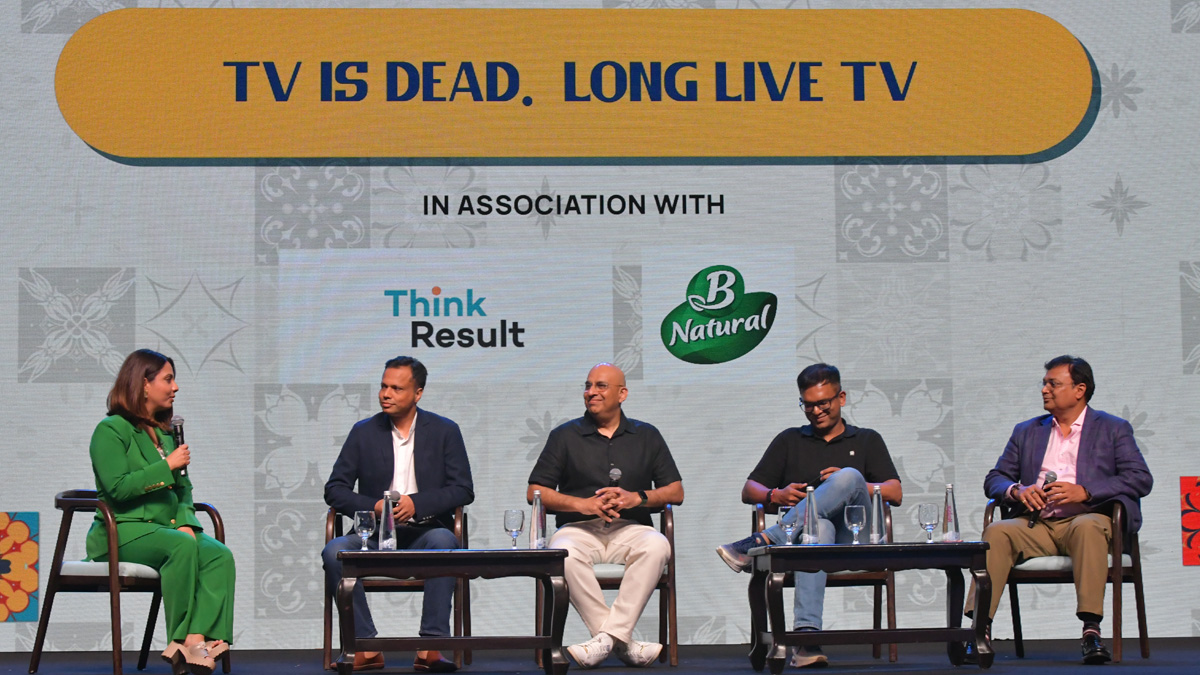
GOA: Television may be getting written off every few years, but if the conversations at Goafest 2026 are anything to go by, the industry is far from ready to switch off the box.
At a packed panel titled TV Is Dead. Long Live TV., featuring Sony Pictures Networks India head linear ad sales Akshay Agrawal, Dabur India Limited vice president media and marketing activations Rajiv Dubey, Ajio chief marketing officer Arpan Biswas and IBDF secretary general Avinash Pandey, moderated by NDTV Profit managing editor Tamanna Inamdar, the debate circled around one central question: if audiences are still watching in massive numbers, why are advertising budgets steadily drifting elsewhere?
The discussion quickly moved beyond the familiar “TV versus digital” battle lines. Instead, the panel argued that television itself has evolved into a broader content ecosystem spanning connected TVs, streaming apps, mobile screens and social platforms. The idea that television is only a living-room device was dismissed as outdated, with broadcasters positioning TV as the engine that powers wider content consumption across platforms.
The numbers presented during the session painted a contradictory picture. Television viewership in India continues to grow, with hundreds of millions still tuning in weekly and regional markets remaining heavily dependent on broadcast media. Penetration levels in southern states and several regional markets remain exceptionally high, while free-to-air television continues expanding rapidly.
Yet at the same time, advertising spends on television have softened, particularly among large consumer brands increasingly experimenting with influencer-led and digital-first campaigns. That tension formed the core of the discussion. If audiences remain loyal, why are advertisers diversifying away from traditional TV buys?
The answer, according to the broad consensus in the room, lies in changing marketing priorities rather than television’s decline. Digital platforms are increasingly being used for “demand capture”, where brands target consumers closer to purchase decisions. Television, meanwhile, continues to dominate “demand creation”, building trust, awareness and long-term brand memory at scale.
The panel repeatedly returned to television’s unmatched ability to create credibility. While digital platforms may drive instant clicks and measurable conversions, television was described as the medium that still gives brands stature, familiarity and emotional recall. Several speakers suggested that the industry’s obsession with short-term metrics has also hurt TV’s position, particularly as marketers face mounting pressure to show immediate business impact.
There was also acknowledgement that television itself needs to adapt. Passive viewing alone may no longer be enough in an era shaped by social media interaction and second-screen behaviour. The future of TV, according to the discussion, lies in making audiences participants rather than mere viewers. Reality shows, live voting formats, behind-the-scenes content and social engagement loops were cited as examples of how broadcasters are attempting to turn television into a more immersive experience.
The conversation also explored the growing dependence on influencers and creator-led storytelling. While influencer marketing has opened new doors for brands to reach fragmented audiences, concerns were raised around the risks attached to tying brands too closely to internet personalities whose public image can change overnight. The rise of “cancel culture” and reputational volatility in the creator economy emerged as an undercurrent throughout the session.
Even so, the panel stopped short of framing the debate as a winner-takes-all contest. Instead, television, digital platforms and influencers were positioned as complementary tools within a broader media mix. Television may no longer command the singular dominance it once enjoyed, but the sentiment across the discussion was clear: it still remains the medium that launches narratives large enough for every other platform to amplify.
By the end of the session, the obituary for television looked a little premature. The screens may have changed shape, audiences may be scrolling while watching, and advertisers may be splitting budgets more carefully than before, but TV, it seems, is still very much tuned into India’s attention economy.