Hollywood
Disney sells out ad slots for 98th Oscars broadcast
Strong demand for live events turns the Academy Awards into a global, multi-platform marketing moment
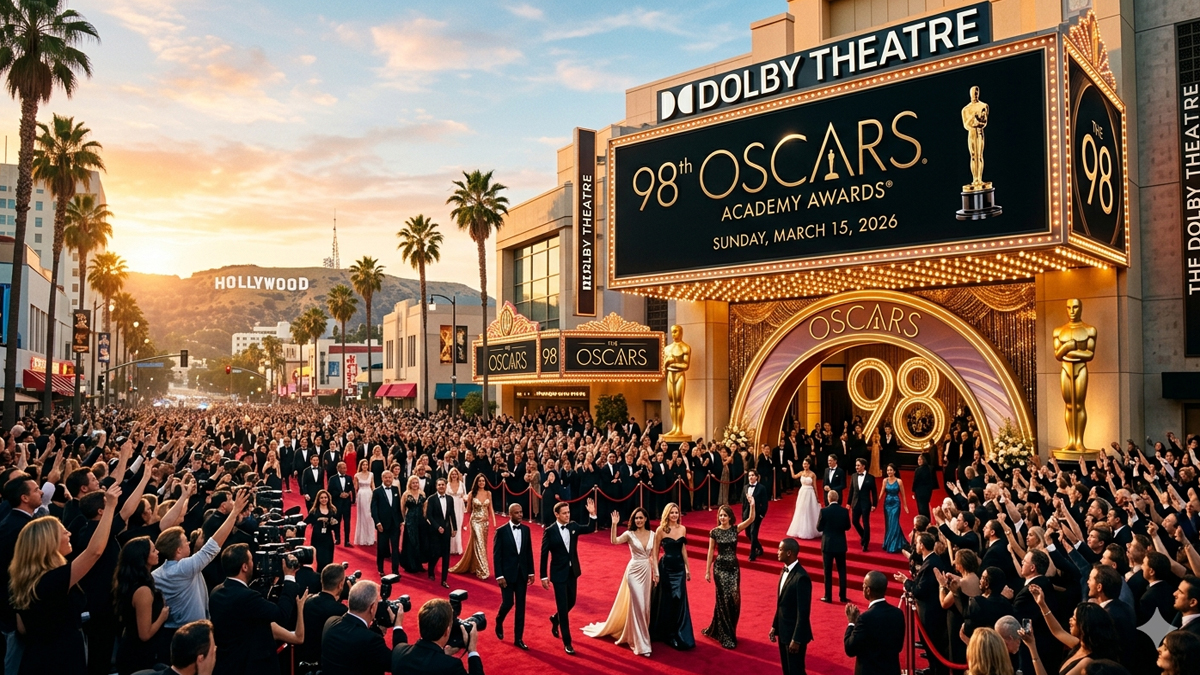
NEW YORK: Hollywood’s biggest night has also become one of advertising’s hottest tickets. Disney has sold out all advertising inventory for the 98th Oscars, underscoring the growing demand from brands eager to ride the cultural wave of major live events.
The sell-out marks the sixth consecutive live tentpole success for Disney Advertising. The streak includes last year’s 97th Oscars, the 59th Annual CMA Awards, and Dick Clark’s New Year’s Rockin’ Eve with Ryan Seacrest, signalling strong appetite among marketers for moments that bring audiences together in real time.
For advertisers, the Oscars are no longer just a single night of glitz and gold statues. Disney’s “Content Everywhere” strategy has expanded the awards show into a sprawling, multi-platform brand playground spanning linear television, streaming, social media and digital content.
“Live continues to be one of the most powerful ways for brands to connect with engaged audiences at scale, and the Oscars represent the very best of culture, creativity and community,” said Disney Advertising SVP, entertainment and streaming solutions John Campbell. He added that the company has reshaped the show’s commercial potential into a connected experience that stretches well beyond the broadcast.
Brands such as Mazda, Pfizer and Volkswagen of America are tapping into Disney’s wider ecosystem, appearing across original content segments including Know Your Movies on Hulu and Critically Acclaimed on Disney+. Partnerships also extend to social media through TikTok Pulse Premiere and to custom brand storytelling created by Disney CreativeWorks.
The result is what Disney calls the “Oscars Everywhere” approach. Rather than a few high-profile ad breaks, advertisers now find themselves woven through a series of moments before, during and after the ceremony.
These include On The Red Carpet at The Oscars, a live pre-show syndicated across major local markets and streamed nationwide, and the After the Oscars Show, which keeps the conversation going once the final award has been handed out.
This year’s sponsors include Rolex, returning for its ninth year, and Burger King, which joins the Oscars advertiser roster for the first time. Other brands in the mix include Disney Cruise Line, Dunkin’, Eli Lilly and Company, Eucerin, Intuit TurboTax, L’Oréal, McDonald’s, Microsoft, Miebo, Paris Baguette, Peacock, Starbucks, State Farm, Toyota and Verizon.
The 98th Oscars will take place on March 15, 2026, at the Dolby Theatre at Ovation Hollywood. The ceremony will be broadcast live on ABC and streamed on Hulu, reaching audiences in more than 200 territories worldwide.

Hollywood
Moscow on the Bollywood Map: Interview with Georgy Prokopov, CEO of Moscow Film Cluster
New Delhi [India], March 11: Moscow is quickly becoming a top destination for international film productions, and Bollywood is taking notice. With modern studios, iconic city streets, and rich cultural locations, the city offers filmmakers both visual variety and logistical support. Over the past few years, collaboration between Moscow and the Indian film industry has intensified, with high-profile projects and joint initiatives demonstrating the city’s growing appeal.
We speak with Georgy Prokopov, CEO of Moscow Film Cluster, about what makes Moscow an attractive destination for Indian filmmakers, the practical benefits of shooting here, and how the city is supporting international productions.
How would you describe the main objective of the Moscow Film Cluster for entering the Indian market and participating in the IIFTC Conclave 2026?
At this stage, our goal is very specific: to establish Moscow Film Cluster as a clear, competitive and economically efficient location for Indian producers. The cluster is part of the program, initiated by Moscow Mayor Sergey Sobyanin. The key point is that this is not a one-off project – it represents a consistent, long-term city infrastructure designed to support international film production over the years.
What kind of financial support does Moscow offer Indian filmmakers?
Moscow provides rebates of up to 45% on eligible production and post-production expenses.. Producers may receive up to 30% of approved production or post-production costs as a direct financial rebate and up to 15% in benefits from reduced accommodation, logistics and services within Moscow Film Cluster and the city ecosystem. The main advantage is the in the transparent and structuredmodel: rebate categories are clearly defined, local cost thresholds are fixed, and the application and review procedure is standardized and supported by Moscow Film Cluster. This allows Indian producers to plan projects with a clear understanding of potential rebates, even though the exact amount is confirmed only after submission and approval..
How does the current financial settlement system between Russia and India affect co-productions?
One factor enhancing the attractiveness of joint projects is the direct RUB/INR settlement system. Around 90–95% of payments between Russia and India are now made without using USD or EUR, reducing currency risks. The banking infrastructure is fast: up to 60% of payments from Russia to India are processed within 10 minutes, the rest within 24 hours; from India to Russia, about 15% of transactions are completed within 10 minutes. For producers, this means payments for services, fees, and local contractors can be handled efficiently without delays or extra exchange costs.
What practical measures has Moscow already implemented to simplify the visa regime, the entry to Russia, organizational issues for the stay of Indian film crews?
Producers are naturally concerned not only with locations and rebates, but also with the time and effort required to organize a shoot. Moscow and India already enjoy strong economic and sectoral cooperation, which allows humanitarian and entry procedures to be simplified. This includes electronic visas and more predictable border processes.
Moscow Film Cluster and Moscow Film Commission work closely with Russian production partners who accompany Indian crews during preparation and filming in Moscow –from coordinating the shooting process coordination to providing on-site organizational support. Moscow also negotiates discounts on accommodation and services for film crews within the city ecosystem. The goal is to ensure producers receive all necessary services through a single managed system, without having to coordinate multiple agencies.
What types of locations and venues in Moscow might be particularly interesting for Indian projects?
Moscow offers a broad range of shooting options. Within the cluster, Film City brings together diverse spaces– from historic streets to modern European-style quarters – ideal for projects that move across countries or time periods. Film Factory adds technological capabilities for projects with heavy VFX requirements, while Gorky Film Studio provides fully equipped sound stages, workshops, and the largest archive of costumes and props, reducing the need to build everything from scratch.
Outside the studios, Moscow offers varied urban and natural locations: the historic center, modern business districts, residential areas, parks, and transport infrastructure. All urban shoots are coordinated through Film Commission, minimizing delays and simplifying the permit process.
How would you explain the Moscow Film Cluster structure to Indian producers? Where are the main points of contact with production?
In simple terms, it is a one-stop-shop ecosystem. It includes: Film City with its large backlots, Film Factory with its capabilities, Gorky Film Studio, Film Commission, a dedicated digital platform and Moskino cinema chain.
The integrated cluster structure allows to managethe entire cycle: from scouting and location shooting to post-production and movie screening for Moscow audiences. Sincethe cluster directly manages key locations and infrastructure, pricing is transparent and predictable, which is a major advantage for international partners.
How much interest is there specifically from India, and how has this interest been transformed into real projects?
The Indian interest in Moscow as a production site has become more concrete over the past two years. At FICCI FRAMES 2025, we presented Moscow Film Cluster as a venue partner and held over a hundred meetings with Indian companies, from major studios to service providers.
Smash is a good example of how financial and infrastructure instruments can be combined: the agreement was signed at the Moscow International Film Week. So, the shooting in Moscow will begin in 2026 and is supported by a rebate program. Part of the shooting will take place at the FILM CITY and part will take place at city locations. For us, this is an indicator that the Indian market perceives Moscow not as an abstract possibility, but as a real solution for specific production tasks.
What key advantages of shooting in Moscow would you highlight for Indian producers and studios?
In short, it is a combination of three groups of factors.
The first one is economics: up to 45% rebate, competitive labor costs, large backlogs that reduce travel expenses and an improved RUB/INR payment infrastructure that reduces currency and time costs.
The second one is process manageability: centralized work of tFilm Commission, digital application procedures and a clear set of rules for using city locations and infrastructure.
And the third one is the ecosystem approach: the ability to conduct most of the production cycle in one city and within one managed system—from Film City and Film Factory to Gorky Film Studio and the Moskino network. For Indian producers with their busy schedules and high demands on content volume, this allows for more accurate planning of workloads and budgets.
What message would you like to convey to the Indian industry following your participation in IIFTC 2026?
The main message is that Moscow Film Cluster is already an operational system, not a ‘in-progress’ one, and it was originally designed as a tool for international producers. We openly discuss the rebate structure, infrastructure and working conditions, based on facts and projects that have already been launched, including those with Indian partners.
Pragmatically speaking, we invite Indian companies to view Moscow as a regular link in their production chains: not as a one-off ‘exotic’ location, but as a city that can be included in their content production schedule for several years ahead.
How would you describe the main objective of the Moscow Film Cluster for entering the Indian market and participating in the IIFTC Conclave 2026?
At this stage, our objective is very specific: establishing Moscow Film Cluster as a clear, competitive and economically efficient location for Indian producers. The cluster is being created and developed as part of Moscow City Film Program, initiated by Moscow Mayor Sergey Sobyanin. And this is a key point: we are not talking about a one-off project, but about a consistent city infrastructure.
International marketplaces are professional entry points for us into dialogue with the industry, where we can show how the Moscow model works – not in theory, but in figures and production scenarios.
Rebate and project economics
Up to 45% cost rebate in Moscow:
30% — direct cash rebate on eligible expenses.
Up to 15% — through discounts on accommodation, logistics and services within the cluster and city ecosystem.
Rebate is available for shooting and post-production upon reaching the set thresholds for local costs. The cluster was created as part of the Moscow – City of Cinema program initiated by Moscow Mayor Sergey Sobyanin.
Infrastructure
Key cluster elements: Film City (backlots), Film Factory (virtual and industrial production), Maxim Gorky Film Studio, Moscow Film Commission, Film in Moscow digital platform, Moskino cinema chain.
Examples of current projects: sports drama Smash (co-production by Smena / Kartina Entertainment), shooting in Moscow with a applicated rebate from March 2026.
Financial settlements between Russia and India
90–95% of settlements between countries are already conducted in RUB and INR, without the dollar or euro.
Up to 60% of payments from Russia to India completed within 10 minutes, and the rest – within 24 hours.
About 15% of payments from India to Russia take 10 minutes.