Hollywood
Paramount to shoulder $79bn debt in $110bn Warner Bros deal
Ellison vows no cable sell-offs as studios unite to take on Netflix
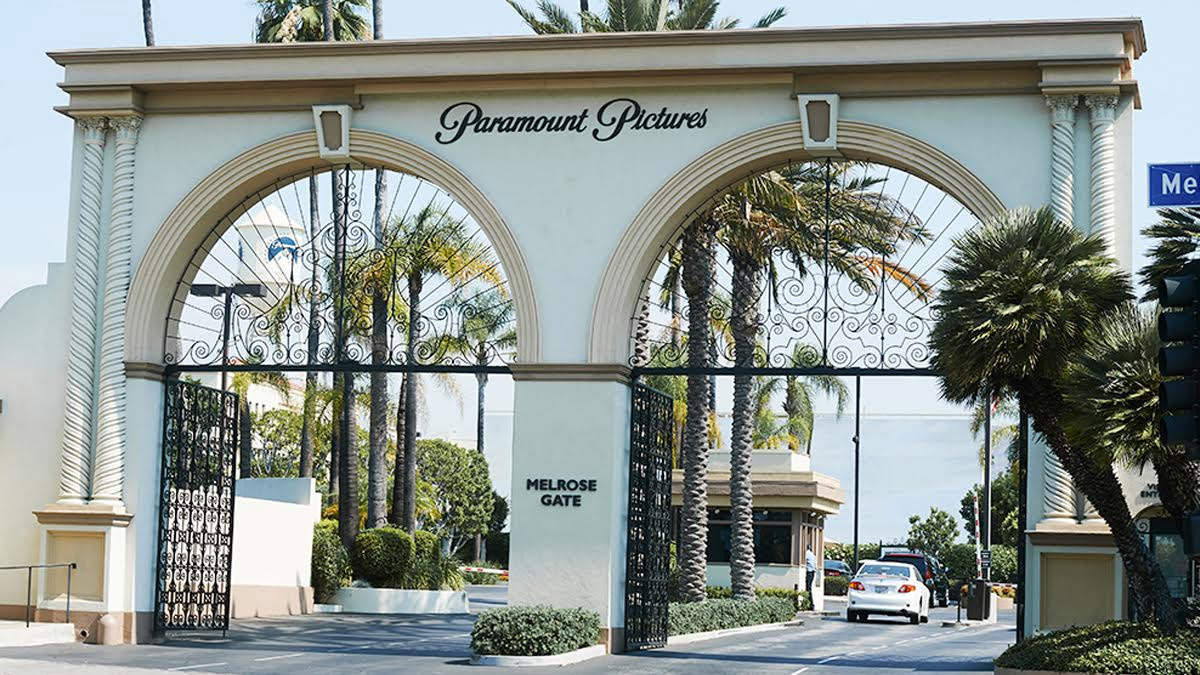
LOS ANGELES: In a Hollywood plot twist worthy of its own blockbuster, Paramount is set to carry net debt of about $79 billion after sealing its $110 billion takeover of Warner Bros, creating one of the most formidable entertainment groups on the planet.
The deal, signed on Friday at $31 a share, ends months of bidding drama with Netflix, which ultimately declined to raise its offer. Paramount will also pay a $2.8 billion termination fee owed to Netflix, clearing the decks for the merger, which is expected to close in the third quarter.
At the helm is David Ellison, son of billionaire Larry Ellison, who pitched the transaction as less about scale for scale’s sake and more about rewriting the rules of modern media.
“This is not about consolidation, it’s about reinventing the business,” Ellison told analysts, promising that the combined group would expand its reach while sharpening its storytelling edge.
The new entity will merge Paramount+ and HBO Max into a single streaming platform, instantly creating a service with more than 200 million direct-to-consumer subscribers across over 100 regions. The ambition is clear: build the heft needed to compete with streaming’s dominant force, Netflix.
Ellison confirmed that films will continue to enjoy 45-day theatrical windows before moving to premium video on demand, underscoring his belief that cinema remains the launchpad for enduring franchises.
“Franchises are launched in theatres, period,” he said, drawing a firm line under his commitment to the big screen.
The merger unites two storied studios, Warner Bros. and Paramount Pictures, alongside a powerful roster of television brands. Under one corporate roof will sit CBS, MTV, Comedy Central and BET, together with CNN, HBO, TNT and Food Network.
The intellectual property vault reads like a Hollywood hall of fame: Game of Thrones, Harry Potter, Top Gun, the DC Universe, Mission: Impossible and SpongeBob SquarePants among them. Together, they form one of the deepest catalogues in the industry.
The combined company expects to produce at least 30 theatrical films a year, maintaining both studios rather than folding one into the other.
Despite the hefty debt load, Paramount’s leadership was unequivocal about one point: there are no plans to spin off or sell the cable networks. Chief strategy officer Andy Gordon said the group believes firmly in the assets it is acquiring, while targeting $6 billion in cost savings and a three-times leverage ratio within three years.
That belt-tightening will inevitably raise concerns about jobs, though executives stressed that most savings would not come from production cuts and pledged continued support for HBO’s creative independence.
The transaction is expected to secure European Union approval with only minor concessions, though scrutiny is mounting in the United States. California Attorney General Rob Bonta has signalled a vigorous review, and cinema operators have warned that fewer studios could mean fewer films and potential job losses.
For now, however, the script is set. Paramount is betting big, borrowing big and thinking bigger. If Ellison’s vision holds, the merger could reshape the entertainment landscape. If not, it may prove that in Hollywood, even the grandest productions can run over budget.

Hollywood
Who won what at the Oscars 2026? Full winners list from the 98th Academy Awards
A night of history, high drama, and gingery wit at the 98th Academy Awards
LOS ANGELES: If the 98th Academy Awards taught us anything, it is that Hollywood still loves a tortured genius and a well-timed ginger joke. While the night was technically a coronation for Paul Thomas Anderson’s sprawling war drama One Battle After Another, the real battle was fought in the stalls of the Dolby Theatre as host Conan O’Brien unleashed a monologue that was part roast, part group therapy session.
The evening belonged to the cinematic heavyweights. One Battle After Another lived up to its title, clinching Best Picture, Best Director, and Best Adapted Screenplay. Anderson, the perennial bridesmaid of the Oscars, finally took home the big prizes, cementing his status as the industry’s favourite auteur.
In the acting categories, Michael B. Jordan made history. Winning Best Actor for his visceral performance in the supernatural thriller Sinners, he became only the fourth Black man to win the trophy. His speech was a masterclass in humility, though he spared a moment to thank his trainer for “making me look like I could actually fight a demon.”
The history books were rewritten several times over. Autumn Durald Arkapaw shattered a long-standing glass ceiling by becoming the first woman to win Best Cinematography for Sinners. Meanwhile, the newly minted Best Achievement in Casting category saw its inaugural trophy go to the ensemble of One Battle After Another.
Returning to the stage with his signature quiff and self-deprecating bite, Conan O’Brien did not hold back. He began by acknowledging the elephant in the room: his own presence.
“I know what you’re thinking,” he quipped. “Why is the ghost of a Victorian chimney sweep hosting the Oscars? It’s because AI is too expensive and I work for sandwiches.”
The controversy kicked off when he turned his sights on the Best Visual Effects nominees. Pointing at the Avatar: Fire and Ash table, he remarked:
“James Cameron has spent so much money on blue people that the actual ocean is now jealous of his budget. Jim, at some point, you have to admit this is just a very expensive aquarium hobby.”
He also took a cheeky swipe at the trend of method acting, specifically targeting Sean Penn.
“Sean stayed in character for so long that his own family had to serve him a subpoena just to get him to come to Sunday roast,” O’Brien joked, to a mix of nervous titters and Penn’s trademark stony glare.
The night was not without its “did he really say that?” moments. During a bit about the length of the telecast, O’Brien noted that the show was running so long that:
“By the time we get to Best Picture, the winner will have already been rebooted as a gritty limited series on Max.”
He also touched on the industry’s obsession with youth, pointing at a young starlet and saying:
“You’re so young that your first memory is actually a TikTok of this monologue.”
While most took it in stride, some critics on social media called the joke “typical boomer energy,” though O’Brien seemed entirely unfazed.
The full winners’ circle:
Best Picture: One Battle After Another
Best Director: Paul Thomas Anderson (One Battle After Another)
Best Actor: Michael B. Jordan (Sinners)
Best Actress: Jessie Buckley (Hamnet)
Best Supporting Actor: Sean Penn (One Battle After Another)
Best Supporting Actress: Amy Madigan (Weapons)
Best Animated Feature: K-Pop: Demon Hunters
Best Original Song: “Golden” from K-Pop: Demon Hunters
As the curtains closed and the A-list headed for the after-parties, the mood was one of relief. Hollywood had managed to celebrate its past while poking fun at its increasingly digital future. Whether the night belonged to the war heroes of PTA or the witty barbs of a tall redhead remains a matter of debate.